An open curb corner can send water across insulation before a ceiling shows it. In Wilton Center, Wilton, CT, we start at the room report and follow the water path through the membrane, curb flashing and drainage details above it. Wilton Center serves as the town's economic and cultural focal point, with a train station and a pedestrian link in the district. That mix makes access and material movement worth planning with the property contact. The roof still decides the repair: we inspect the actual lap, edge, penetration and substrate before setting a work limit. A commercial roof inspection begins with the reported area and safe access.
Water path: follow the mark to the entry
Water can travel along a deck joint or insulation before it reaches a ceiling. The interior report narrows the search; we follow lap direction, surface low points and nearby wall details to find a path that fits the timing. A lifted lap may admit water near a curb, while a loose termination can let it move behind the edge metal. We check connected details rather than open the first area directly above the stain. The repair boundary follows what the roof shows, not a guess based on the room alone.
Wilton Center's station and pedestrian connection can make timing and access part of the conversation, especially where doors or shared paths stay in use. We confirm ladder or hatch access, delivery limits and the area below the work with the manager. When a manager also oversees Noroton Heights, keep each room report tied to the inspected roof detail and preserve separate records for each property.
Assembly check: identify the surface first
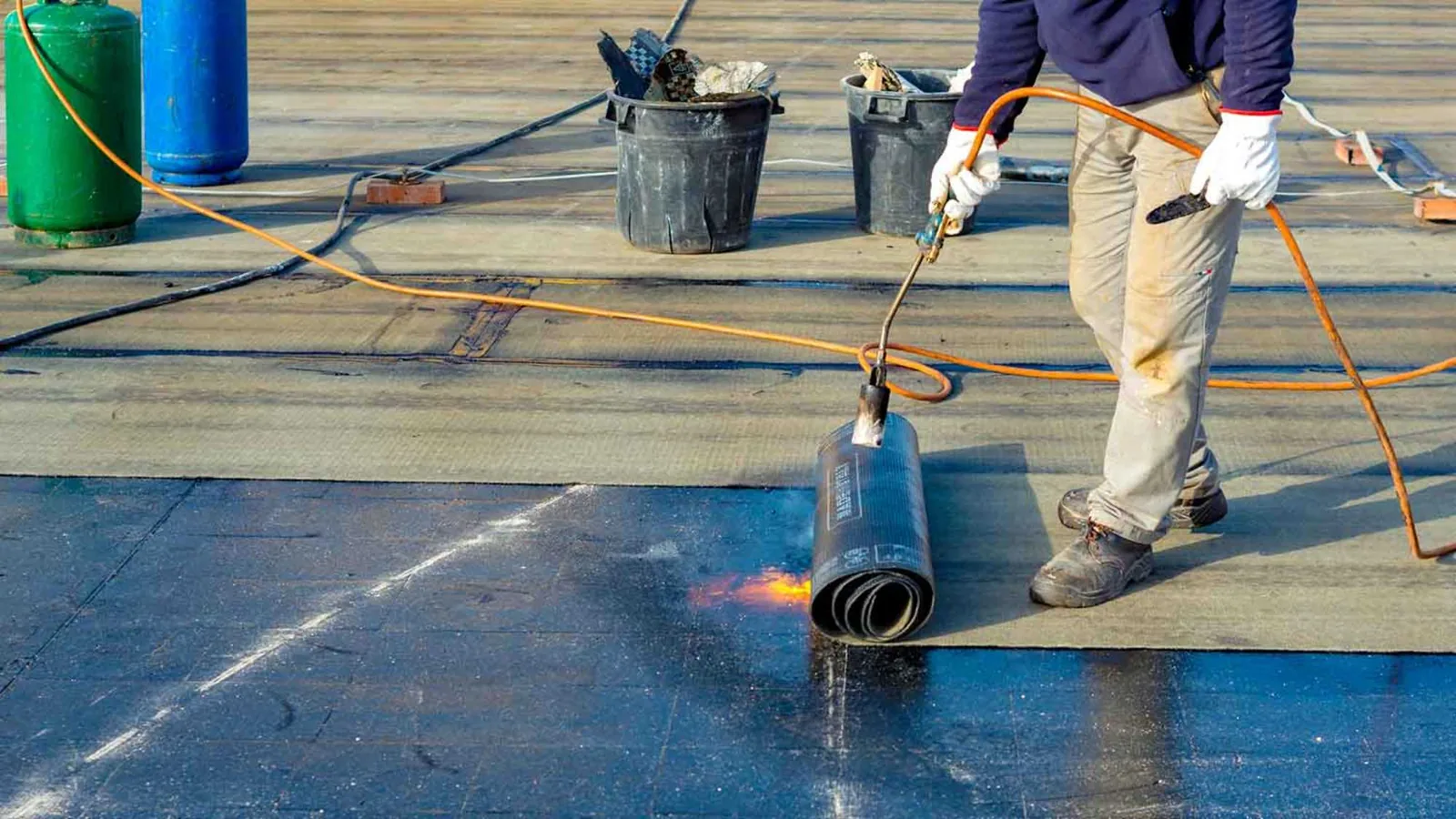
The repair follows the installed assembly. We identify sheet, bitumen, metal or coating, then check how that layer is fastened and where its seams turn at curbs or edges. A weld test can show whether thermoplastic sheet will accept a patch; a coating needs a dry, prepared base. Earlier repairs, membrane tension and wet insulation may move the cut line beyond the visible defect.
Wilton Center's transit-oriented mixed use places business activity near regional connections. At each property, we identify the installed roof system before choosing a tie-in. TPO seam work uses a different tie-in from modified-bitumen repair. We name the material, the failed connection and the condition required for a sound patch. If a parapet, curb or equipment support interrupts the field, its corners and vertical flashing need their own checks.
Edge and drain: close the water route
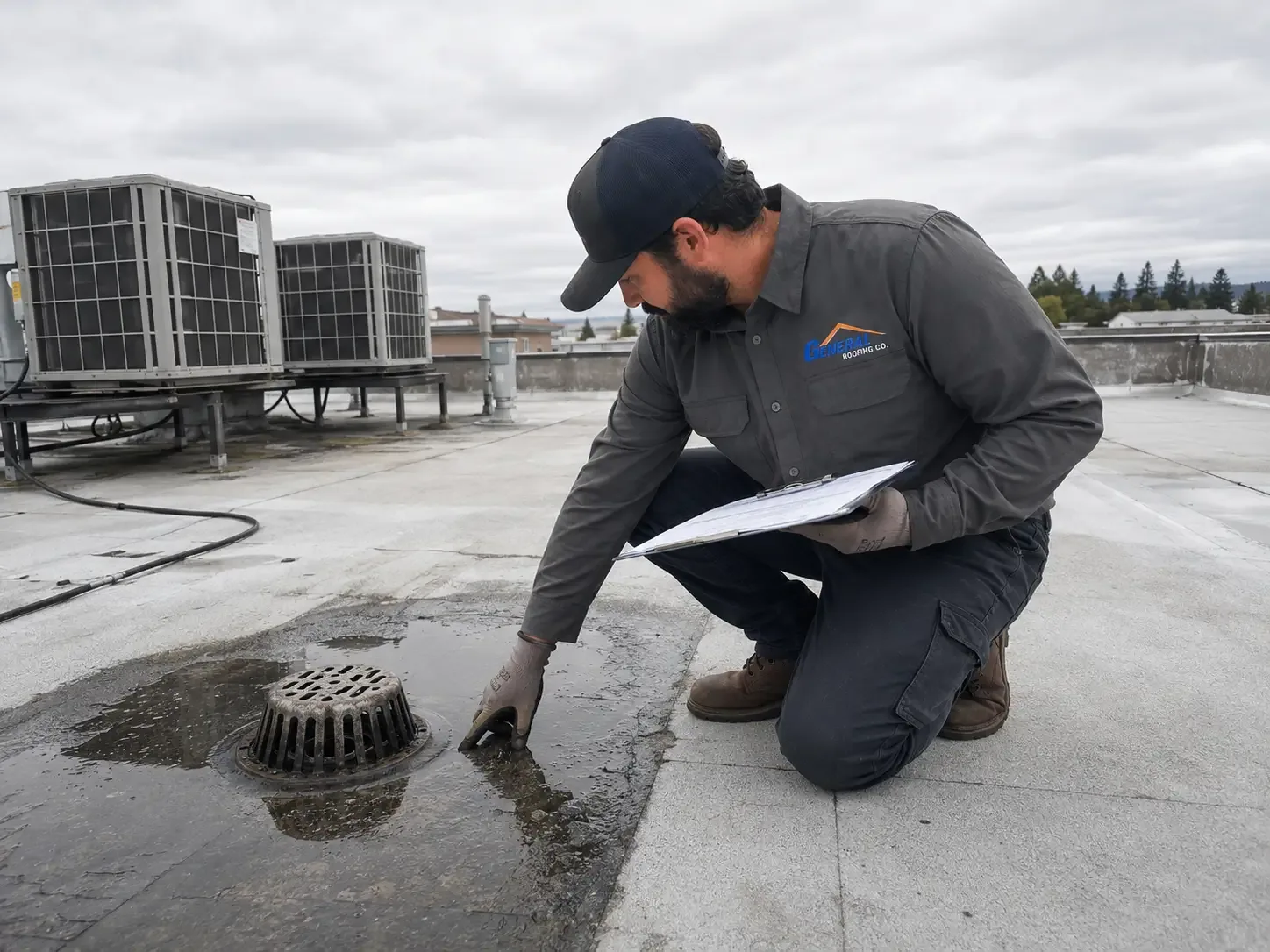
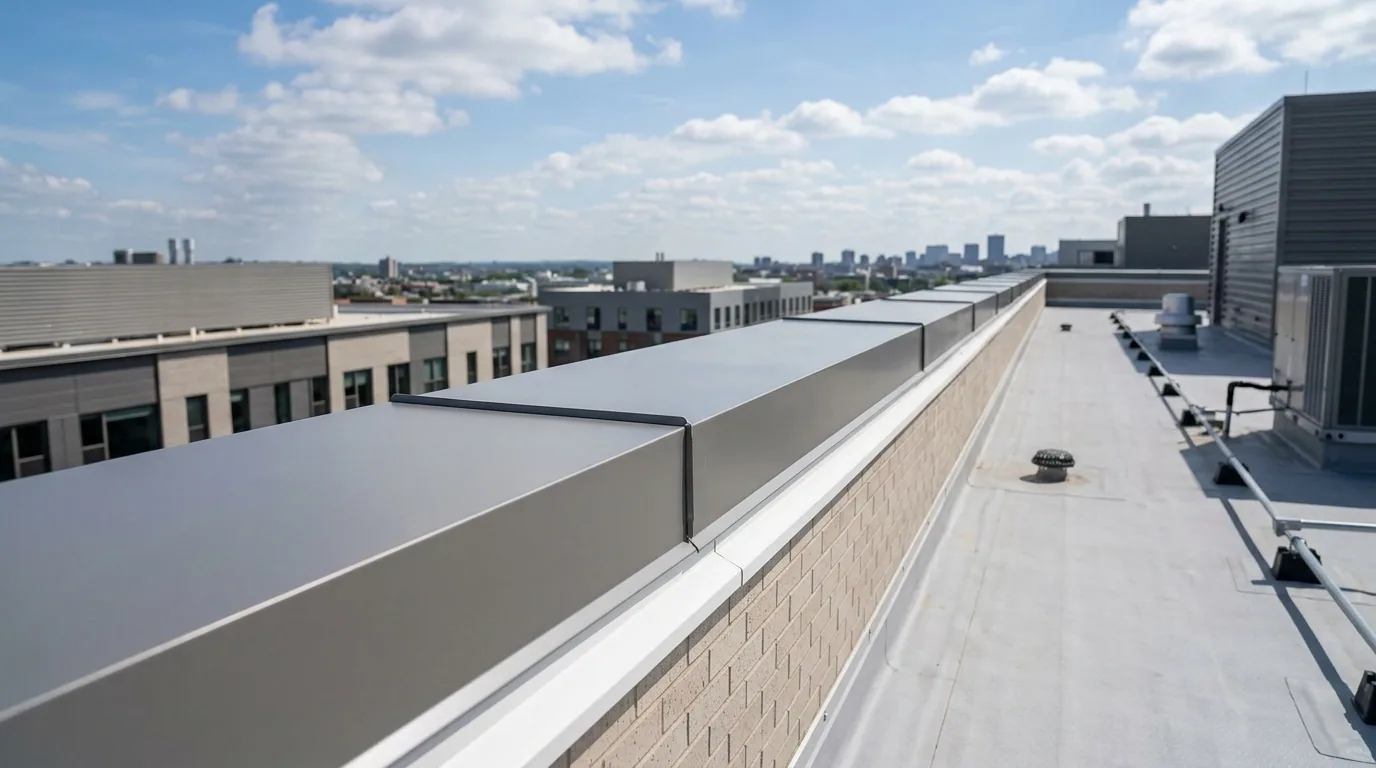
A drain may pass water through its throat and still leak at the flange. We inspect the strainer, bowl, sump, clamping ring, membrane tie-in and overflow. At a parapet, coping joints, fasteners, splice plates and metal returns can open a path behind the edge. A scupper needs a secure transition from metal to membrane. We distinguish a blocked outlet from a failed connection because clearing debris does not repair a loose flange or damaged flashing.
Wilton's mixed-use pattern links Danbury Road and the Norwalk River. A roof has a smaller water route from field membrane to outlet, so we check the drain connection and the membrane leading into it. We document ponding, debris, displaced metal and open laps at the roof itself. Drain and scupper work addresses a water outlet; coping and edge-metal repair addresses the perimeter. Each detail gets a separate scope when its failure and repair method differ.
Repair boundary: stop at sound roofing
A focused patch works when the surrounding membrane remains attached and the tie-in can reach dry, stable material. We remove the failed section, prepare the surface and connect compatible roofing to the sound field. If the opening exposes wet insulation, crushed cover board or a soft deck, the cut line has to include that layer. Closing over moisture may leave the interior symptom quiet while the affected assembly remains in place. We describe the added removal before permanent close-in.
Transit-oriented mixed use in Wilton links Danbury Road with the Norwalk River. For a building along Danbury Road, we record its access route, photos, and repair boundary against that roof's own plan. Commercial roof repair can resolve a contained failure; separated wet areas or repeated seam splits may justify comparing a wider system scope.
Seasonal stress: inspect the terminations
Stamford's winter climate brings recurring snowfall and subfreezing nights, conditions that put freeze-thaw movement, drainage and snow-load checks on the market maintenance list. We inspect open terminations, displaced coping and blocked drains after winter weather, then check seams and metal transitions as temperatures rise. A Wilton Center repair still follows the condition of the roof we inspect.
A maintenance visit can clear debris, record new splits and note whether a seal or flashing detail needs a closer look. Preventive roof maintenance is useful when the assembly still has serviceable material and accessible details. Where a leak returns at the same curb or drain, a repeated surface patch may miss the connection below it. We compare the repair boundary, moisture extent and attachment before recommending coating, recover or replacement. A roof with open drains can hold water against seams after rain; we check that overflow paths discharge clear of the wall. At metal edges, loose fasteners and moving returns can widen an opening as temperatures shift. Those observations help separate routine cleaning from a repair that requires membrane removal.
Access and cost: define the work before removal
Cost changes with roof material, removal depth, number of connected details, wet insulation, disposal and protection below. Access can also affect staging: Wilton Center's sidewalks and pedestrian link toward the station make it sensible to confirm where equipment and materials can move without blocking a shared route. The manager sets property rules; we record them as job assumptions. The written scope separates confirmed work from any condition that would change the amount of removal.
For a permit application, Connecticut's current code package includes the 2021 IBC and IECC with state amendments; the filing date controls which rules apply. We can record roof area, existing layers, penetrations, drainage and proposed tie-ins for the project review. Send the reported room, prior service notes and property access requirements before arranging a walk. We will inspect the assembly and set out the repair boundary, including any condition that would justify a broader roof scope.
Commercial Roofing Questions
Can water show up away from a roof seam?
Yes. A deck joint, insulation layer or curb can carry moisture before it reaches a room. We compare the stain with roof slope and nearby transitions, then test the likely route where access allows.
What does Wilton Center's station access change?
It can affect delivery and staging choices around shared paths. The property contact confirms the usable route and work area, while the roof inspection identifies the membrane and repair method.
How far should removal go when insulation is wet?
We continue the cut to dry, stable material after finding wet insulation or a damaged layer. The scope records the exposed edge and any added work before the roof closes.
Does a blocked drain explain every leak near it?
No. Debris can slow discharge, but water may enter at the flange, overflow or nearby membrane tie-in. We inspect the bowl and connected details before setting scope.
Which inspection finding turns a wilton center repair into a broader roof scope?
Wet layers across separate areas, weak attachment or repeated failures can make a patch less dependable. We map the affected roof and compare repair, recover and replacement options against the assembly found.