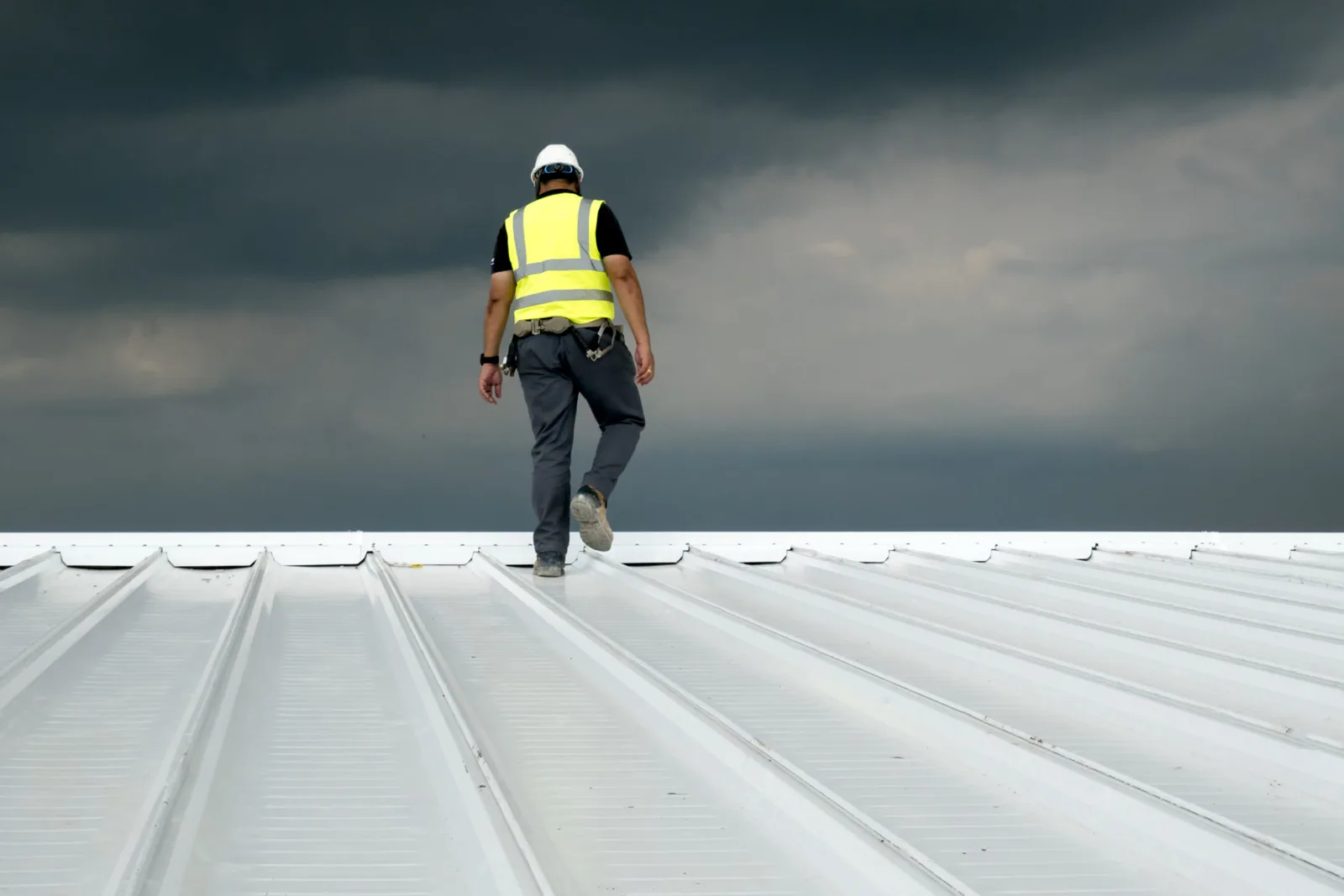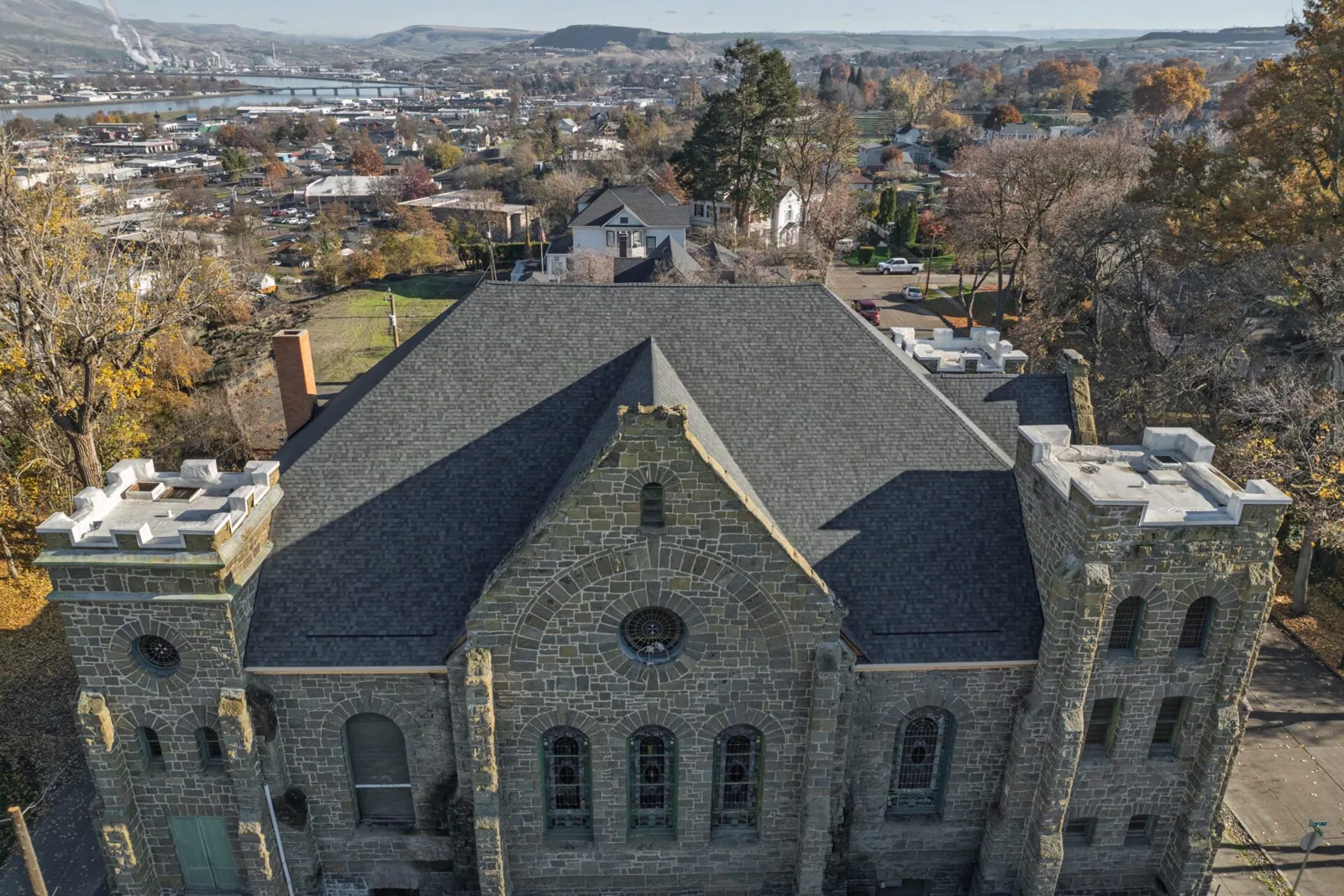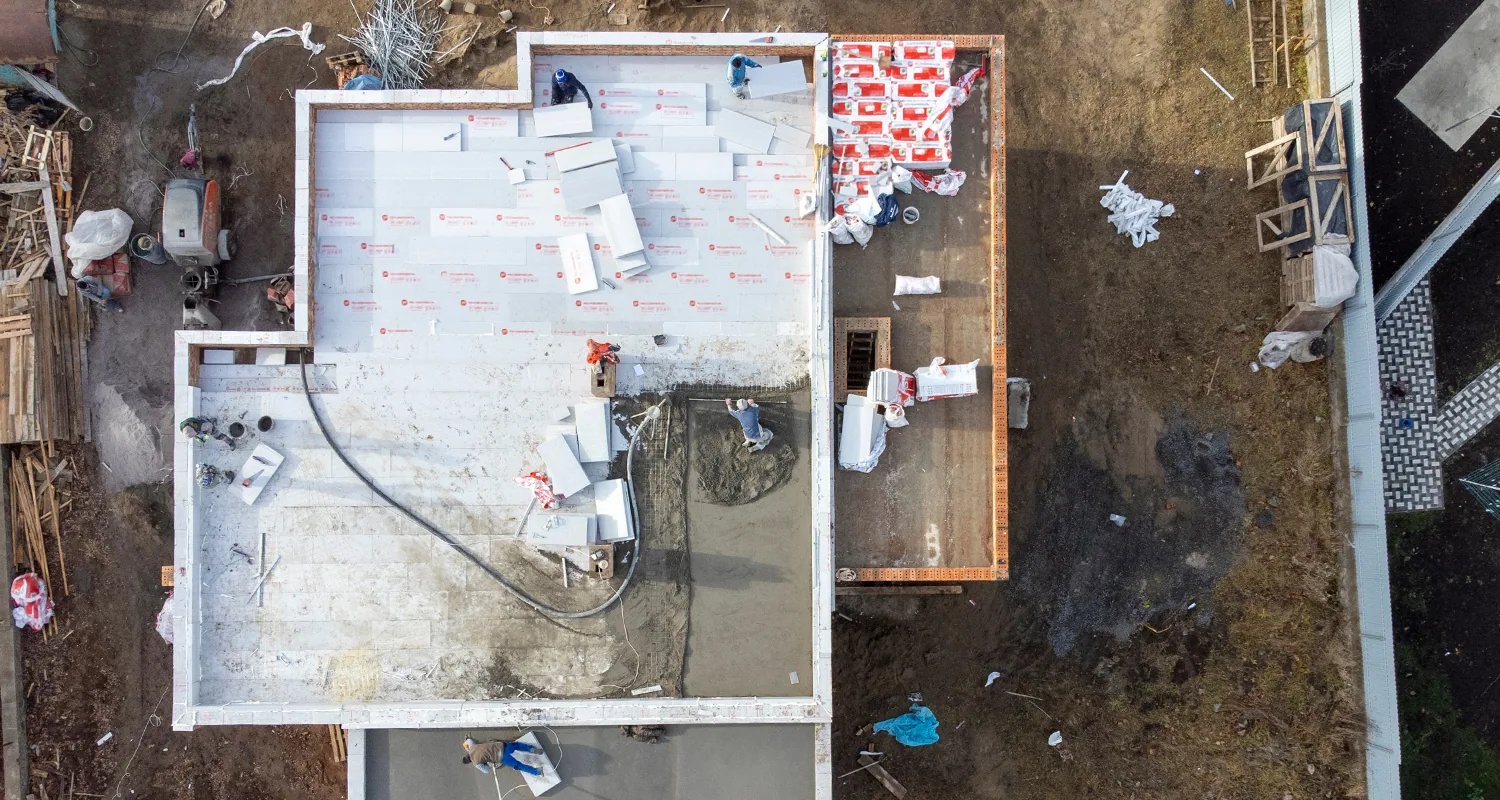
A broad roof field can hide small failures where it meets equipment, walls, and drains. Drone imaging gives us a way to review large or difficult-to-access areas and mark visible details for a closer look. In Stamford, each flight is planned around the roof boundary, owner permission, and activity at the time of capture. We orient each view to a roof section, equipment group, or perimeter transition. A hands-on inspection remains the next step when the roof condition needs contact, testing, or repair. Before a flight, we learn the roof layout, the purpose of the review, and the areas where staff have reported leaks. That gives the images a practical job. We label each view with enough roof context for a technician to relocate the feature and check it by hand, rather than treating every visible mark as a failure.
Coverage: map the field before choosing a repair
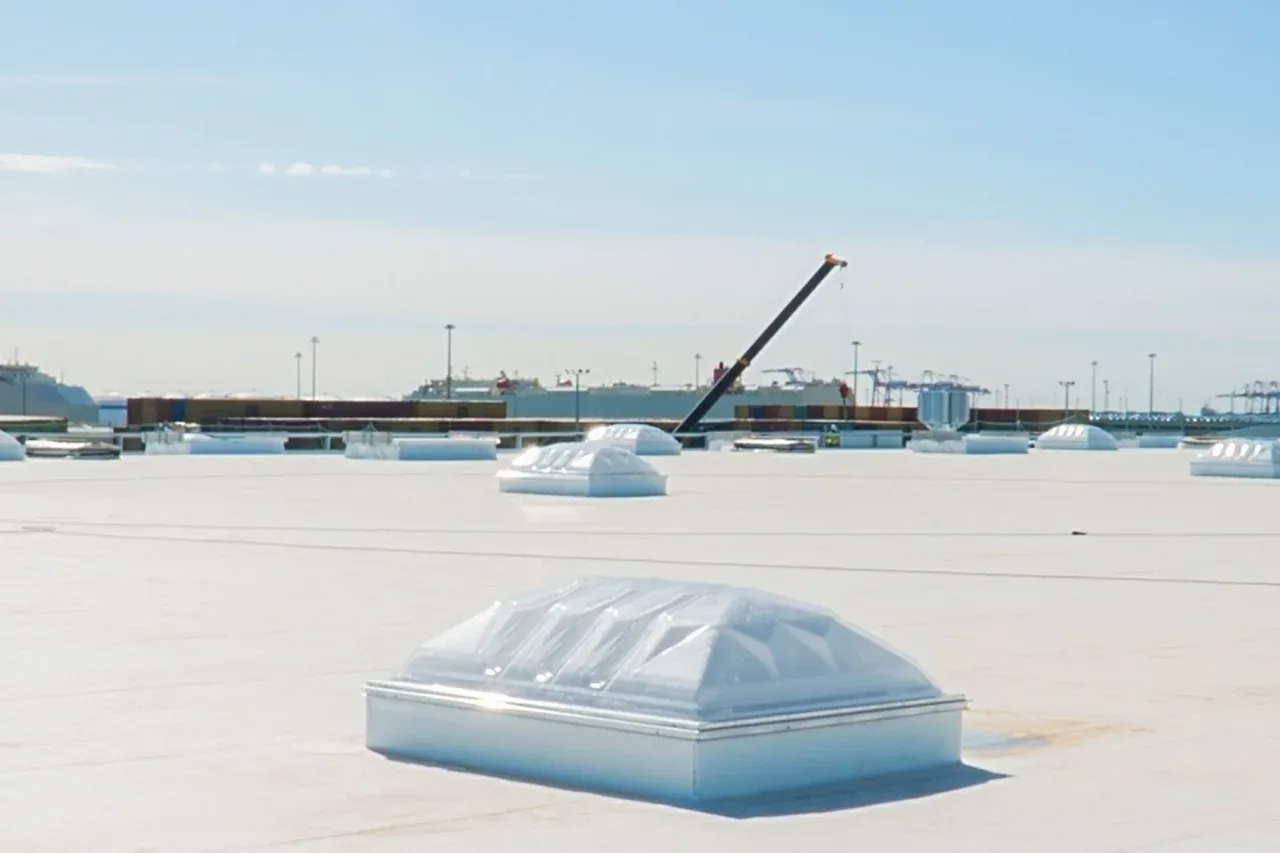
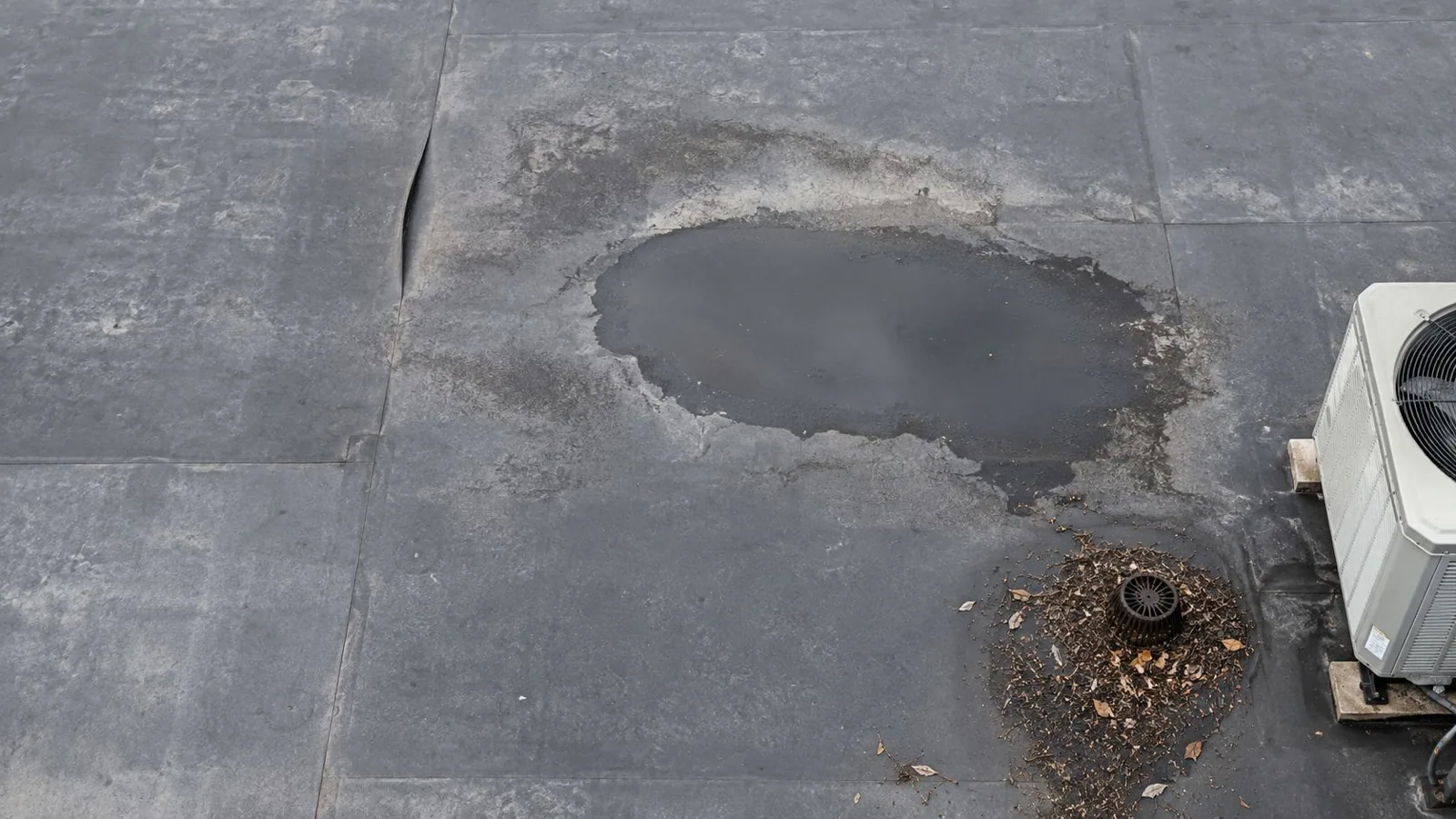
We use the flight to orient the roof surface, edges, drains, equipment, and transitions. A high-resolution image can show a displaced piece of metal, debris at a drain, an open-looking seam, or a roof area that needs closer review. The image maps visible features to a roof zone for follow-up. Warm roof surfaces and rooftop equipment can create visual contrasts; we mark equipment zones and service paths so a technician can compare those areas with nearby details. We capture useful angles and tie observations to a roof area. The resulting condition report can identify where a technician should walk, photograph, or test next. Views from several angles can help distinguish an edge detail from a shadow or surface discoloration. We make sure the imagery has enough context to locate the feature again, then label the areas where scale, angle, or obstruction limits interpretation. A direction label and wide reference frame help a technician relocate the feature without mistaking a shadow for a defect. We label views by roof section and direction, include the capture date, and keep a wide reference frame beside close views of an edge or penetration. This context lets a technician relocate a feature and compare it with the roof plan.
Access plan: account for the building and surroundings
Flight access depends on permission, weather, safe launch and landing points, and the operating restrictions for the roof. We confirm who controls the area and which sections may be captured, then keep the flight path within the approved boundary. Loading or vehicle movement can affect staging, so the timing is agreed with the responsible contact. In the Harbor Point area, we confirm that same approved boundary before image capture. For work near Springdale, loading activity can affect where a launch point is practical. Wind and precipitation can make imagery unsafe or unreadable; if coverage cannot be completed safely, we record the unscanned area and identify an appropriate hands-on check. The image set is limited to areas included in the owner's permission.
Image review: distinguish a visible mark from a failure
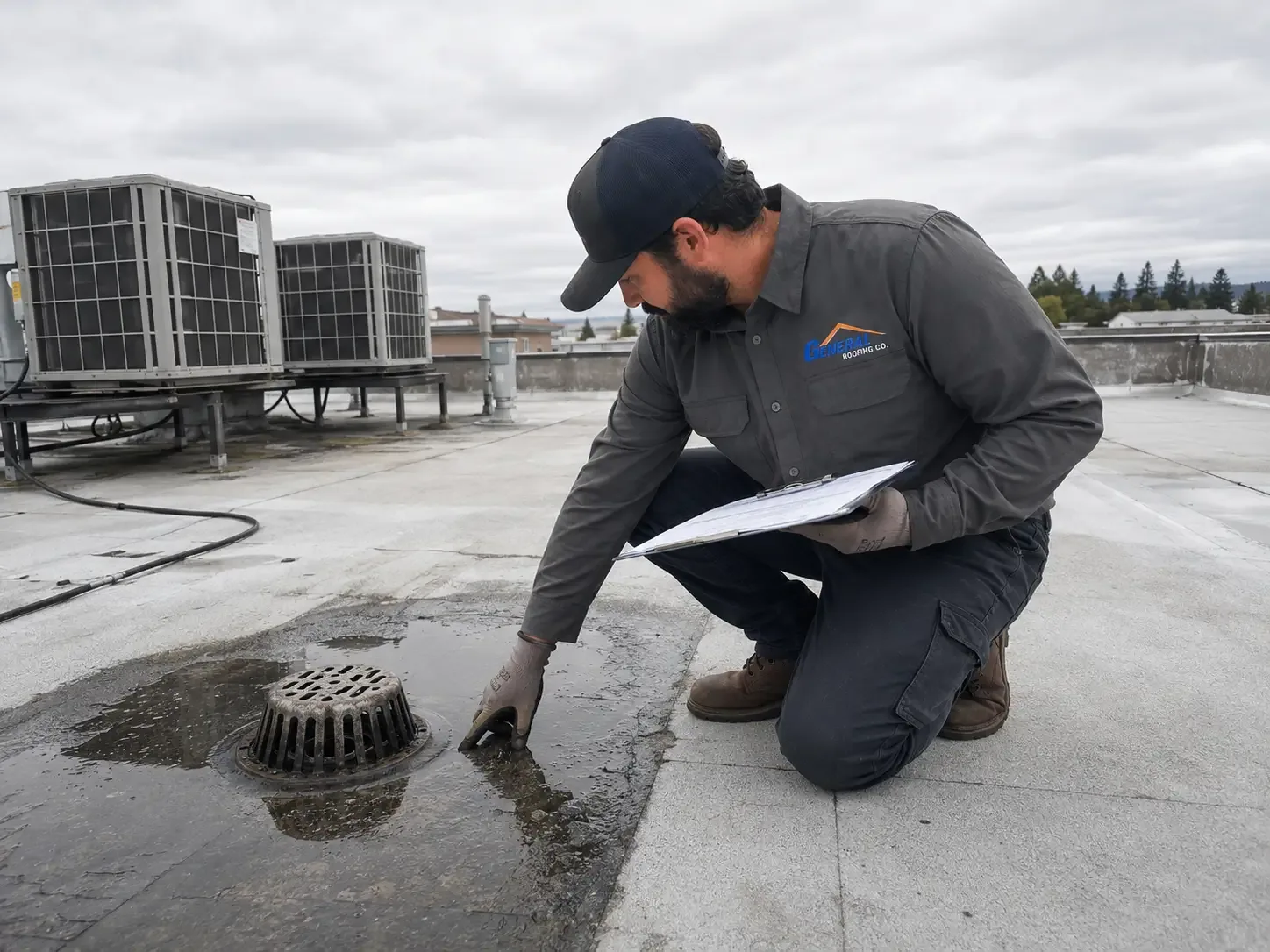
We review the image set for changes in membrane appearance, displaced components, ponding patterns, and details that deserve hands-on verification. A dark area may be shade, a surface condition, or moisture, so we compare its shape and location with nearby roof details and reported leaks. We mark the location and compare it with leak reports or prior roof records. If the image points toward drainage, our drain inspection checks the bowl and surrounding flange. An edge or curb concern may call for flashing review. Each recommendation ties the picture to a next inspection step. We also mark areas hidden by equipment or parapet geometry and identify the roof-level check needed to assess them.
Follow-up: pair images with roof-level findings
Drone views help locate roof sections for a targeted roof-level inspection. We use the images to locate areas for checking the membrane, lap, termination, or substrate where safe access permits. For a TPO roof, a close view can help direct attention to welds and transitions, while the field condition still requires confirmation. On a thermoplastic roof, we compare the photographed seam with the installed lap, weld, and termination on a TPO system. A roof survey can combine property records with image findings for a larger asset review. Roof-level follow-up may involve checking a weld, probing a metal return, clearing a drain, or testing for moisture. We match the method to the visible question and record which section needs a hands-on check. If prior photographs are available, we compare the same roof angle and note a visible change over time. A consistent orientation helps reviewers distinguish a shifted component from a change in camera angle.
Decision use: make the next visit more precise
Each image links a roof section to a next action: hands-on review, moisture testing, or repair assessment. We label areas for a technician, note obstructions and limits, and identify whether the next step is a moisture test, hands-on review, or repair. The image set is grouped by roof section so each follow-up question points to a defined area. When images show a detail that could be open, our repair assessment verifies the membrane and sets a written boundary. If the image review identifies concealed moisture as the open question, an infrared moisture survey can be considered separately. The marked views help a technician relocate each detail without relying on a verbal description. We can group the images by roof section, connect them to the reported leak, and list the follow-up question for each point. The result supports a repair or testing decision while identifying the next roof section and inspection method. A clear label links each marked view to a roof plan reference, reported leak, or visible transition so a service team can return to the right location.
Commercial Roofing Questions
What roof-level details can aerial images document before a closer examination?
Images can help locate visible surface changes, debris, equipment, edges, and areas that need closer review. We use them to map a large or difficult roof and identify where a hands-on inspection should focus. We label views so staff can locate the feature again and compare it with the reported roof area.
Which roof conditions require hands-on verification after aerial imaging?
No. Images help us plan and document the roof, while a technician checks details that need contact, probing, moisture testing, or repair. We explain which findings are visible and which need a closer inspection. The next step follows the question the image leaves open. A close roof walk can verify the transition shown in the view.
Are drone flights possible over every Stamford building?
Access depends on site permission, surrounding activity, weather, and applicable operating restrictions. We review the property and planned coverage before scheduling. If flight is unsuitable, we can discuss another way to inspect accessible roof areas. A ground or roof-level method may be more appropriate for the conditions.
Will the images tell me if insulation is wet?
A visible mark may suggest an area for testing, but ordinary drone imagery cannot confirm moisture below the roof surface. We can recommend infrared imaging or a core cut when moisture extent affects the repair decision. The image set helps locate the follow-up area. Testing is focused where the result can change the scope.
What do I receive after the image review?
You receive a set of roof views and findings tied to locations, plus recommended next steps. We identify areas needing hands-on review and state any limits in coverage. If the images support repair or testing, the written scope says what condition remains to be confirmed. The marked locations also help coordinate access for the follow-up visit.