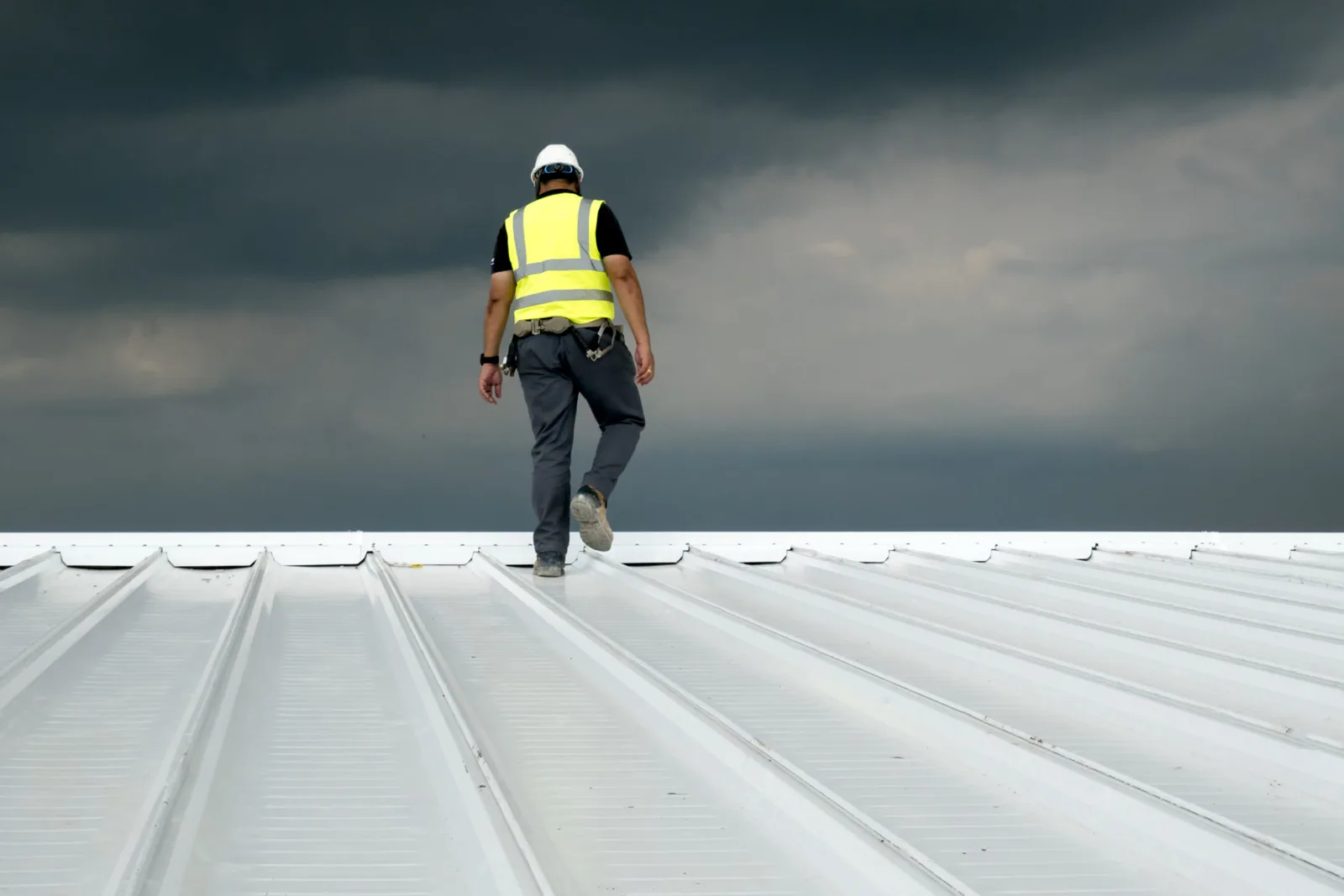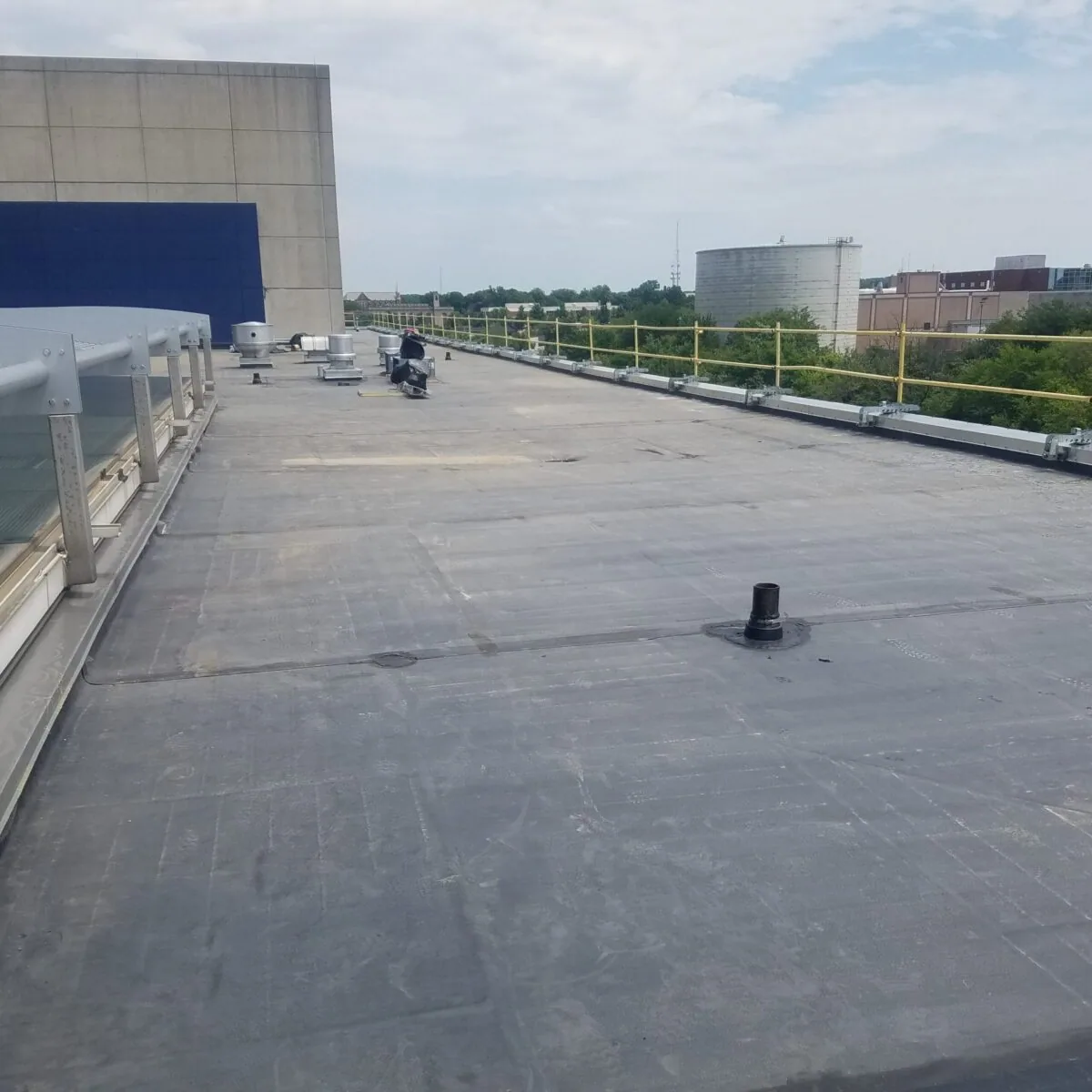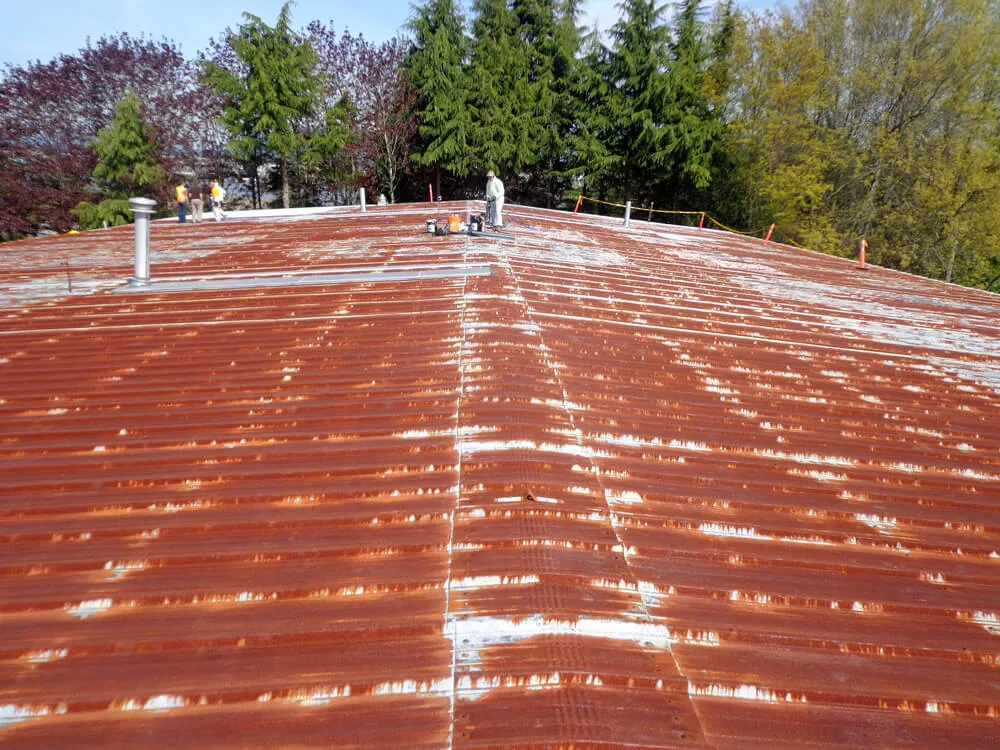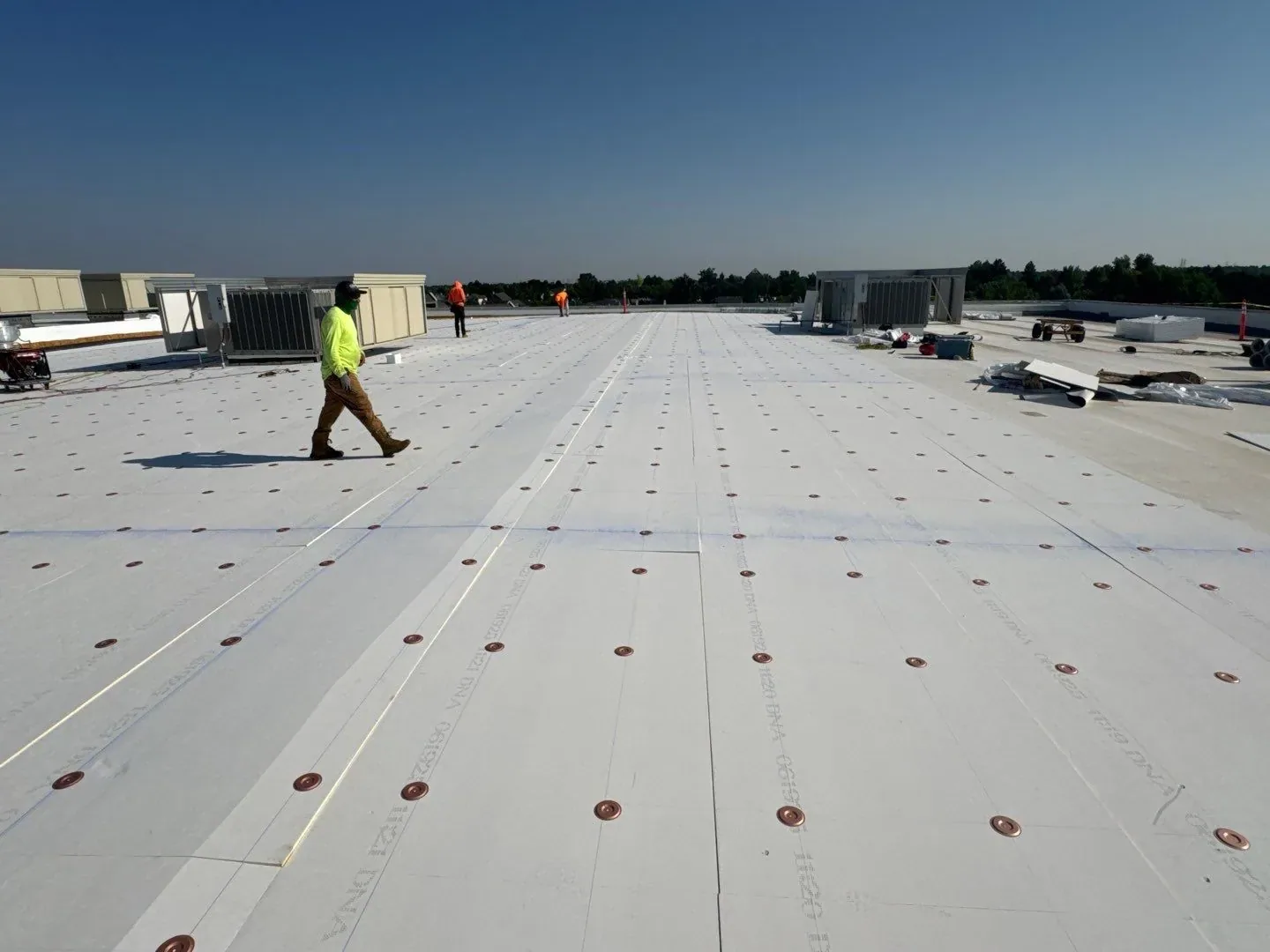
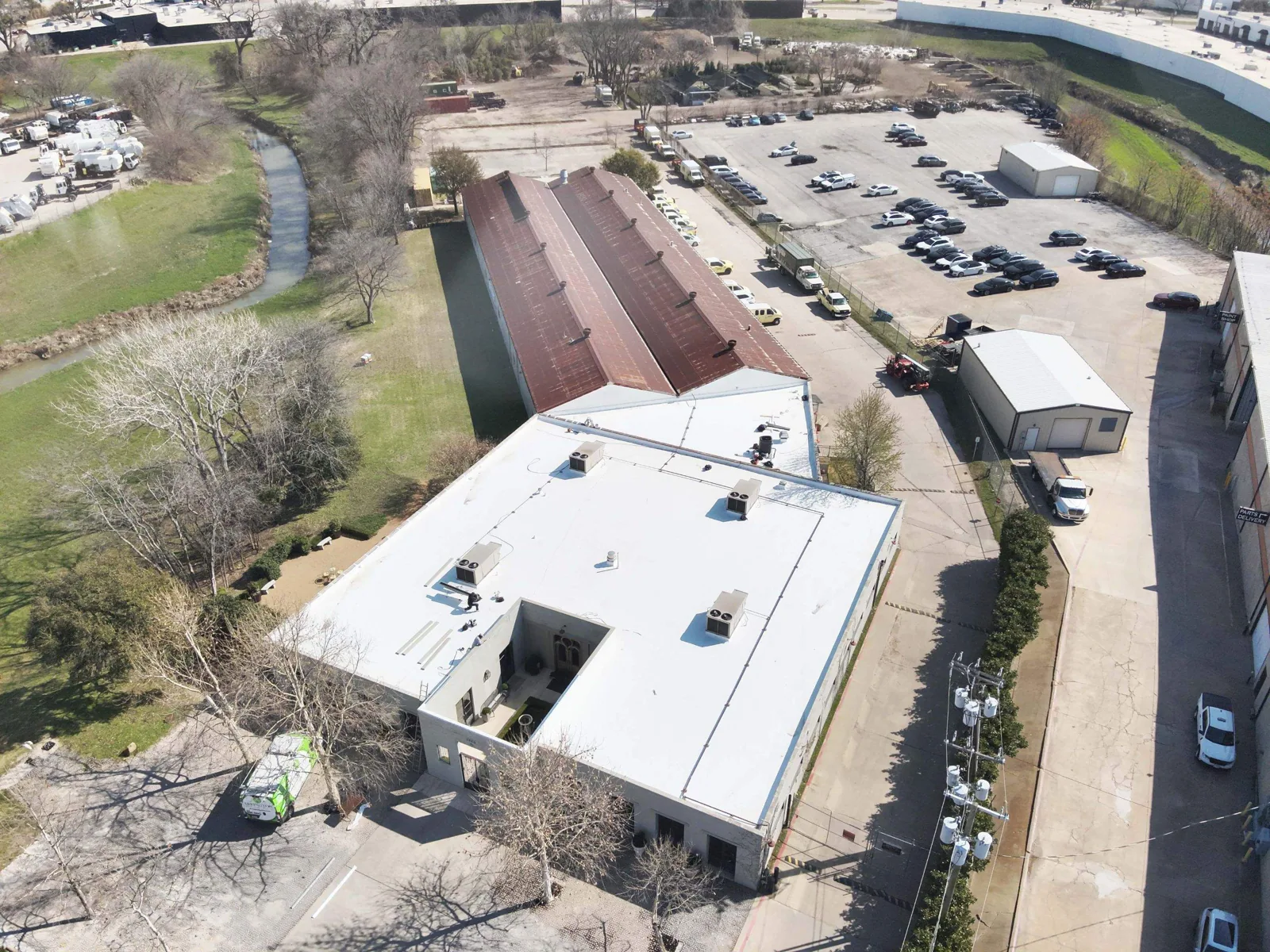
A dark, aging roof can hold heat, but a reflective finish will not correct wet insulation, open seams, or a drain that backs up. We start with the assembly and its condition. Stamford summer normals show daily highs in the low-to-mid 80s Fahrenheit and seasonal cooling demand. That makes surface reflectance worth evaluating alongside insulation and rooftop equipment, not as a stand-alone promise of lower bills. Downtown and South End buildings include mixed uses, and Harbor Point contains offices, homes, shops, hotel space, and public areas across a broad district. Those settings can put occupied rooms, air handlers, and roof traffic close to the work. We compare coating, recover, and replacement paths after checking adhesion, moisture, slope, edge metal, and existing membrane. A roof inspection ties the proposed cool-roof treatment to defects that must be corrected first.
Surface reflectance: separate heat from roof condition
A lighter surface changes how much solar energy the roof absorbs. The result depends on the complete assembly, building use, insulation, ventilation, and how much rooftop equipment interrupts the field. We do not treat a reflective coating as a substitute for repair. A blister, split seam, loose termination, or wet layer remains a defect after the surface color changes. At the Downtown Stamford office, housing, and retail mix, a property manager may be weighing comfort, maintenance, and capital timing at once. We identify which concern the roof can address and which belongs to HVAC or controls. The evaluation should distinguish a measurable roof-system change from a whole-building energy claim. A reflective membrane or coating can be part of a roof plan when the substrate is stable and the detail work is sound. If those conditions are absent, the repair line comes before the finish.
Substrate and membrane: test what can carry the finish
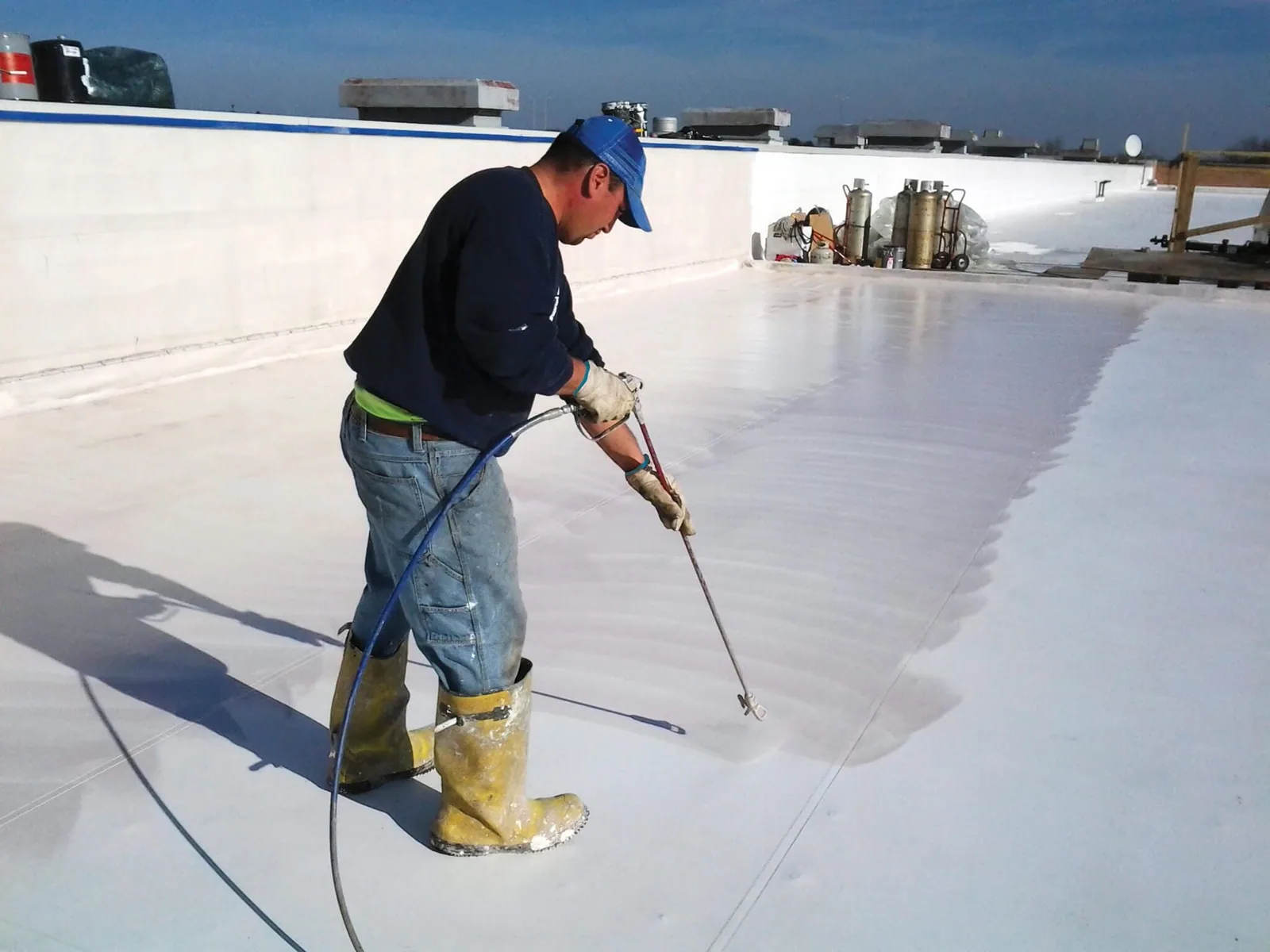
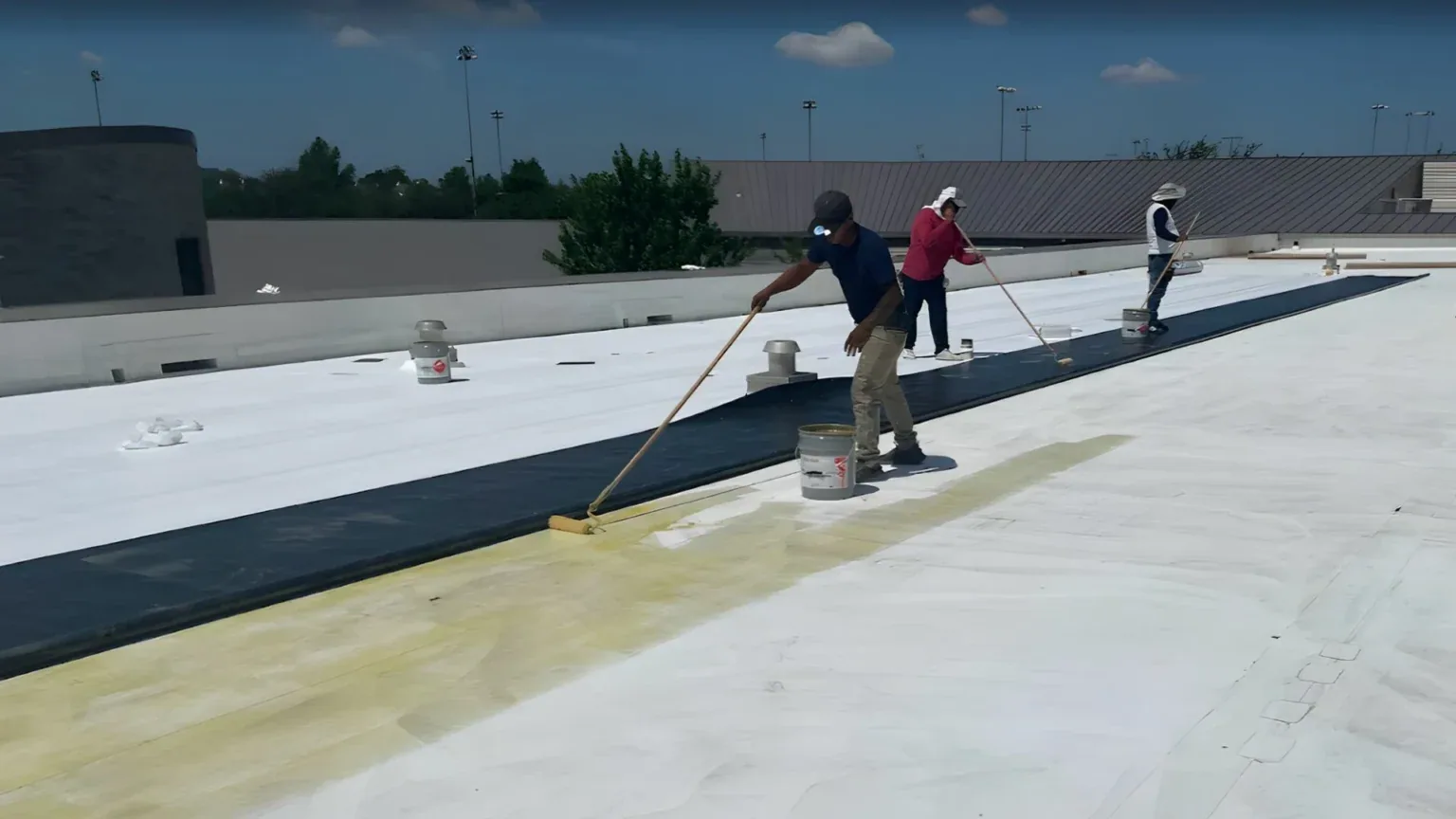
Coatings need a compatible, clean, dry surface with enough adhesion for the specified application. We inspect existing laps, repair patches, metal edges, penetrations, and any areas that remain damp after drainage. Test patches can expose an adhesion problem before the full surface is prepared. A silicone coating and an acrylic coating respond differently to water exposure and project conditions, so the system choice follows the roof rather than a label. We check whether the existing membrane can accept another layer and whether incompatible repairs must be removed. The scope includes preparation, reinforcement at details, application limits, and inspection points. It also says where coating stops. If wet insulation, corrosion, or movement makes the base unreliable, a replacement evaluation is the sounder next decision. Material installed over a weak bond line only transfers the weakness to the new surface.
Drainage and edge details: keep the water route open
Reflective systems still need a clear path to drains and scuppers. Coating must not bridge an opening, narrow a throat, or cover a detail that needs movement. We check drain bowls, overflow routes, parapet edges, metal returns, and transitions where the field terminates. Stamford's coastal exposure includes wind, precipitation, surge flooding, and erosion along Long Island Sound. That hazard mix makes edge securement and drainage condition important, but it does not make a roof surface a flood barrier. At Norwalk Center, a pedestrian-scale business concentration sits among commercial corridors, so roof work above active storefronts also needs a safe drop zone and a dry-in sequence. Drain inspection checks the openings before a reflective layer is specified. Ponding caused by slope or a blocked bowl should be addressed directly, not concealed beneath a finish coat. We also confirm that overflow routes remain usable after surface preparation. Masking protects an outlet during application, while a walk at closeout checks that no coating or debris has narrowed the path. An unchanged water route matters as much as the finished field.
Coating or new roof: compare the boundaries
A coating may extend a serviceable roof when the existing membrane is stable, adhesion tests pass, and repairs can restore the critical details. A recover adds a new assembly above an existing roof only when code, moisture, and attachment conditions allow it. Replacement removes material that cannot serve as a reliable base. We document those separate boundaries so the owner can compare scope instead of comparing product names. The coating restoration scope identifies surface preparation, reinforcement, drain protection, and the area excluded from treatment. A recover review asks a different set of questions about layer count, deck, and concealed moisture. If the deck or insulation needs investigation, we note the test and explain how its result would affect the recommendation. Stamford's Route 1 segment spans 3.2 miles between Greenwich and Darien and carries 12,700 to 29,800 vehicles daily. Delivery and staging near that corridor should be planned around confirmed property access.
Work sequence: protect occupied space below
Surface preparation creates dust, noise, and material movement. We map roof access, protect drains, identify staging limits, and decide how a work area will be closed if conditions interrupt application. Air intakes, loading doors, and paths used by building staff need to be identified before cleaning or spraying begins. We also note equipment that could be affected by overspray or temporary shutdowns. A written capital plan can place a reflective-roof project beside insulation or drainage work, making the order of tasks clear. The sequence should state which repairs precede coating, when the substrate is dry enough, and where a quality check will occur. At mixed-use buildings, the work line can sit above residents, retail, and office areas at the same time. We define those constraints without assuming every tenant uses the building alike. The foreman needs a roof map that marks drains, curbs, seams, and any section reserved for another trade. That map becomes useful during preparation and closeout. Before committing to a full application, a test area can show whether the coating bonds to the existing surface after the specified preparation.
Commercial Roofing Questions
Will a reflective roof lower my building's cooling bill?
A reflective surface can reduce solar heat absorbed at the roof, but the utility effect depends on insulation, HVAC efficiency, internal loads, controls, and operating hours. We can define the roof work and its measured surface properties. A whole-building savings estimate needs those other inputs and should not be promised from roof color alone.
Can reflective coating go over an existing membrane?
It can when the substrate is sound, dry, clean, and compatible with the selected coating. We inspect seams and repairs, then use adhesion testing where it can change the decision. Wet insulation or a weak bond can move the recommendation toward a recover or replacement instead.
What happens to drains and scuppers during coating?
We keep drain openings clear and protect them while surface material is prepared or applied. Drain bowls, overflow routes, and nearby membrane turns need separate checks. If ponding comes from a slope or blocked outlet, the scope should address that condition before a new surface is installed.
Does a cool roof mean the roof is insulated correctly?
No. Reflectance and insulation perform different jobs. We inspect for wet or compressed insulation and note where a test would clarify the assembly. A reflective finish can be considered after the substrate and roof details can support it.
How do you plan the work above active tenants?
We identify access routes, air intakes, staging areas, and the spaces below each work zone. The sequence limits open roof area and states how the building is protected if preparation or application pauses. Share operating constraints before the scope is set so they can be built into the work boundary.