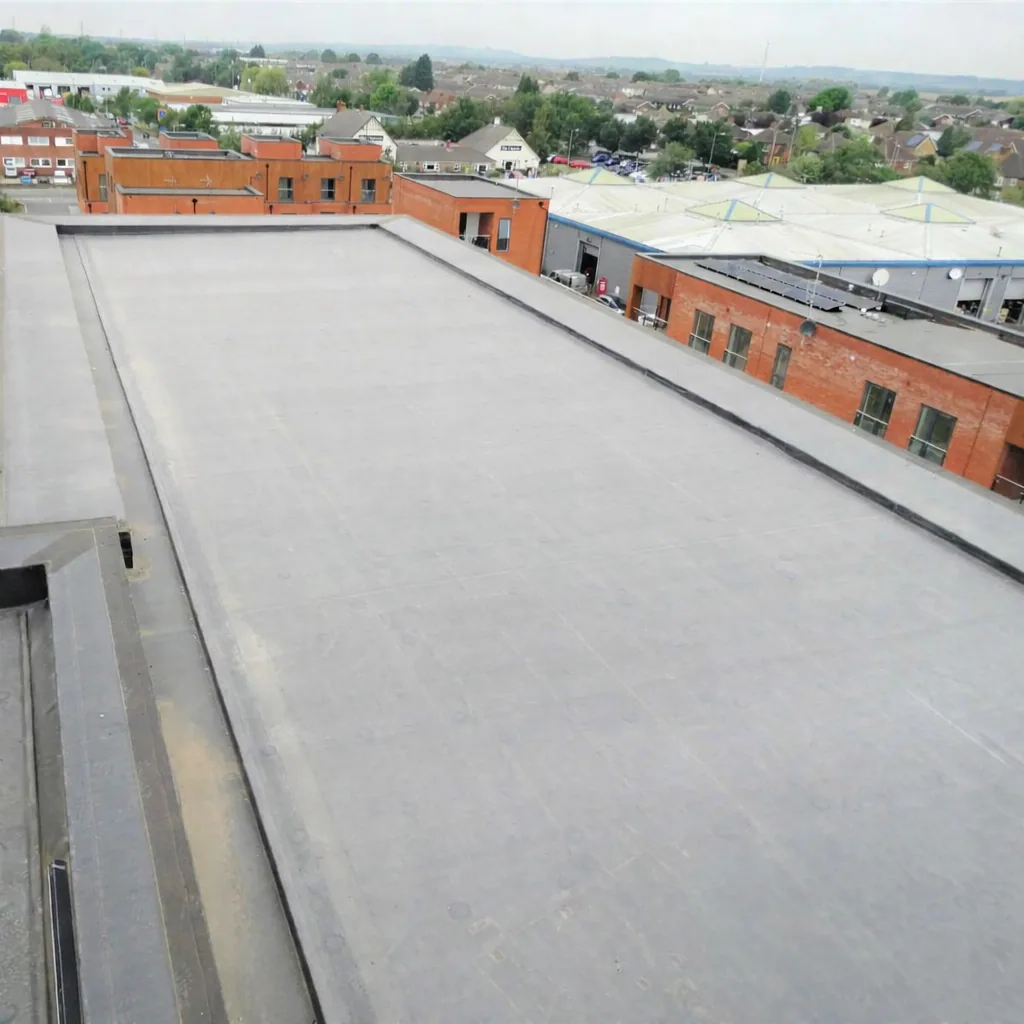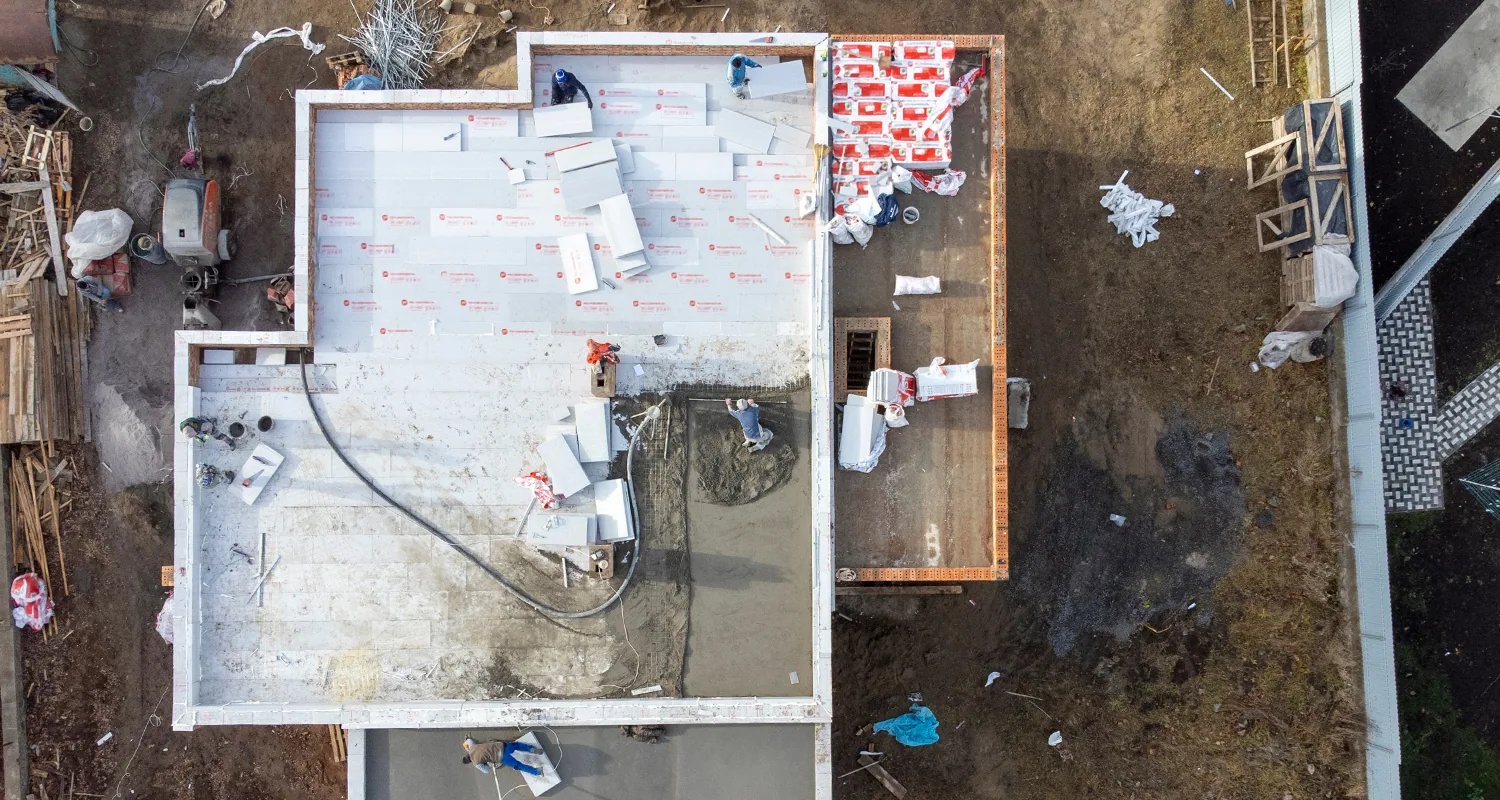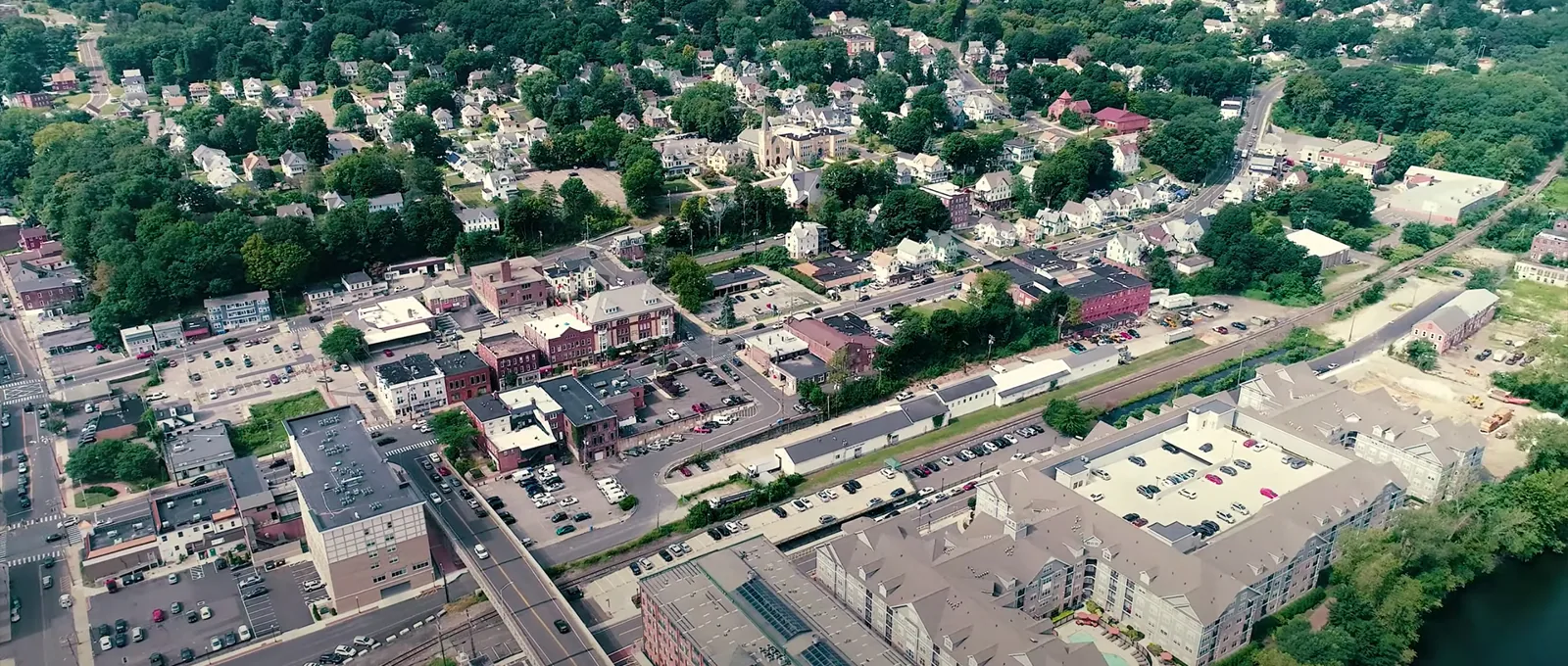
A low roof can hold water beside a seam even when the nearest drain is clear. Along Trumbull's Route 111 and Route 25 corridors, Trumbull, CT, we check the membrane, slope, outlet and connected edge before choosing a repair. Business planning areas along Routes 111 and 25 include Trumbull Center, Reservoir Avenue and Lindeman Drive. More than one million square feet of commercial space has been redeveloped or reoccupied in Trumbull. That measures commercial floor area, not roof size or condition. The roof walk identifies the assembly, leak path and work boundary at each property.
Planning areas: keep each roof record separate
Trumbull Center and Reservoir Avenue are among the business areas tied to Routes 111 and 25. Within those broad corridors, each property has its own use, roof system and access rules. We confirm each property's occupied areas, ladder or hatch access, equipment clearances and staging limits with its manager. The same route can serve buildings with different membranes, drainage layouts and previous repairs.
With Trumbull about 98 percent developed, future commercial growth is expected to come through infill and redevelopment. For an owner assessing an existing asset, the roof condition can be documented alongside other project decisions. We note open seams, wet insulation, curb details and drainage performance without assuming that the townwide redevelopment figure describes a roof. Roof capital planning can organize observed repairs by urgency, When work extends to Stratford Center, we document that property's roof condition and access limits on their own terms.
Water entry: inspect low points and transitions
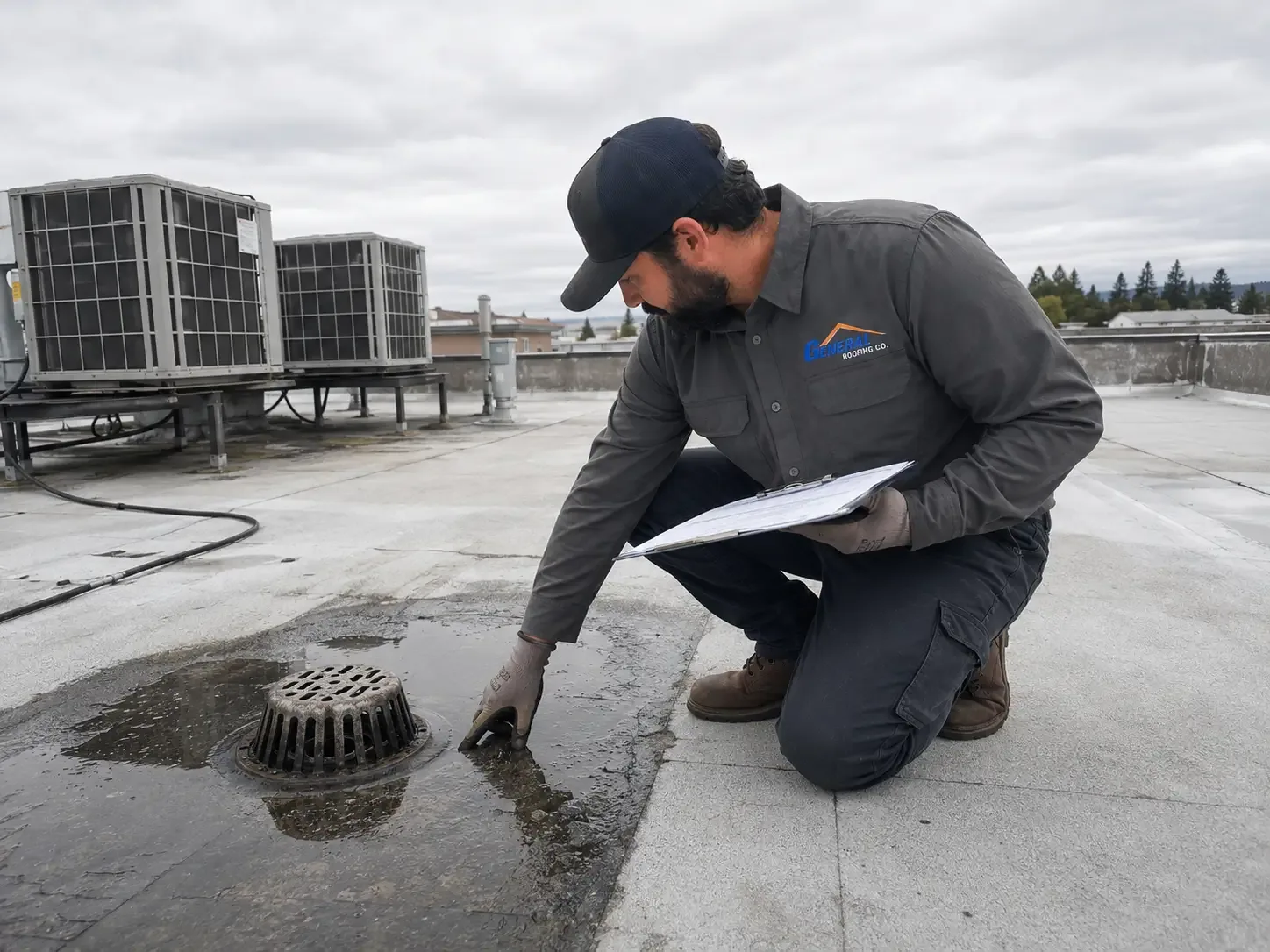
A ceiling mark may sit below the place water entered. We compare its timing and location with roof slope, seam direction, penetrations and low areas. A drain strainer can be clear while the clamping ring or membrane flange leaks. A curb can admit water at a corner, and a loose parapet return can carry it behind the edge. We inspect connected details first, then open material only where the evidence points.
Where adjoining sections differ in elevation, membrane or attachment, the transition can alter the water path. We inspect each section and the tie-ins between them before choosing a repair. Commercial roof leak repair starts with the reported path; drain and scupper work addresses the outlet and its membrane connection. If a curb, wall or roof plane meets the drain area, we check that transition as well. A single outlet cleaning may not correct a loose flange or split lap beside it.
Material match: prepare the seam for its system
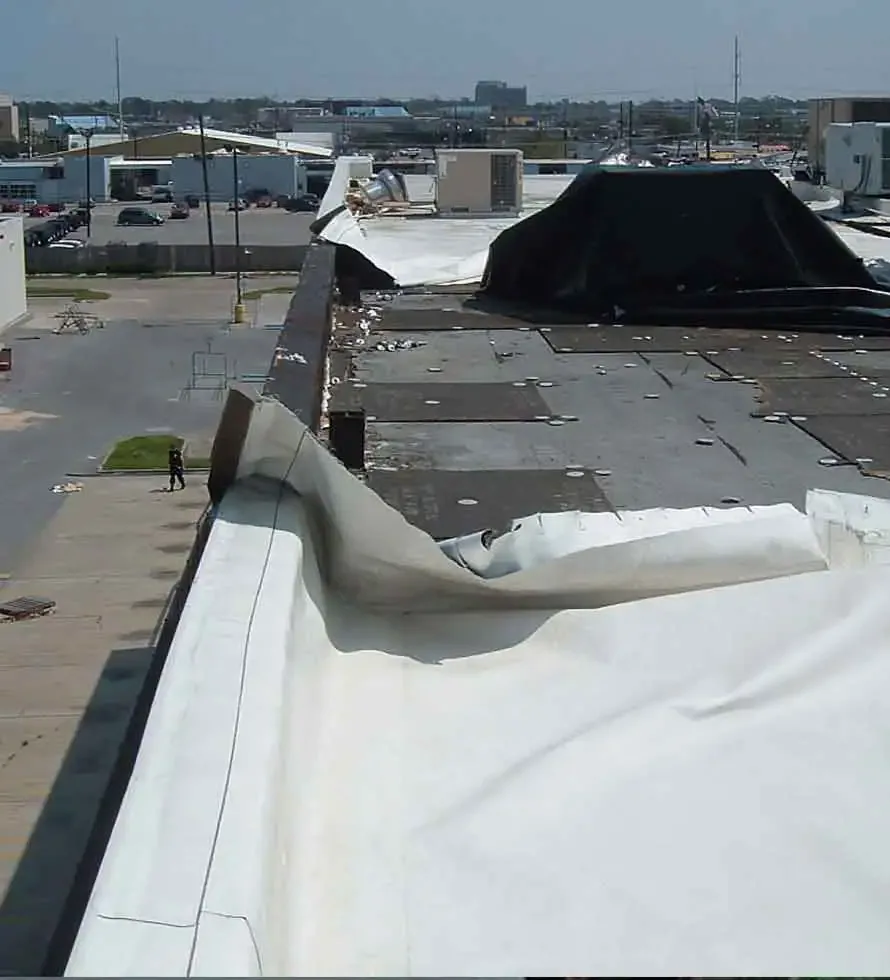
At a sheet seam, we test whether the existing surface can accept a weld or splice. A metal edge needs its own fastener and return check; on layered asphalt roofing, we inspect the cap, flashing and substrate that will receive the repair. Material, attachment and surface condition set the preparation. Previous coatings or repairs can affect adhesion. Wet insulation, loose cover board or rusted metal changes the work boundary and may require removal beyond the visible split.
A building's position near Route 111 or Route 25 does not identify the material on its roof. We inspect the assembly and state the compatible method in the scope. EPDM seam work requires different preparation from TPO repair. Around a pipe or equipment curb, the vertical flashing and corner transitions must meet the field membrane without an open edge. The scope names that connection, not just the square of sheet around it.
Repair or renew: compare the full affected area
A localized repair fits when the roof around it remains attached, dry and suitable for a tie-in. We remove failed material, prepare the surface and connect the patch to stable roofing. If the opening reveals moisture across cover board or weak deck, the repair must follow that layer. We protect the exposed area while the owner reviews any added removal, then close it after the substrate can accept the system material. When a roof covers additions or phased renovations, we sketch each area separately. Changes in slope, membrane or attachment can create a transition where water follows a different path. We inspect termination bars, end laps and exposed edges at those boundaries. If one zone was replaced and another remains older, the scope identifies which portion is included and which stays outside the present repair. We compare those seams with interior reports before setting the work boundary.
Repeated leaks, detached seams or wet areas in separate roof sections can make a broader scope worth comparing. A coating needs a dry, compatible substrate; recover depends on existing layers and attachment. Replacement may be the clearer option when repairs cannot reach reliable boundaries. Commercial roof repair can stay focused on a contained defect, When work extends to Danbury Road in Wilton, we map each building's repair boundary and access needs separately.
Weather and drainage: watch seasonal movement
Stamford's winter climate includes recurring snowfall and subfreezing nights, giving this market reason to check snow loading, freeze-thaw movement and drain flow. At a Trumbull roof, we inspect exposed terminations, coping, seams, and outlets for movement or blockage after winter weather. Summer heat can move membranes and metal transitions. If a leak returns after a season changes, we compare the affected detail with prior photos before extending the repair boundary.
Trumbull's infill and redevelopment outlook may make project sequencing important for an owner planning multiple improvements. The roof scope can identify temporary protection, dry-in points and any added removal that needs approval. Preventive roof maintenance helps record accessible drains and newly opened seams while the assembly remains serviceable. A recurring issue at a curb or drain deserves a connection check before another surface layer is applied.
Access and cost: state the work assumptions
Cost follows the roof material, removal depth, connected details, wet insulation, disposal and interior protection. A curb rebuild has different labor from a short seam patch. Delivery and staging limits also affect setup. We confirm which paths can be used and whether occupied rooms below need protection. The estimate separates included work from concealed conditions that could add removal, so the owner can review the repair boundary before work expands.
For a roof alteration, permit review turns on the proposed scope and submission date. Connecticut's 2022 code incorporates the 2021 IBC and IECC with state-specific changes. We can prepare a roof note identifying existing layers, drainage points, penetrations and proposed tie-ins for the reviewer. A roof walk can map the leak area, outlet and repair edge first. We document which observed conditions fit a contained fix and which warrant comparing a wider system scope.
Commercial Roofing Questions
Does the town's commercial-space total describe roof area?
No. It refers to commercial space redeveloped or reoccupied. We inspect each roof's membrane, drainage and attachment directly before recommending repair or replacement.
Can a clear strainer still leave a roof leak?
Yes. The flange, clamping ring or nearby membrane can fail while the basket stays clear. We inspect the outlet and surrounding seams before deciding what to repair.
What does infill or redevelopment change in a roof review?
It can make a clear record of existing conditions useful to a larger project decision. We document the assembly and repair limits without assuming the roof's age or remaining life.
Which roof conditions set the edge of a repair?
The patch boundary reaches material that can hold a stable connection. Wet insulation, weak attachment or a damaged deck may require added removal, which we describe before closing the opening.
Can work be divided around active operations?
We confirm access, delivery and protection limits with the manager, then set a sequence and dry-in point for the affected area. The sequence follows the roof and work zone in front of us.