Wind-driven rain can enter at a short curb seam and travel below the membrane before a room shows a mark. In New Canaan, CT, we trace that route through the actual assembly, then decide whether the repair can stay local. The New Canaan Branch Line connects the town with the New Haven Line and New York commuter rail. We identify the reported room, inspect nearby penetrations and write down the repair edge. A roof inspection begins with the water path, not a guessed patch location.
Work window: coordinate the roof with daily movement
New Canaan participates in southwestern Connecticut's regional planning network with Stamford, Darien, Norwalk, Greenwich, Wilton and Westport. We confirm whether material can arrive during a limited window, which roof access point is available and whether a shared passage must remain clear. The estimate names those limits because staging and dry-in planning change when equipment cannot be brought close to the work area.
Regional transportation planning also covers safety, transit, highway performance and economic vitality. On a roof job, the practical question is narrower: how can the crew protect occupied space while keeping the repair sequence controlled? We identify the work zone, access path and interior area below it before opening a membrane. If a property contact has different schedules for adjacent roof areas, each gets its own sequence and close-in point. For projects near Darien Center and Wilton Center, we confirm roof details and access at each property before scheduling.
Leak route: compare the room mark with roof details
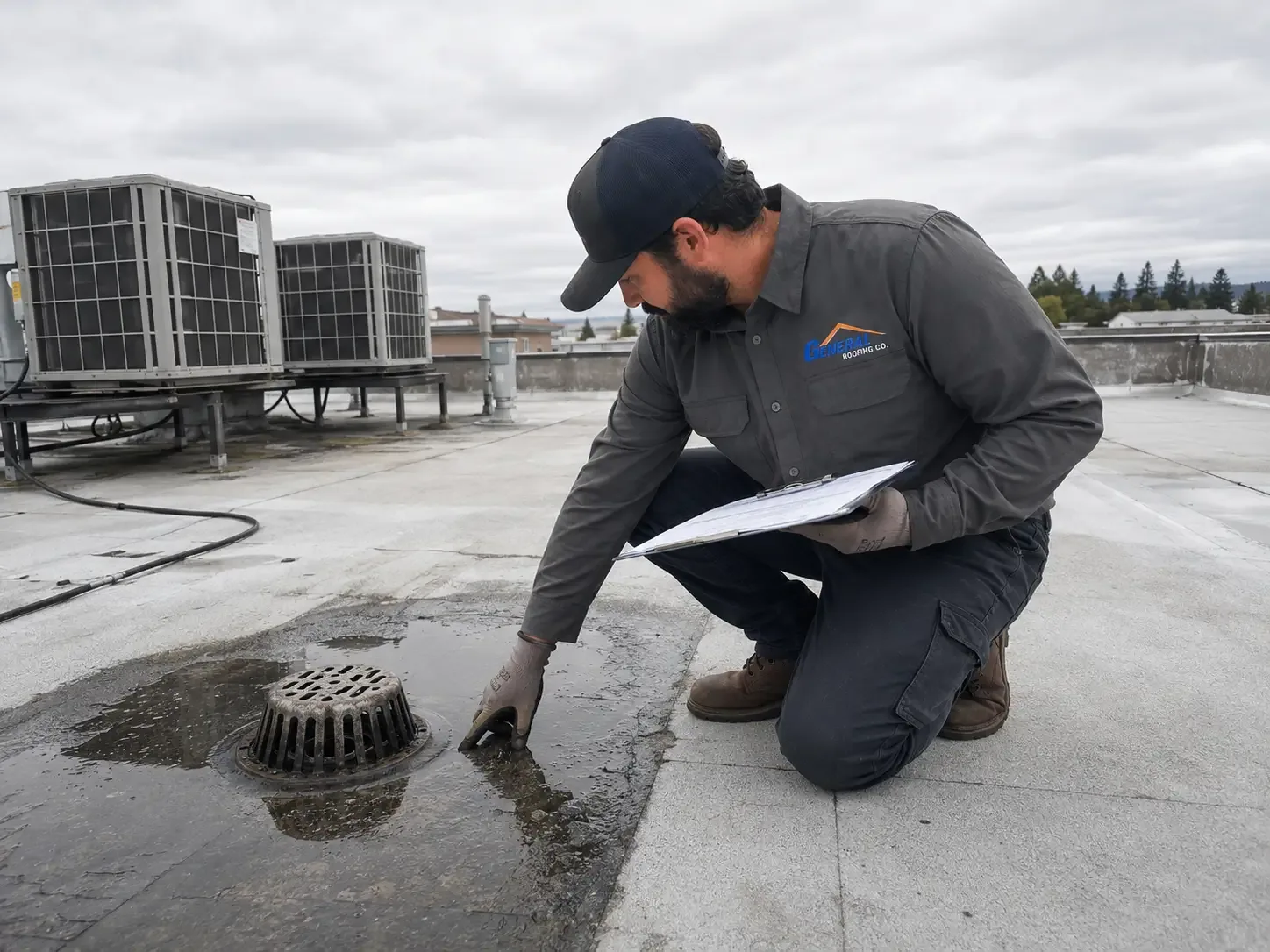
A ceiling mark narrows the search but does not identify the roof opening. We compare its timing with slope, lap direction, penetrations and low points. Water can move beneath insulation or follow a deck joint before it appears indoors. At a curb, a split corner can pass moisture even when the metal cap looks intact. At a drain, the bowl may be clear while the flange or membrane tie-in is loose. We trace connected details that match the report, then test the surface where access permits. The inspection record separates what is visible from what needs a controlled opening.
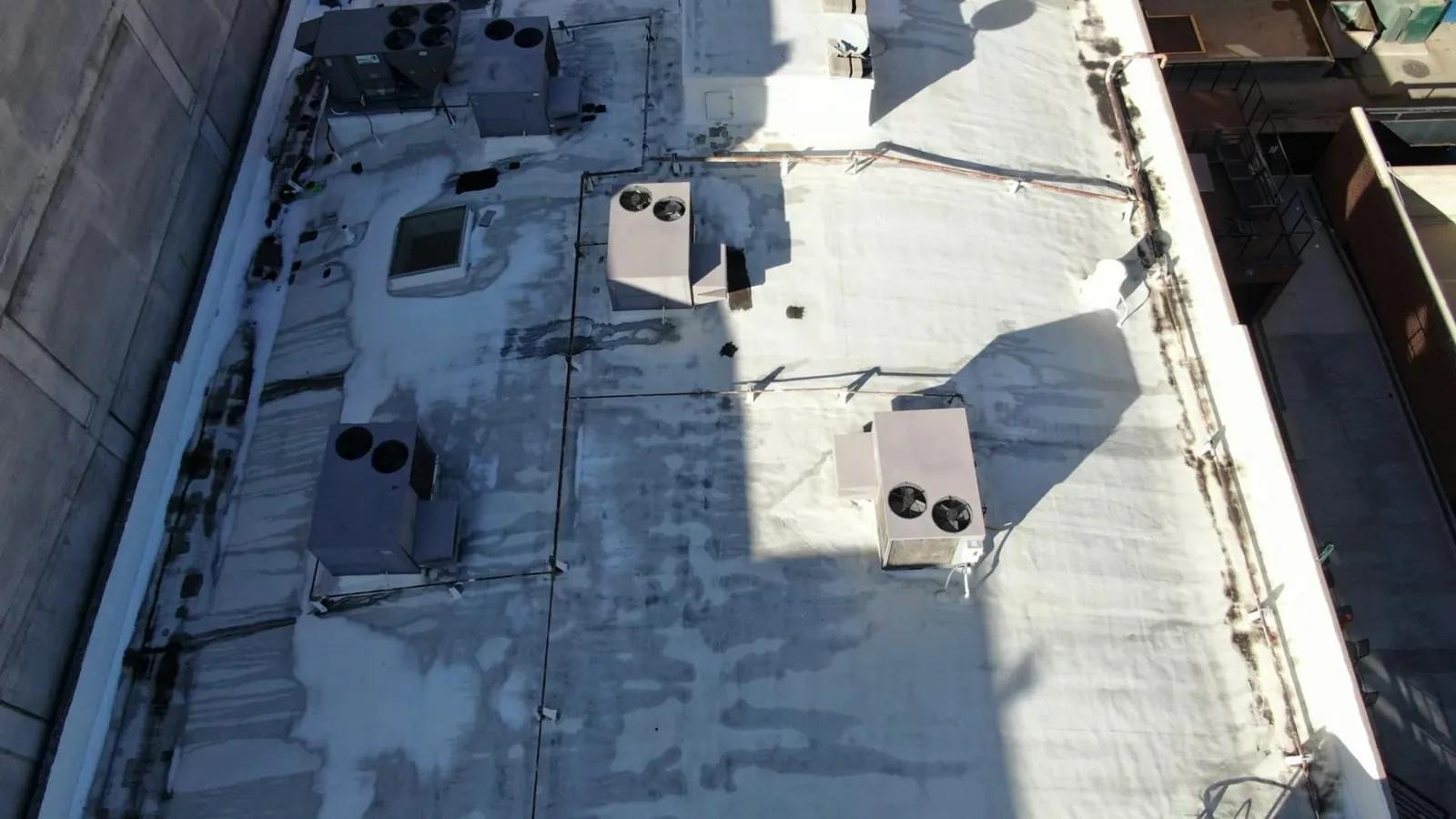
We record seam direction, edge attachment, drain condition and any prior patch that changes the likely path. Drain and scupper work focuses on discharge and the membrane connection. Flashing repair addresses a curb, wall or perimeter transition. If the route reaches several details, we list each one rather than folding them into a single unexplained allowance. That gives the manager a clear view of what the roof showed and where further removal could change the scope.
Assembly check: identify what will accept a tie-in
Repair preparation follows the system already on the roof. We check whether the surface is single-ply sheet, EPDM, modified bitumen, built-up roofing, metal or coating, then inspect attachment and the material around the failed detail. A weld test can show whether a thermoplastic seam will accept a patch. EPDM splice work needs compatible primer and tape. Metal panels rely on fasteners, seams and closures rather than membrane welding. A coating needs a clean, dry substrate. Earlier patches, tension at an edge or wet insulation may require a wider cut before a dependable connection is possible.
EPDM seam repair uses a different splice from standing-seam metal work. At a curb, we inspect vertical flashing and the corners where it meets the field. At a parapet, we follow coping joints and fasteners. The written scope identifies the actual material, the preparation step and the tie-in location instead of describing only a patch by size.
Repair choice: keep the scope tied to sound material
A small repair is reasonable when the membrane around the defect remains attached and the cut reaches a dry, stable base. We remove failed material, prepare the receiving surface and join compatible roofing to the surrounding assembly. If removal finds saturated facer, crushed insulation board or a deck that no longer holds attachment, the boundary has to include that layer. Closing over a weak base can leave moisture or movement beneath a neat surface repair. We show the owner the opening and the condition that changes the amount of removal before the repair proceeds beyond the agreed limit.
Several leaks in one area may share a drainage or flashing problem; leaks in separate roof zones may point to broader deterioration. Commercial roof repair can address a contained seam or transition. If attachment is weak across a wider field, we compare repair with recover or replacement after checking existing layers and drainage. Coating is an option only when the substrate and system are compatible. Roof replacement becomes a separate recommendation when removal, moisture or repeated failures leave no dependable repair boundary. The scope states which condition supports the chosen path and which finding would prompt a review.
Maintenance notes: track the details that move
Stamford climate normals record recurring winter snowfall and subfreezing nights, so freeze-thaw movement, drainage, and snow-load checks belong in regional maintenance planning. At a New Canaan roof, we inspect terminations, drains, and exposed flashing for movement or standing water before assigning repair scope. Summer heat can work a seam or metal transition, so the report should identify the observed detail rather than assign damage to a season without evidence. A roof condition report can keep photos, locations and repair notes together for the next review.
Maintenance is useful when it records a change that affects a work decision. We note whether a strainer is blocked, whether the flange is secure, and whether a seam has opened since the prior inspection. A cleared drain is not the same as a repaired connection. If the same interior area becomes wet again, we compare dates and roof details before repeating a sealant application.
Estimate: make access and concealed conditions explicit
Cost depends on membrane type, the length of failed seam, connected flashing, removal depth, wet insulation, disposal and protection below. A curb rebuild uses different labor from a short patch. Limited delivery hours, long material carries or a need to keep an entrance clear can add setup time. We inspect first and list the assumptions that shape the work. The estimate states what is included, where removal stops and what concealed condition needs approval before the scope grows. That is more useful than a broad allowance that leaves the repair edge unclear.
Connecticut permit requirements depend on the code in effect when the application is filed. We can record existing layers, penetrations, drains and proposed tie-ins for project review without assuming which provisions apply to a particular scope. Before arranging a roof walk, share the reported rooms, past service notes and access limits. The property contact confirms which route and work window are available; we inspect the assembly and set out a repair that reaches material capable of holding the tie-in.
Commercial Roofing Questions
Can a leak show up far from the opening?
Yes. Water can travel beneath a membrane, through insulation or along a deck joint before reaching a ceiling. We compare the mark with slope and nearby details to trace a path that fits the report.
What does the Branch Line change about scheduling?
It is part of New Canaan's regional transit context. The property still sets roof access and delivery rules, so we confirm its work window and route before material is staged.
When should removal include insulation?
Wet insulation or a soft cover board moves the cut line to a dry, stable edge. We document what the opening reveals and identify added work before closing the roof.
Which conditions in new canaan center make a localized patch insufficient?
We compare attachment, moisture extent and the number of connected failures. A contained defect may hold a local repair; separate wet areas or weak field attachment can warrant a broader option review.
What should the manager send before a roof walk?
Send the room where the leak was first noticed, when it appeared, the prior service record and any limits on entry or material delivery. Those details help us trace the route without assuming where the opening sits.