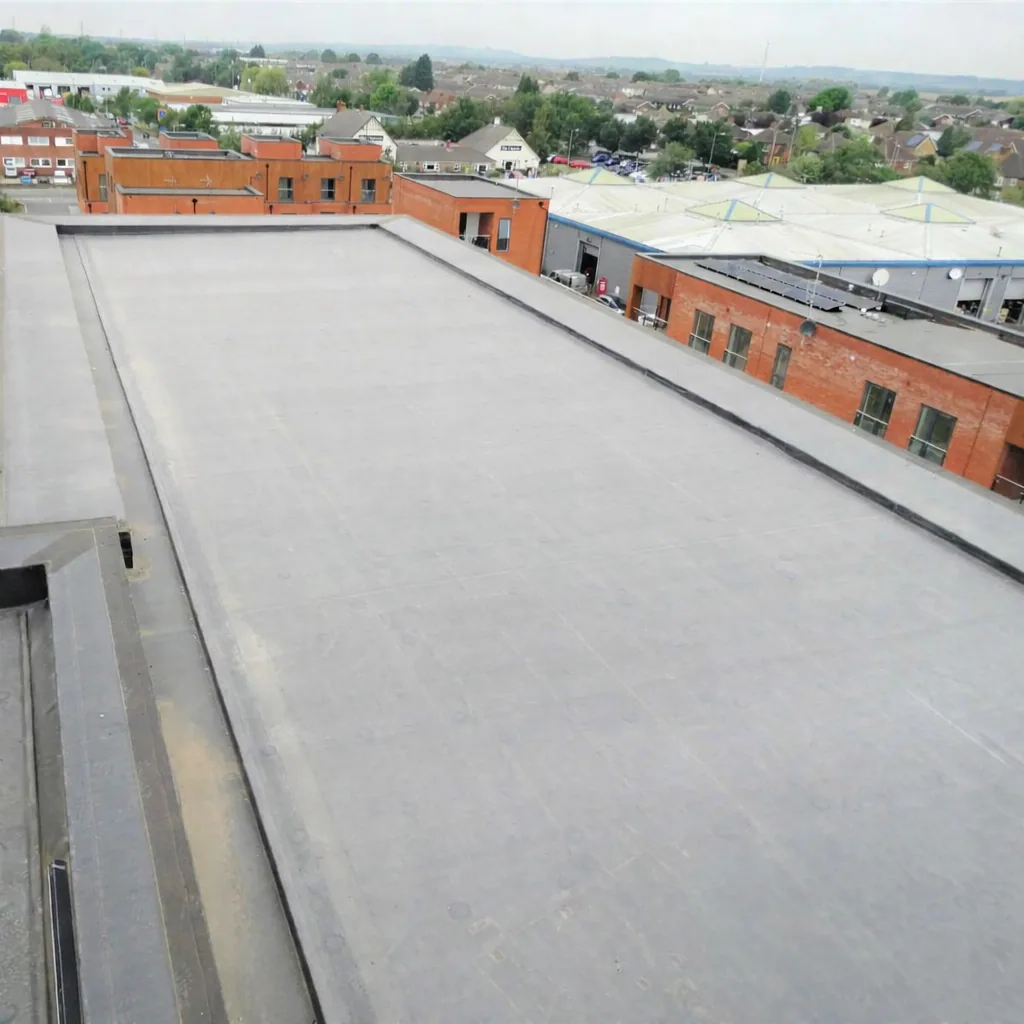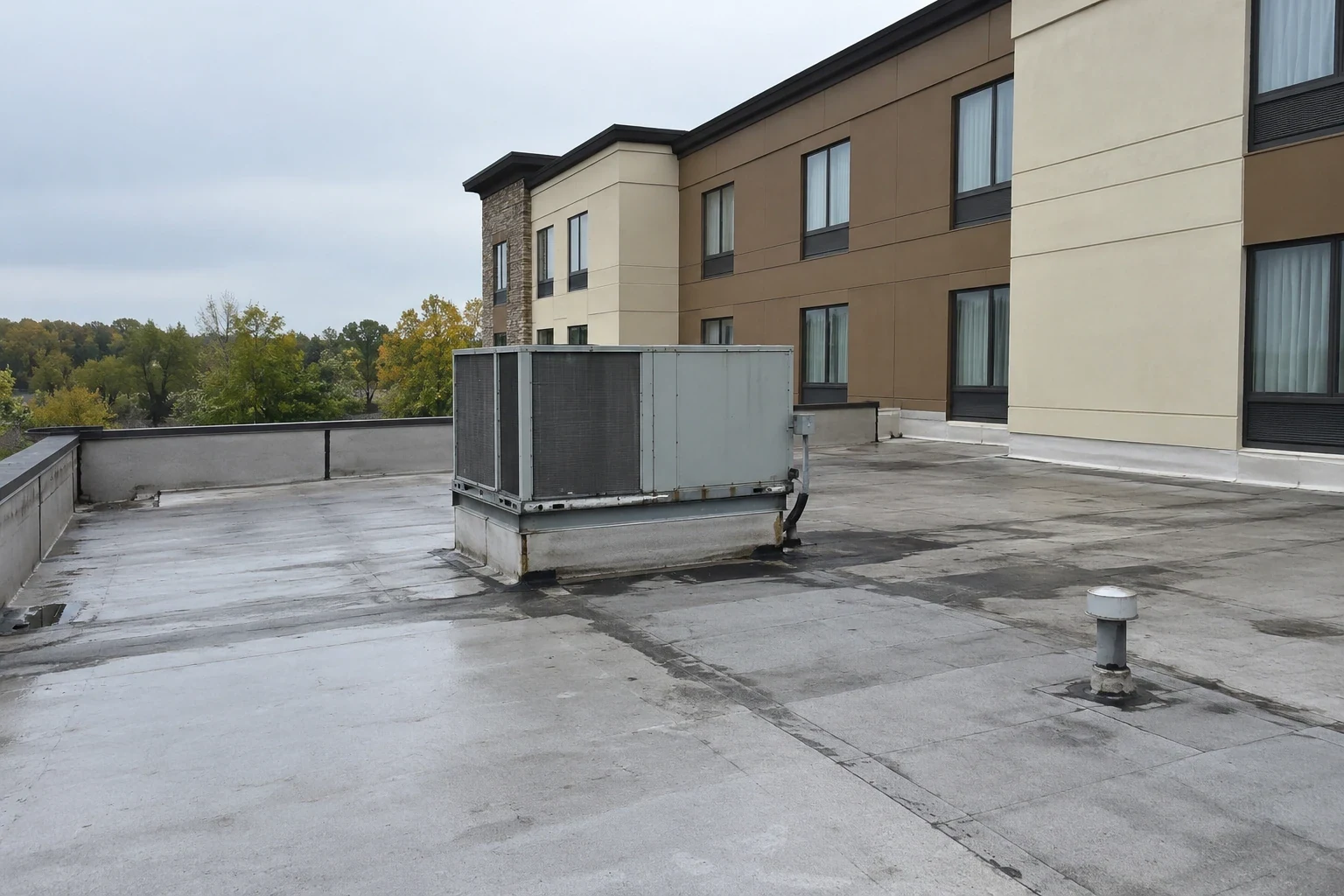
A ceiling stain near a guest corridor may begin at a roof curb or seam beyond the room. We trace the water path before recommending a repair. Hotel roofs can include guest-room wings, kitchens, mechanical areas, meeting spaces, and lower service roofs. Each section may have different access and interior protection needs. In Stamford, CT, we inspect the membrane, flashing, drains, and edges, then define the area that can be corrected based on visible and tested conditions.
The property team needs a repair scope with a boundary, not a broad line that leaves the cause unclear. We photograph the reported zone, note access limits, and identify any test that could change the recommendation. A commercial roof inspection checks seams, curb flashing, drains, and visible deck while keeping roof work separate from mechanical service.
Guest areas: contain the work zone
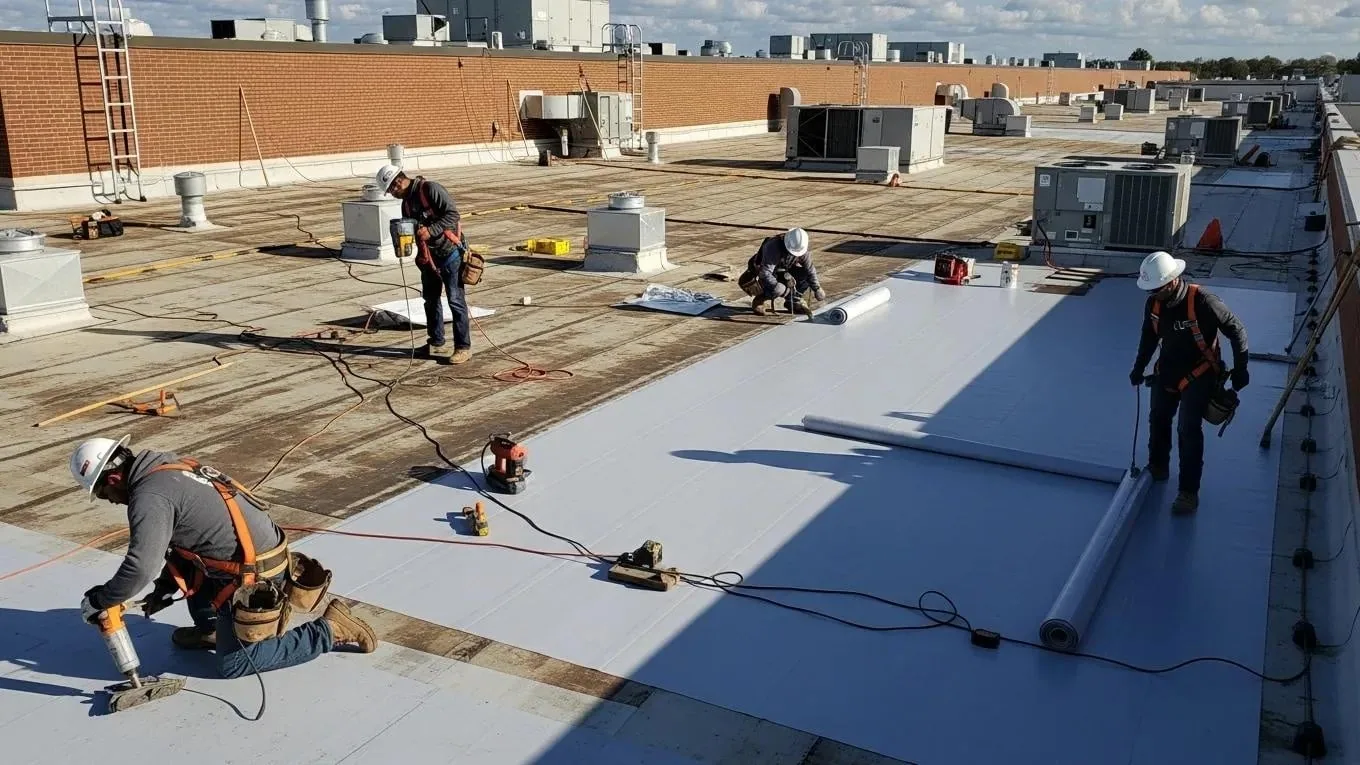
Roof work near occupied rooms calls for a route and protection plan. We confirm the hatch, lift location, ground staging, and any interior area the property wants protected. The daily work zone has a defined opening limit and closeout point. If removal reveals wet insulation outside that line, we document the finding and review the change before the opening moves. A phased occupied-building reroof can set those limits by roof section.
The sequence also accounts for housekeeping routes, loading access, and service windows provided by the property. We identify where another trade needs access to a unit or line and avoid placing roofing material in that path. Each shift ends with the membrane returned to the agreed weather-tight condition. Work timing depends on access approval, weather, drying, and the condition uncovered, not on a generic promise about the building schedule.
Leak trace: compare rooms and roof zones
A water mark in a guest room or meeting area may not sit below its source. We inspect the roof area above and around it, following laps, curb corners, penetrations, parapets, and drains. A hotel leak repair should identify the failed detail and the material that will receive the tie-in. Where insulation is wet, we test enough to locate dry material before setting a removal boundary.
Stamford has recurring winter snowfall and subfreezing overnight temperatures. Drain paths, metal returns, and terminations deserve attention after winter weather, especially when a water report follows a freeze-thaw period. The climate pattern is not a diagnosis. We verify whether a bowl is blocked, a seam has separated, or an edge has moved, then connect that observation to the reported interior area.
Mechanical curbs: keep the handoff clear
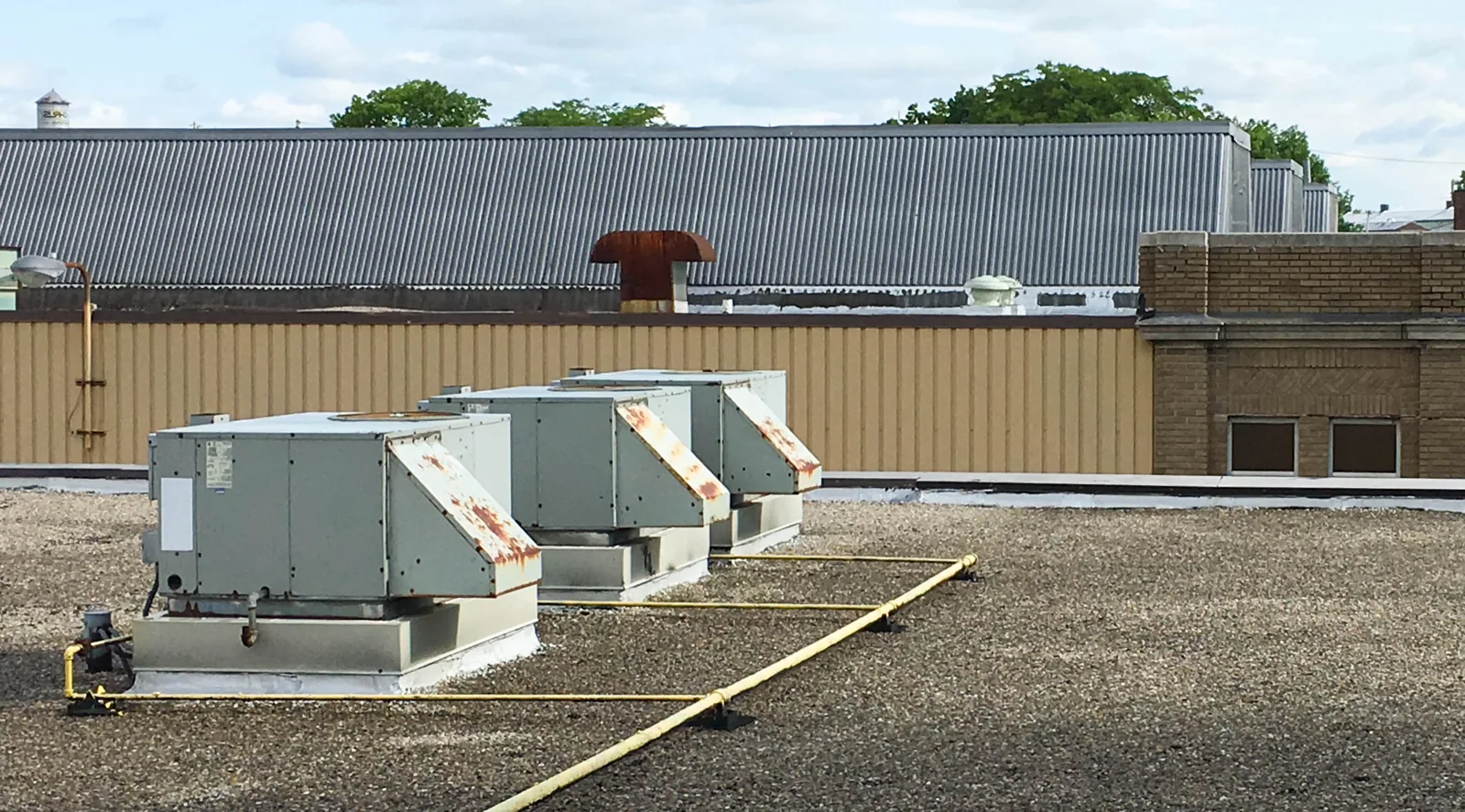
Fans, condensers, and other rooftop equipment interrupt membrane continuity. We inspect the curb base, flashing corners, counterflashing, and fasteners for an open water path. The mechanical trade handles unit connections and service. A curb and support repair can address the roofing detail without assigning equipment work to the roofing scope. If a curb or deck moves, that condition may need review before the membrane is closed around it.
Stamford summer highs reach the low-to-mid 80s, with measurable cooling demand through the season. We check sealants, laps, and metal transitions around equipment for actual separation or wear. Equipment load and roof attachment are reviewed when the condition calls for it. We tie each recommendation to the membrane, flashing, and attachment condition observed at the property.
Drainage: follow the outlet and overflow
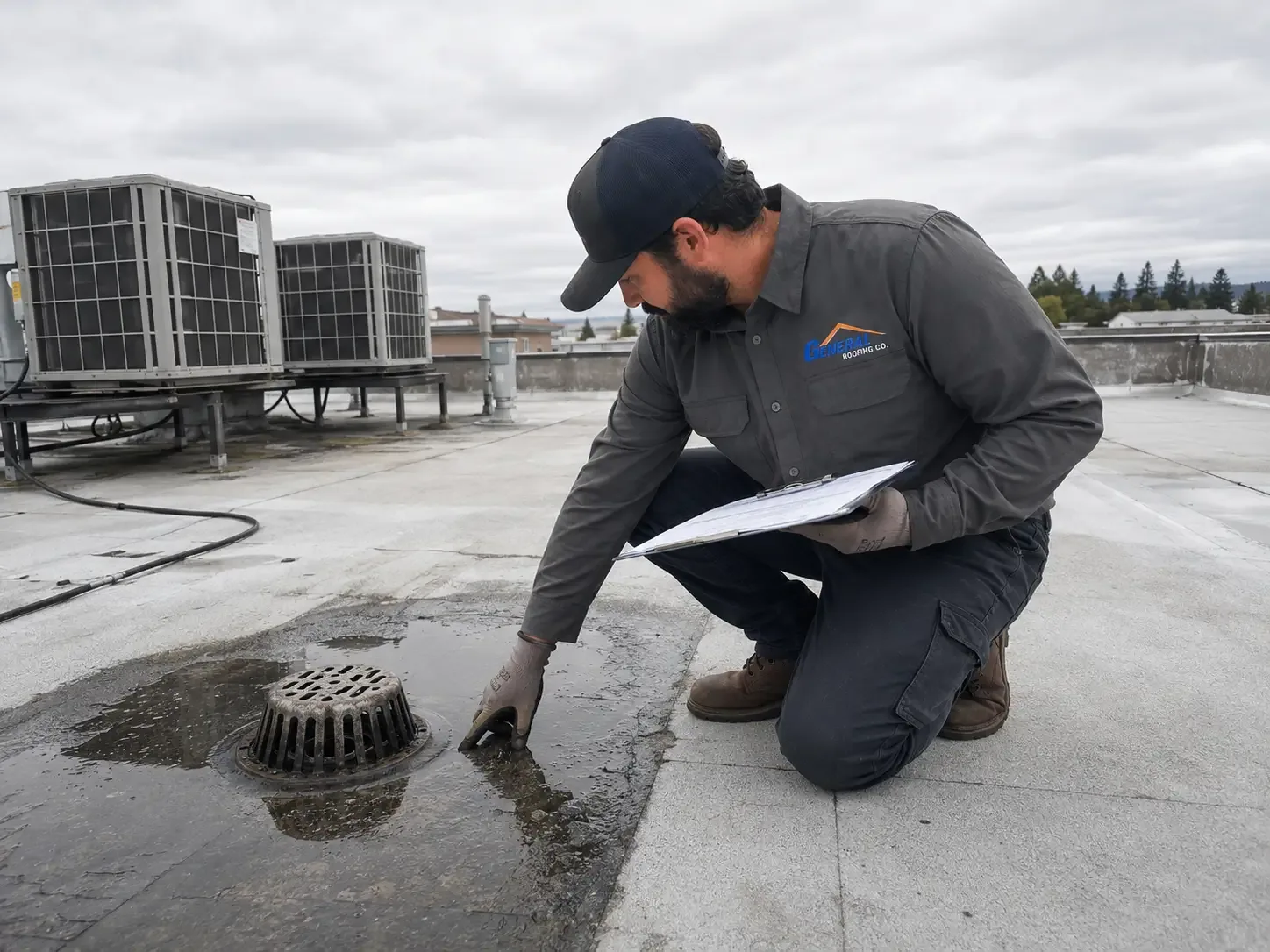
At a roof outlet, the bowl, flange, strainer, and membrane connection each have a separate role. We inspect those parts, then check whether water reaching the drain is arriving along the intended slope. A drain and scupper correction can restore a failed connection or outlet detail; it cannot correct a low deck or displaced insulation that holds water away from the opening. The scope names the condition observed and the test, if any, needed to distinguish them.
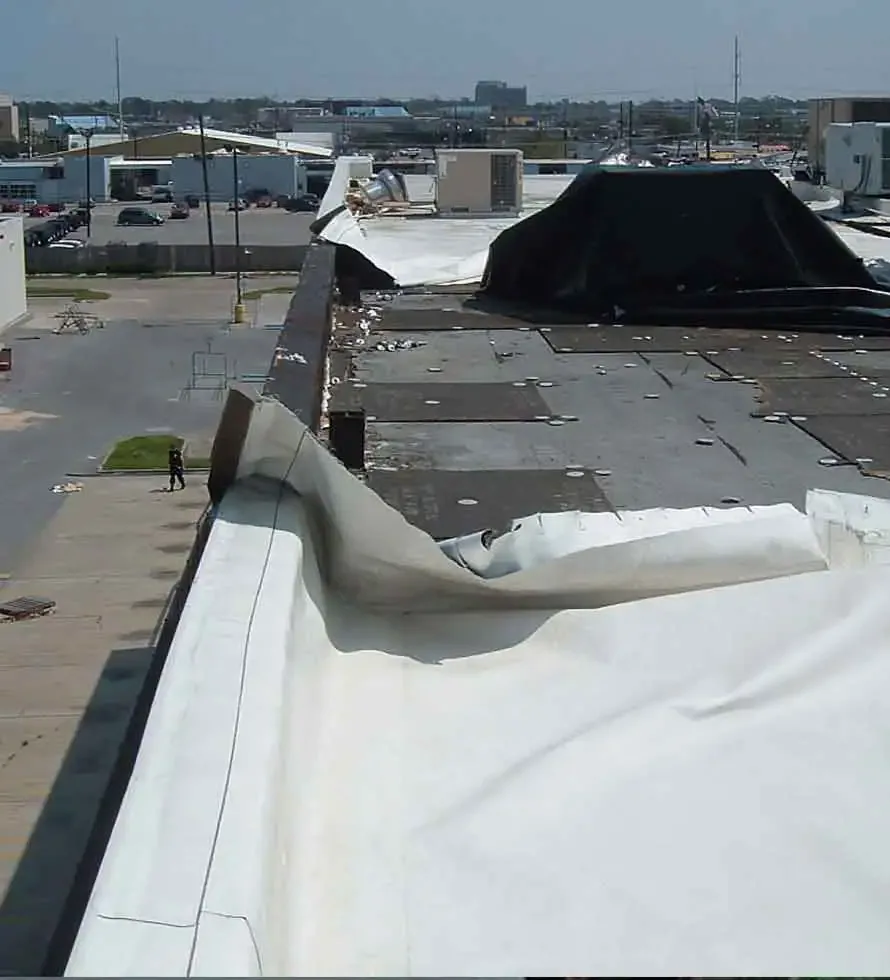
Long Island Sound hurricane exposure includes wind, precipitation, surge flooding, and erosion. After coastal weather, we check roof edges, drains, and penetrations for displaced material or a water path that matches the report. Photos show the details inspected and the next maintenance step tied to those findings.
System decision: repair, recover, or remove
A localized seam failure with dry adjoining insulation may support a repair. Repeated failures, broad wet material, loose attachment, or deck deterioration can call for a wider correction. We inspect the existing assembly and test where the result could change the scope. A membrane such as EPDM must be compatible with the substrate, flashing, and project details; the system name alone does not settle the choice.
Recovery is considered only when existing layers are dry and secure, the deck is suitable, and permit requirements allow an added assembly. Otherwise, removal can be needed. Cost drivers include tear-off, insulation, deck work, perimeter metal, drains, equipment protection, and phasing. A shopping-center roof may share a broad field with other uses, but each assembly must meet the same moisture and attachment checks.
Stamford context: plan around the setting
Harbor Point brings residential, office, retail, hotel, and public uses into a broad Stamford redevelopment district. That city context can make pedestrian routing relevant during roof work, but a hotel site's entrances, loading points, and protected paths must be confirmed with its own property team. We set staging and access from those site instructions rather than assuming neighboring uses share one route.
Stamford's coastal Route 1 segment runs between Greenwich and Darien. Near Norwalk Center or SoNo, the hotel's service entrance and occupied rooms shape the material route and roof sequence. A Harbor Point-area roof assessment records the inspected curb, drain, seam, or edge and keeps that finding separate from general district context.
Closeout: leave the next manager a clear record
The closeout identifies roof zone, repaired detail, material removed, tie-in, and photographs. We list any section not reached and work assigned to another trade. An apartment roof may involve a different set of occupants, but its record also stays tied to the section inspected. If a roof contains multiple additions or systems, the records remain separated by section.
Share guest-area leak locations, roof plans, access restrictions, mechanical clearances, and recent service notes before the roof walk. We compare those details with the assembly and provide a written repair scope or larger-system recommendation. If testing can change the boundary, the scope identifies the test and what it will establish. That gives the property team a decision tied to the roof evidence and the actual work limit.
Commercial Roofing Questions
Can roof repairs stay away from guest entrances?
The property layout, lift position, and approved access route determine where the work can be staged. We confirm ground protection, roof access, and any entrance that must remain open, then set a defined work zone. A change in concealed conditions is documented before the boundary moves.
Why can a guest-room leak appear away from the roof opening?
Water can travel along a deck or insulation joint before it reaches the ceiling. We inspect seams, curbs, edges, and drains along the likely path, then compare the roof findings with the interior location. The scope names the entry detail and any test area needed.
Who handles rooftop equipment during curb repairs?
The mechanical trade handles unit connections and service. We inspect and repair the roofing transition at the curb, with access and timing coordinated before the membrane is opened. The written scope states the handoff so equipment work is not confused with flashing work.
When would a hotel roof need a wider scope?
Wet insulation extending beyond one detail, multiple seam failures, loose attachment, or deck deterioration can widen the repair. We state the test or opening that would confirm the extent. If stable dry material surrounds one defect, a focused repair may fit.
Which room schedules and roof-access controls should be settled before hotel work?
Provide roof plans, leak locations, access limits, mechanical clearances, recent service notes, and any property operating constraints. We verify routes and roof zones in the field, then define opening limits and the daily closeout condition.