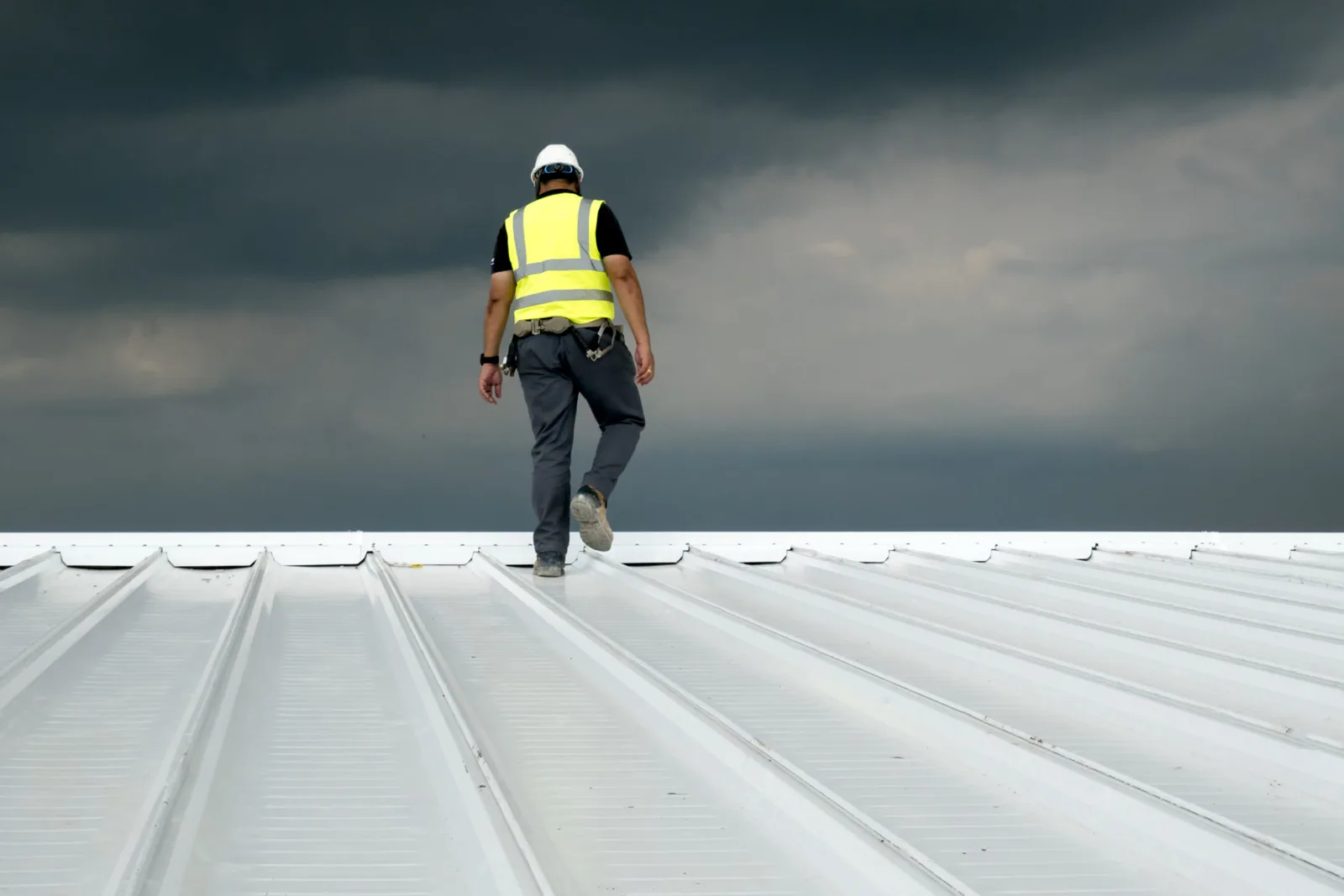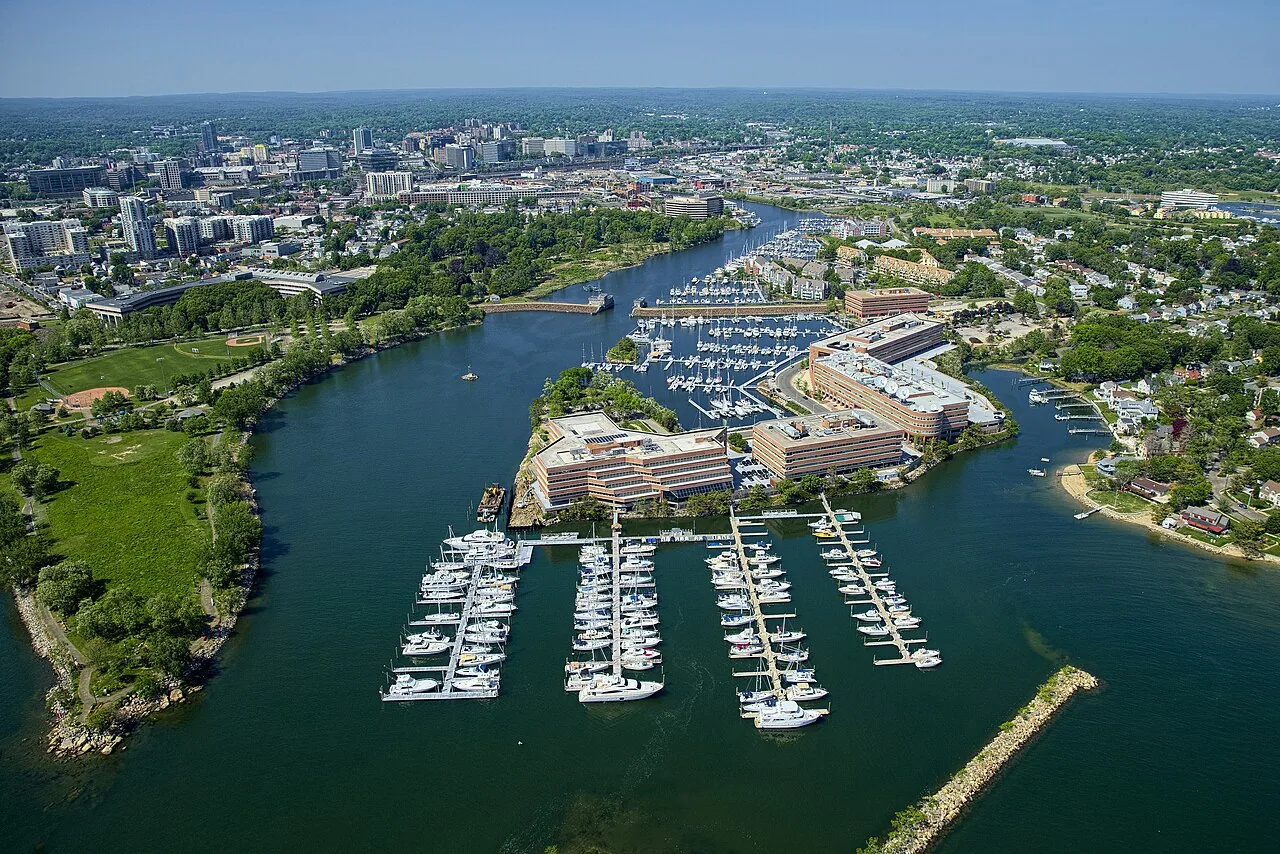
Water at a communications room or service bay can enter through a roof transition far from the interior mark. We trace the path and inspect the detail before setting a repair limit. The Coast Guard lists Station New Haven, and Sector Long Island Sound serves ports that include Stamford, Norwalk, Greenwich, and Bridgeport. That regional role informs access planning, but the roof assembly, edge metal, drains, and penetrations must be inspected at the property before we set a work boundary.
Active operations require access instructions from the property authority. We coordinate the roof route, staging area, escort or badging procedure when supplied, and any restriction around equipment or movement. A commercial roof inspection documents the observed assembly and defects. We do not assume a facility's roof type, clearance, or operating schedule. The site contact confirms those conditions before a lift or material is positioned.
The crew also needs to know whether a roof hatch, ladder, or overhead door is the approved approach. We confirm load limits, drop zones, and the return path for tools before staging. If any of those details changes, the sequence is revised with the site representative before the affected zone is opened.
Coastal exposure: inspect the roof perimeter
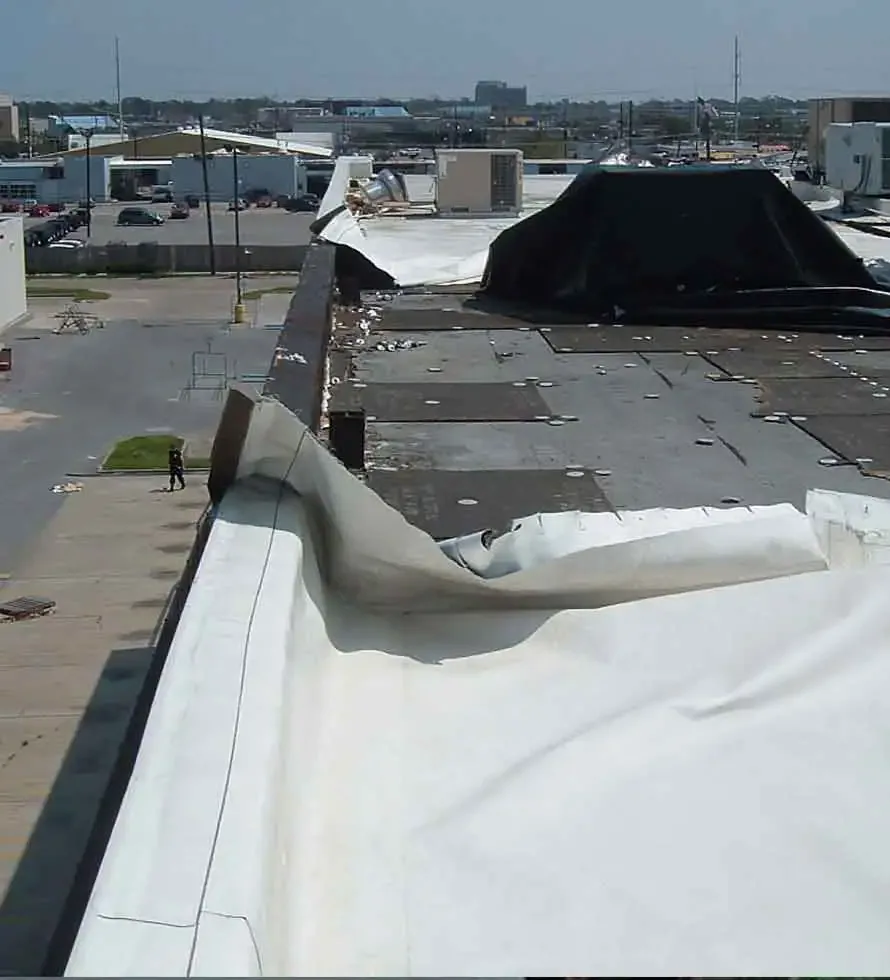
Wind can work on edge metal, terminations, and exposed fasteners, while driven rain tests seams and curb corners. We inspect securement, laps, metal returns, penetrations, and the tie-in at walls. Connecticut guidance identifies wind, precipitation, surge flooding, and erosion as Long Island Sound coastal hazards. That context makes perimeter and drainage review useful after a coastal storm; it does not establish damage at a specific property.
After the roof walk, the record identifies what moved, what remains attached, and any area that could not be reached. A leak repair assessment traces water entry to a seam, curb, or edge and records the material needed for a compatible tie-in. If the evidence indicates moisture below the membrane, a focused moisture survey or test opening can clarify the removal extent.
Drain and water path: verify the outlet detail
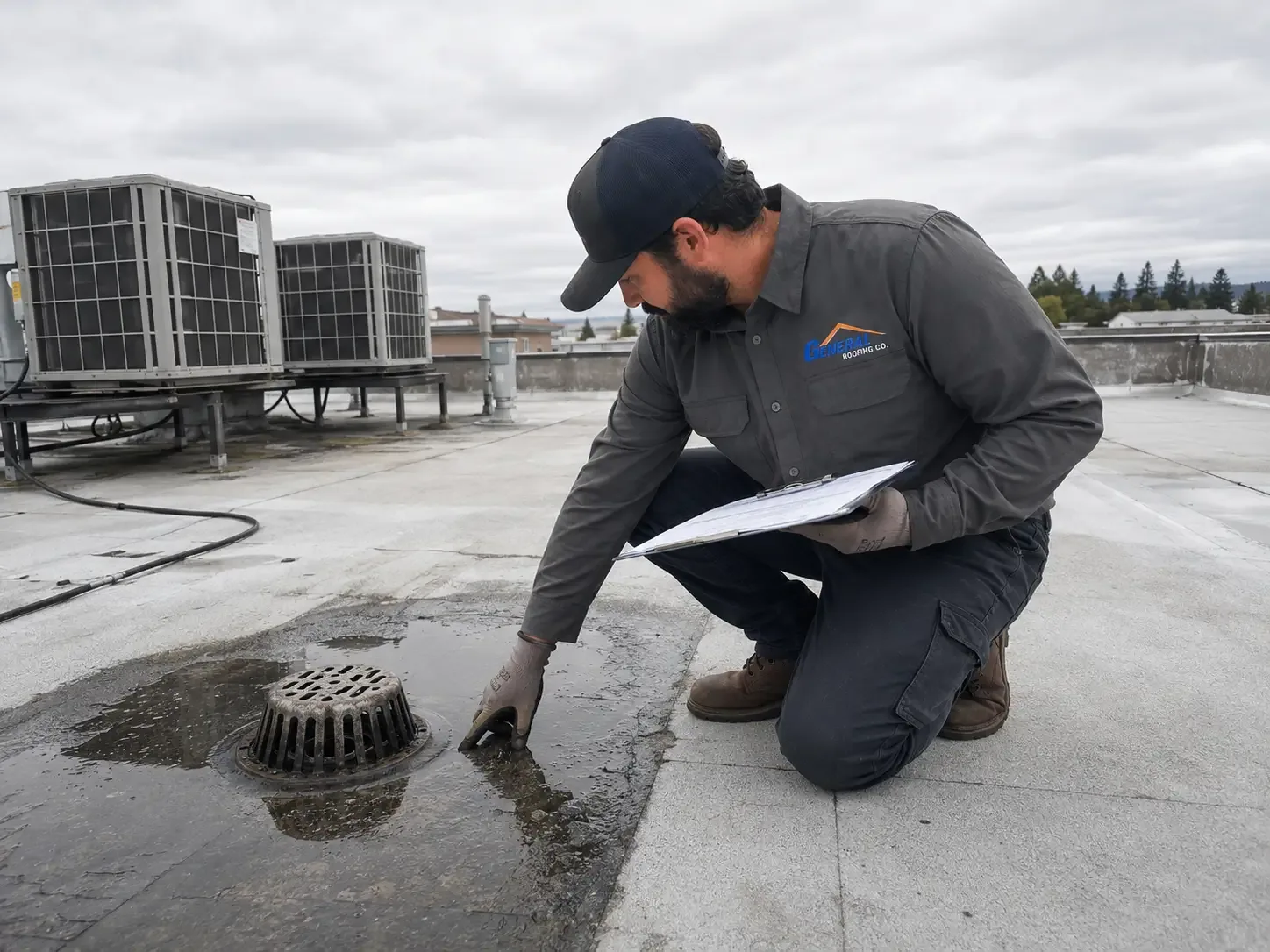
Storm runoff can reach a drain far from where water appears indoors. We inspect the strainer, bowl, flange, overflow path, and membrane around each outlet. A drain and scupper correction addresses a blocked or failed outlet detail. If water remains across the field, the scope considers slope, deck condition, and patch history rather than covering the low area with a coating.
Stamford winter normals include snow and subfreezing overnight temperatures. Freeze-thaw cycles can stress a termination or leave water at a low seam. We check those locations when the reported leak follows winter weather, but the repair follows the observed condition. A clear drain does not rule out a separate lap failure. Each finding is tied to its own roof zone and photographed before repair begins.
Equipment: separate roofing from mission systems
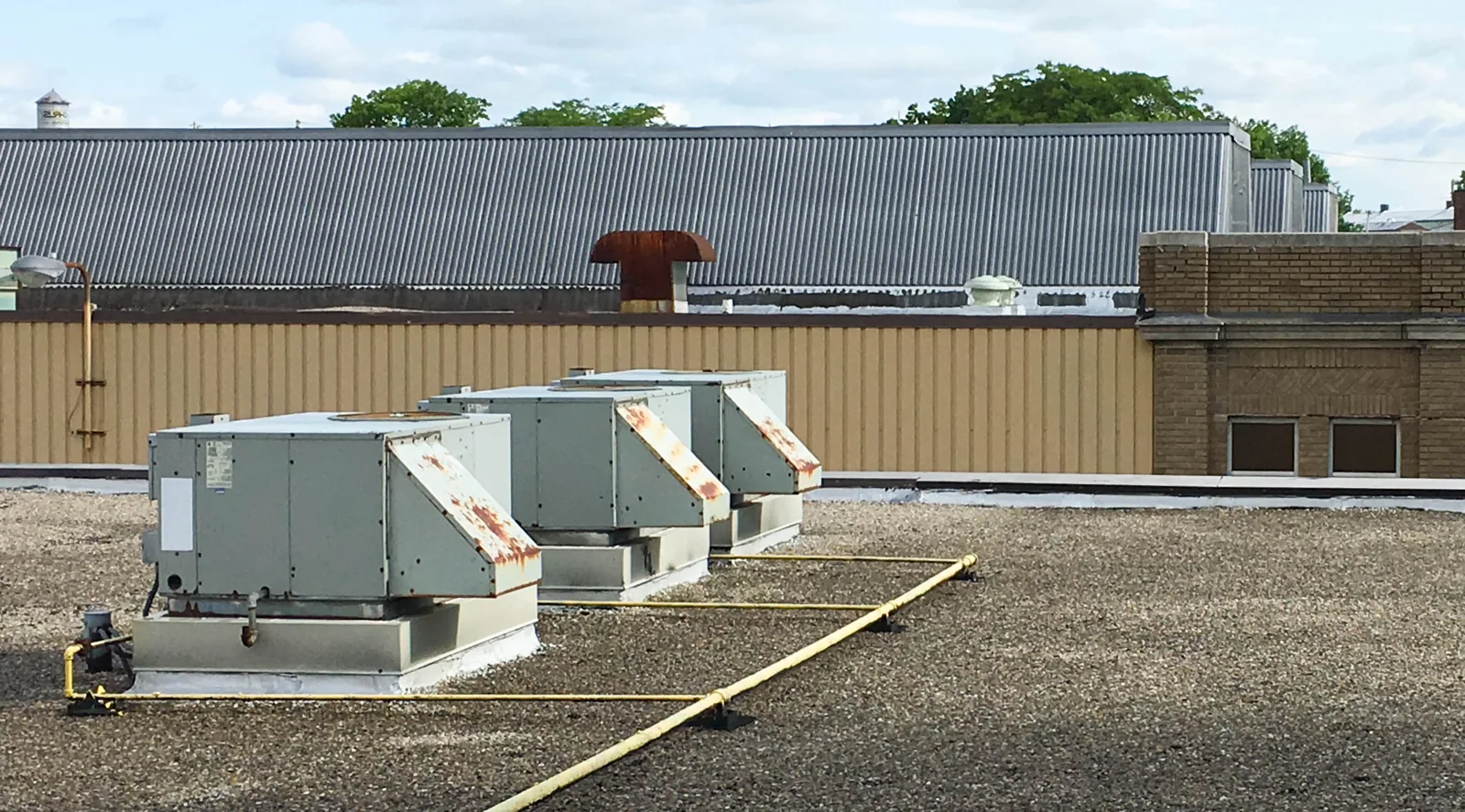
Antennas, exhausts, HVAC units, conduit, and support frames require flashing details that do not interfere with their service. We inspect curb corners, fastening, metal returns, and the membrane turn-up. A curb flashing repair defines the roofing connection and notes support movement for separate engineering or equipment review. We do not alter communications or safety equipment as part of a roof repair.
Access to equipment may be restricted, and the person responsible for the system sets safe clearances. We mark the work area and handoff before opening the roof. If a unit must be isolated or moved, that step is coordinated with the appropriate operator. Photos and closeout notes identify the condition corrected and any equipment work that remained outside the roofing boundary.
Assembly choice: price the confirmed condition
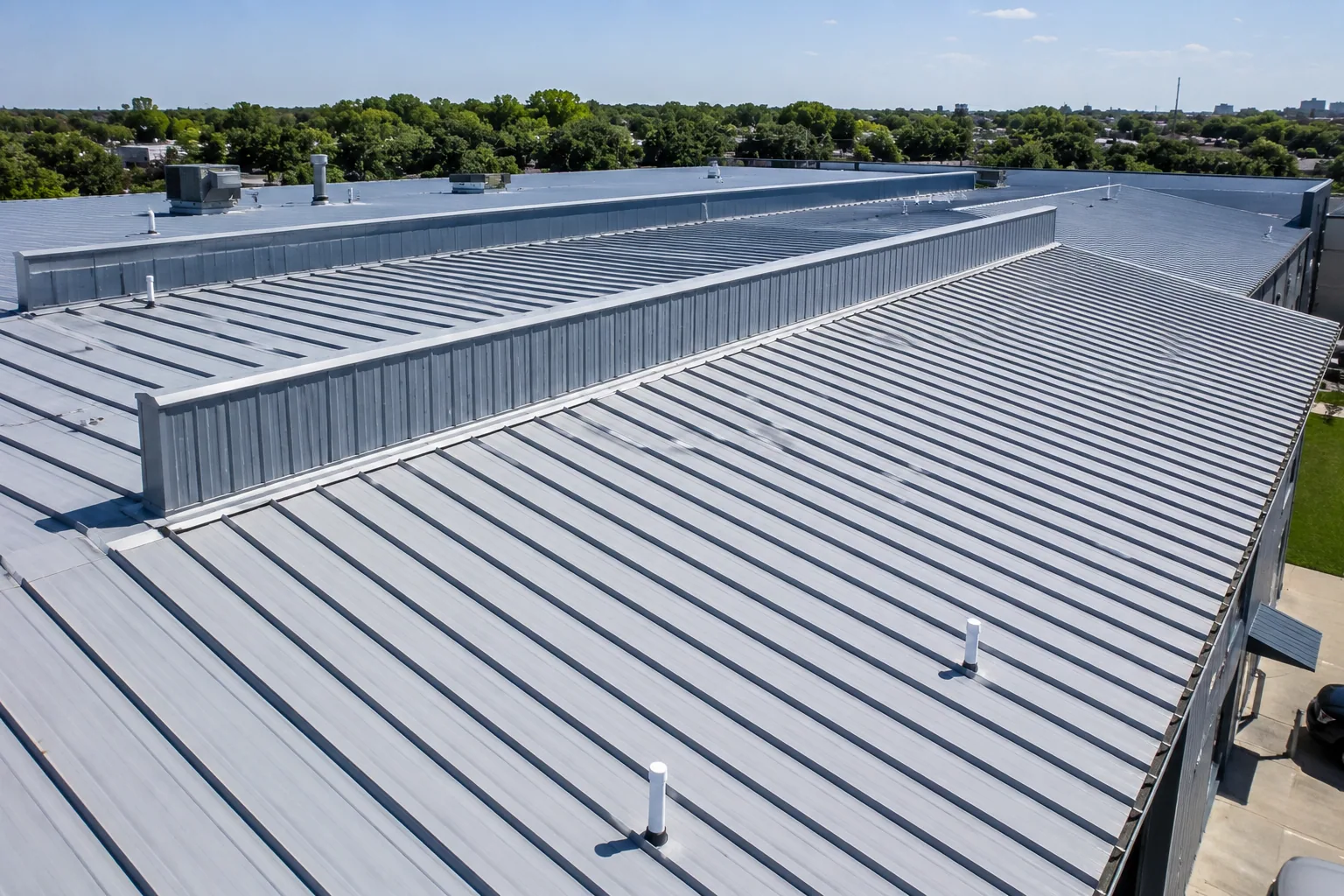
A localized seam split beside dry insulation may support a repair. Repeated open laps, broad moisture, loose attachment, or deck deterioration can require a larger project. We identify the assembly and confirm material compatibility before patching. A standing-seam metal roof has different movement and seam details from a membrane system. The recommendation follows the inspected roof, not the facility category.
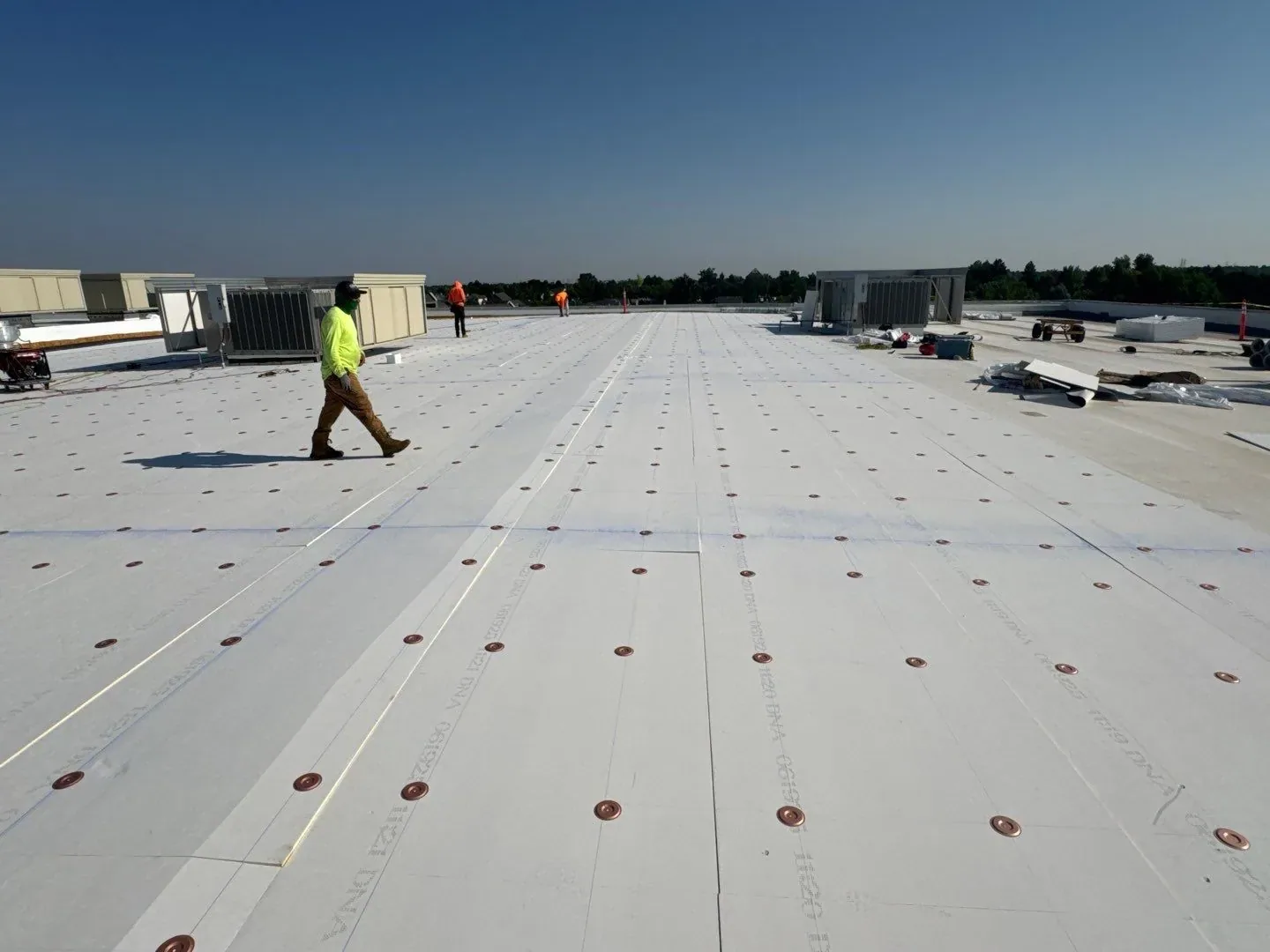
A recover can work only when the existing layers, moisture, attachment, deck, and project permit requirements allow another assembly. Added height changes drains, curbs, and perimeter flashing. A recover assessment tests those conditions against removal. A government building roof and a warehouse roof may share industrial details, but the work sequence and access controls are specific to each site.
Regional context: plan work around real access
Stamford's coastal Route 1 segment connects Greenwich, Stamford, and Darien, with commercial access points along the roadway. For properties in that corridor, deliveries and lift placement need a site-level review. Traffic conditions do not establish a roof or access condition at any individual facility. We confirm the actual loading area, roof entry, and protected route with the property contact before scheduling material movement.
Norwalk Center and SoNo have pedestrian-scale business blocks, while Route 7 runs north from Norwalk toward New Milford. Those are broad regional place and corridor patterns. They help explain why access can differ between nearby maritime properties, but do not substitute for an operating plan. A Norwalk Center roof walk records the building and route that were actually inspected, leaving other sites outside that scope.
Controlled work: document the boundary and handoff
Before a section opens, the scope defines the area, the protection below, and the dry-in point for the shift. If removal reveals additional wet material or weak decking, we document it and review the change before extending the work. The closeout identifies roof zones, material removed, tie-in photos, and any area not reached. An occupied-building roofing sequence can set phased boundaries when the broader project must coexist with ongoing use.
Provide drawings, leak locations, equipment restrictions, prior repairs, and the access procedure before the roof walk. We compare those items with field conditions and state the repair limit, tests needed, and next decision. A written roof condition report can preserve that record for facilities review. The scope identifies who handles each remaining task rather than leaving a roofing tie-in mixed with another trade's work. We also state which temporary materials protect an open section, how runoff is directed, and what the property must review before the area returns to normal use.
Commercial Roofing Questions
How do you plan roofing work around controlled access?
The property authority supplies escort, badging, equipment, and route restrictions. We map roof entry, staging, and the ground work zone around those instructions, then confirm them before material moves. The written plan identifies the section and daily closure point.
What coastal roof details should be checked after a storm?
We inspect edge securement, terminations, drains, curb flashing, and exposed seams for movement or water entry. The report records the condition found and photos of the affected zone. Coastal exposure alone does not establish damage or a need for replacement.
Can equipment remain in place during curb work?
We check whether the flashing can be rebuilt around the unit and whether support or clearance affects the tie-in. The responsible equipment trade confirms any movement or shutdown. The roofing scope separates membrane work from equipment service.
When is repair not enough for a maritime roof?
A localized split can remain a small repair when nearby layers are bonded and dry. We mark the proposed removal edge and use a test point when the wet area is not visible. Failed attachment, soft deck, or moisture across several roof zones supports a different scope than a single leaking seam.
What does the roof closeout record?
It identifies the assembly, repaired detail, roof zone, photographs, material removed, tests, and any area not reached. We also note access restrictions and other-trade handoffs so a later inspection can compare findings with the same boundary.