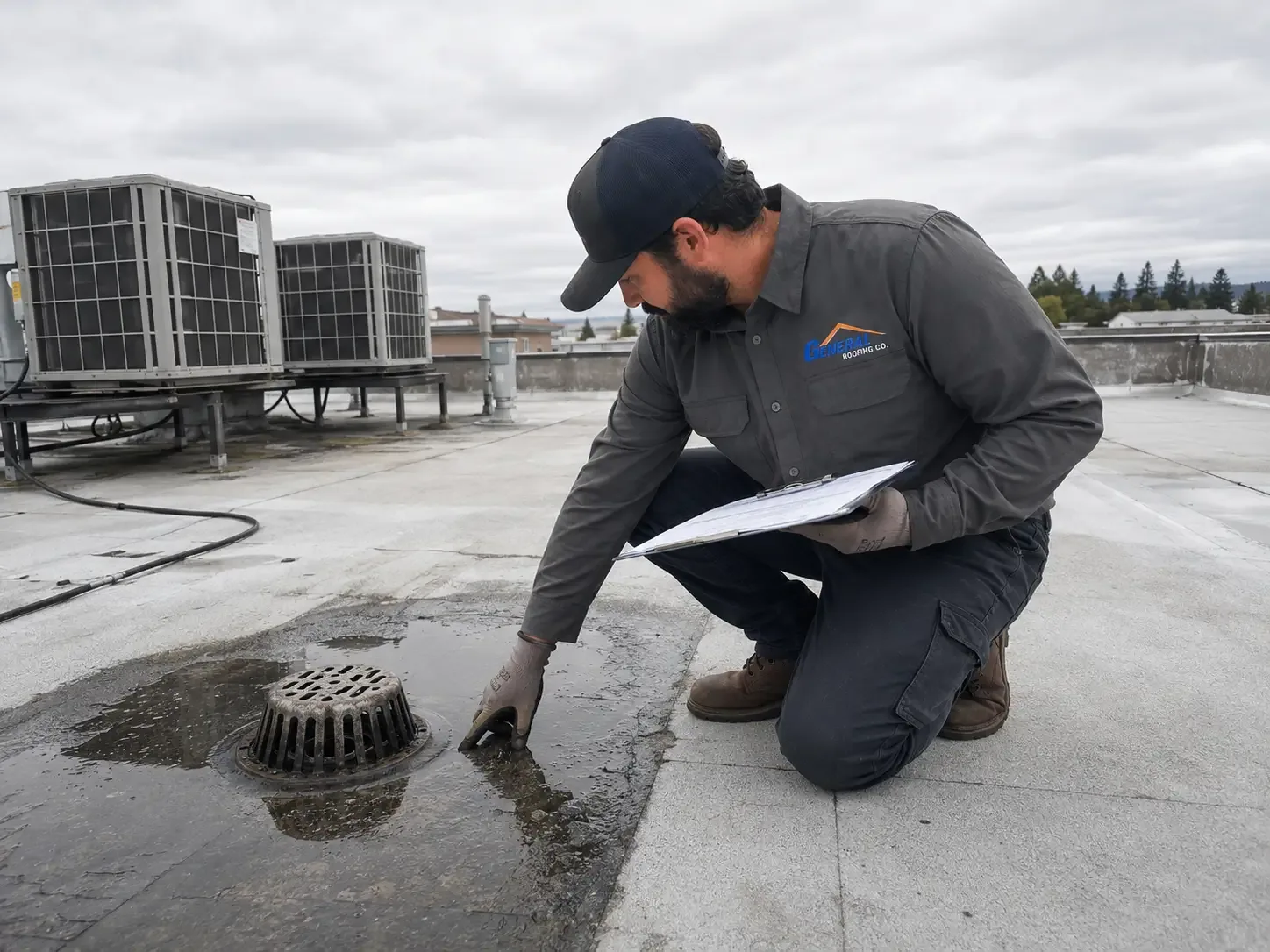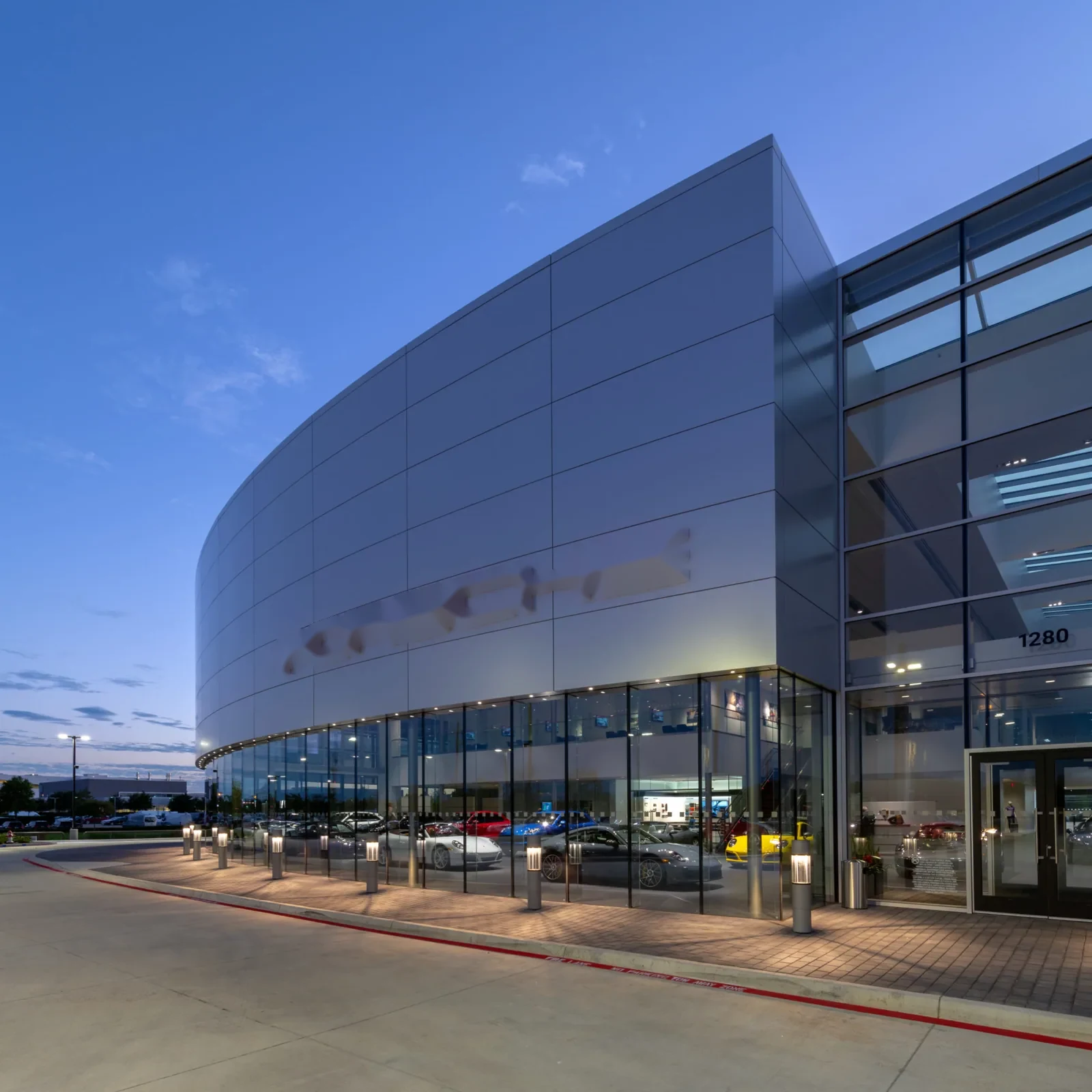
A water mark above a showroom can start at a curb or roof edge well beyond the ceiling. We trace the path before choosing a repair. Auto dealerships may place display areas, offices, parts storage, and service bays beneath connected roof sections, with rooftop equipment crossing the field. In Stamford, CT, we inspect the membrane and transitions near the reported area, then identify the affected zone and any testing needed to set a boundary. The report separates roof work from glass, vehicle, or mechanical work below.
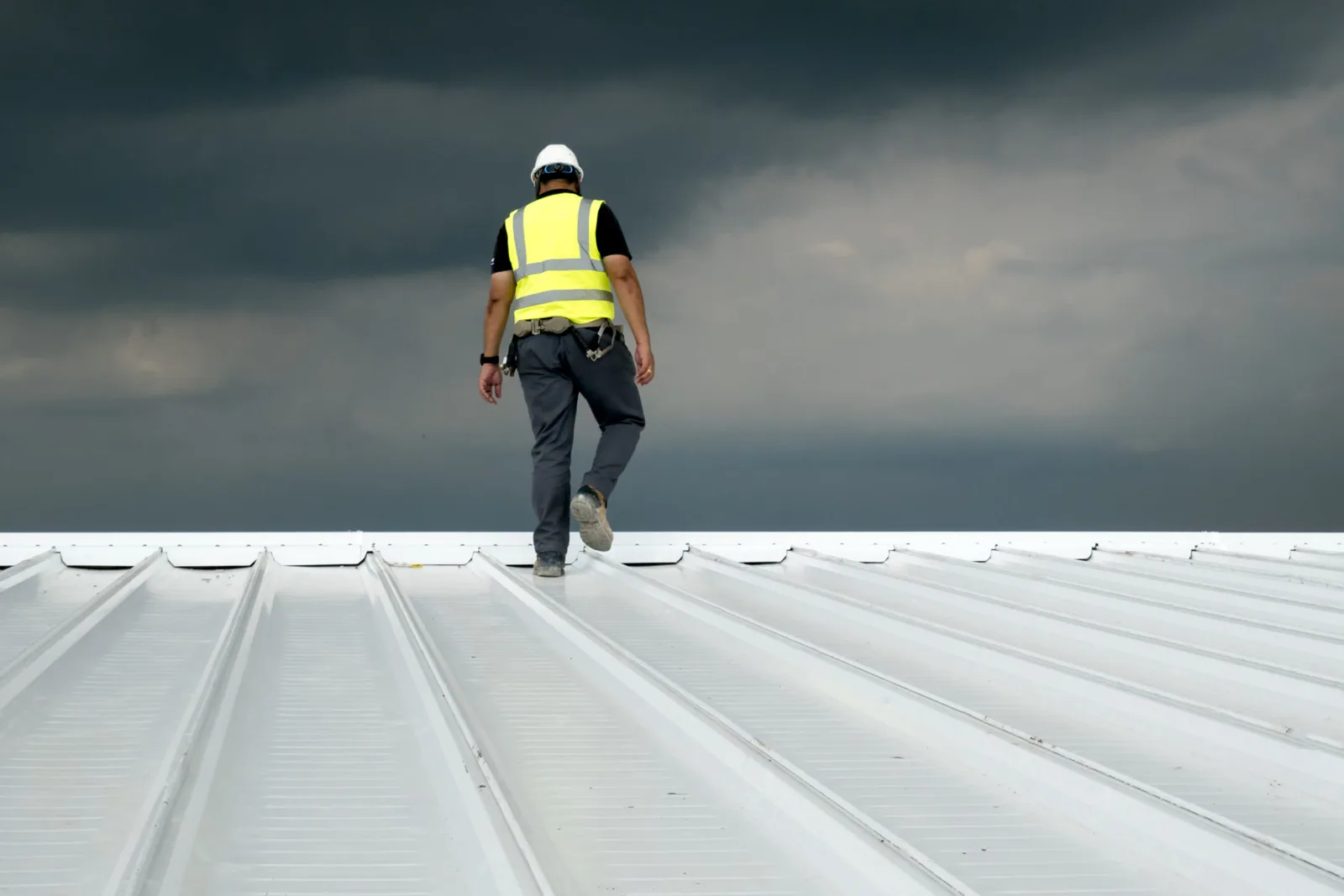
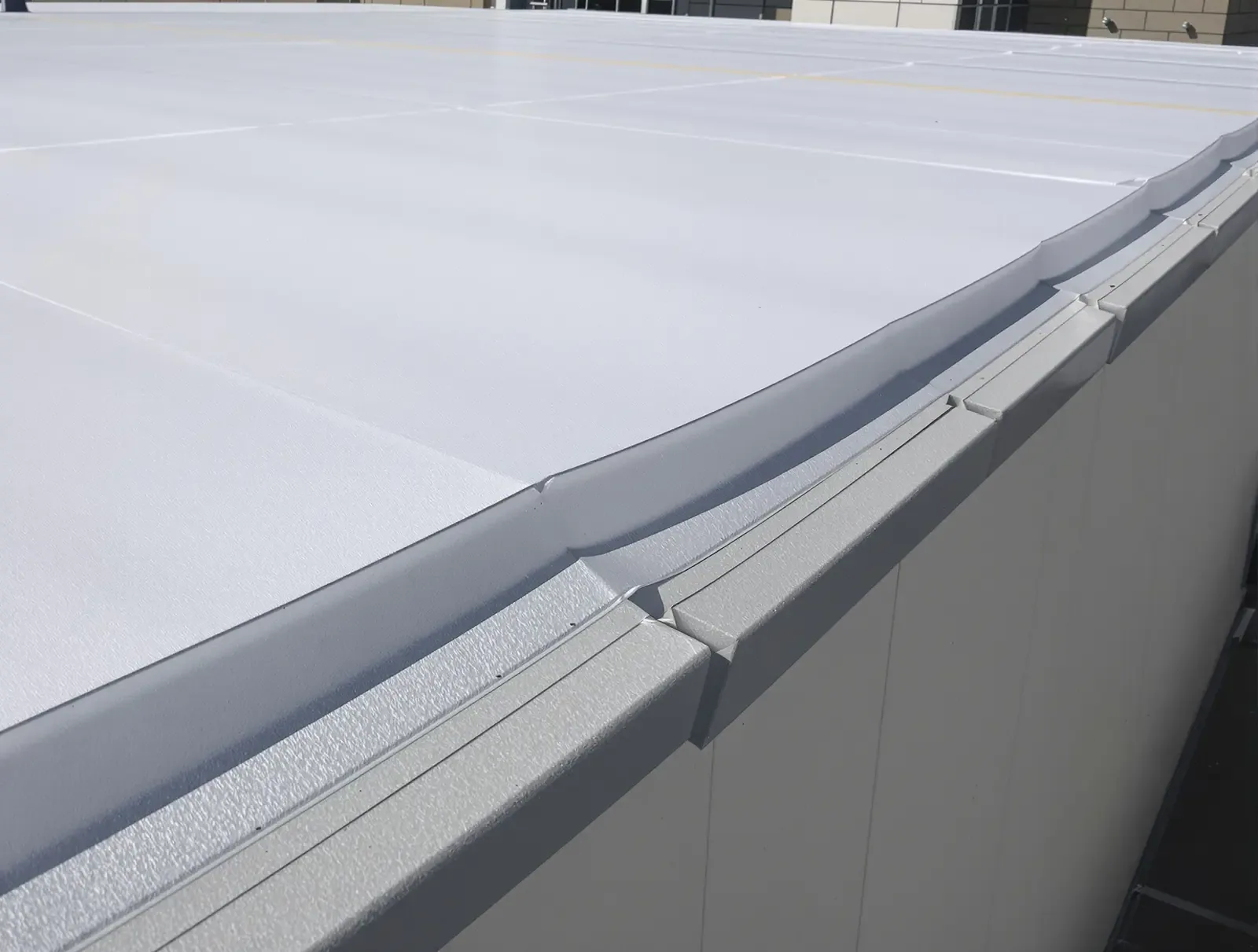
Customer entrances, service drives, and deliveries can share limited space. Before work, we confirm the roof route, lift location, material staging, and areas that need ground protection. A commercial roof inspection records seams, drains, curb flashing, edge metal, and visible deck conditions. If a hidden layer changes the size of the repair, we document the finding and review the expanded scope before opening another section.
Showroom: protect the space below the roof
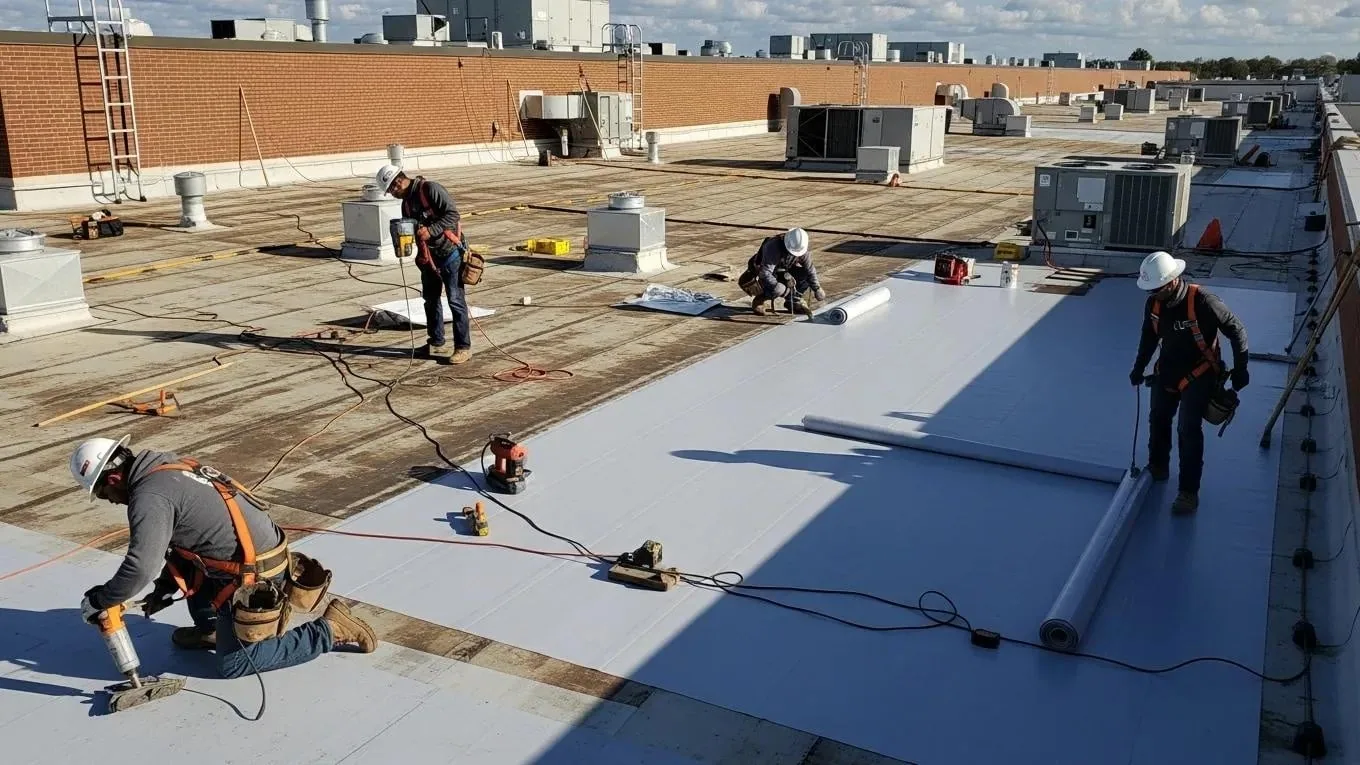
Large display windows, public entrances, and finished ceilings call for a planned drop zone. We identify where a lift can operate, which doors remain in use, and how removed roofing material will leave the property. The work limit includes protection below each roof opening and a dry-in point for the end of the shift. A phased occupied-building reroof can separate roof sections when a broader replacement would otherwise cross several operating areas.
Noise and dust can affect sales, office work, and vehicle movement. The property contact sets operating windows and any route restrictions. We schedule material handling around those directions and keep the daily roof boundary visible in the work record. If a task requires a room or drive aisle to close temporarily, that condition is listed before the crew reaches it, rather than treated as an unplanned change on the roof.
Service bays: inspect equipment and exhaust details
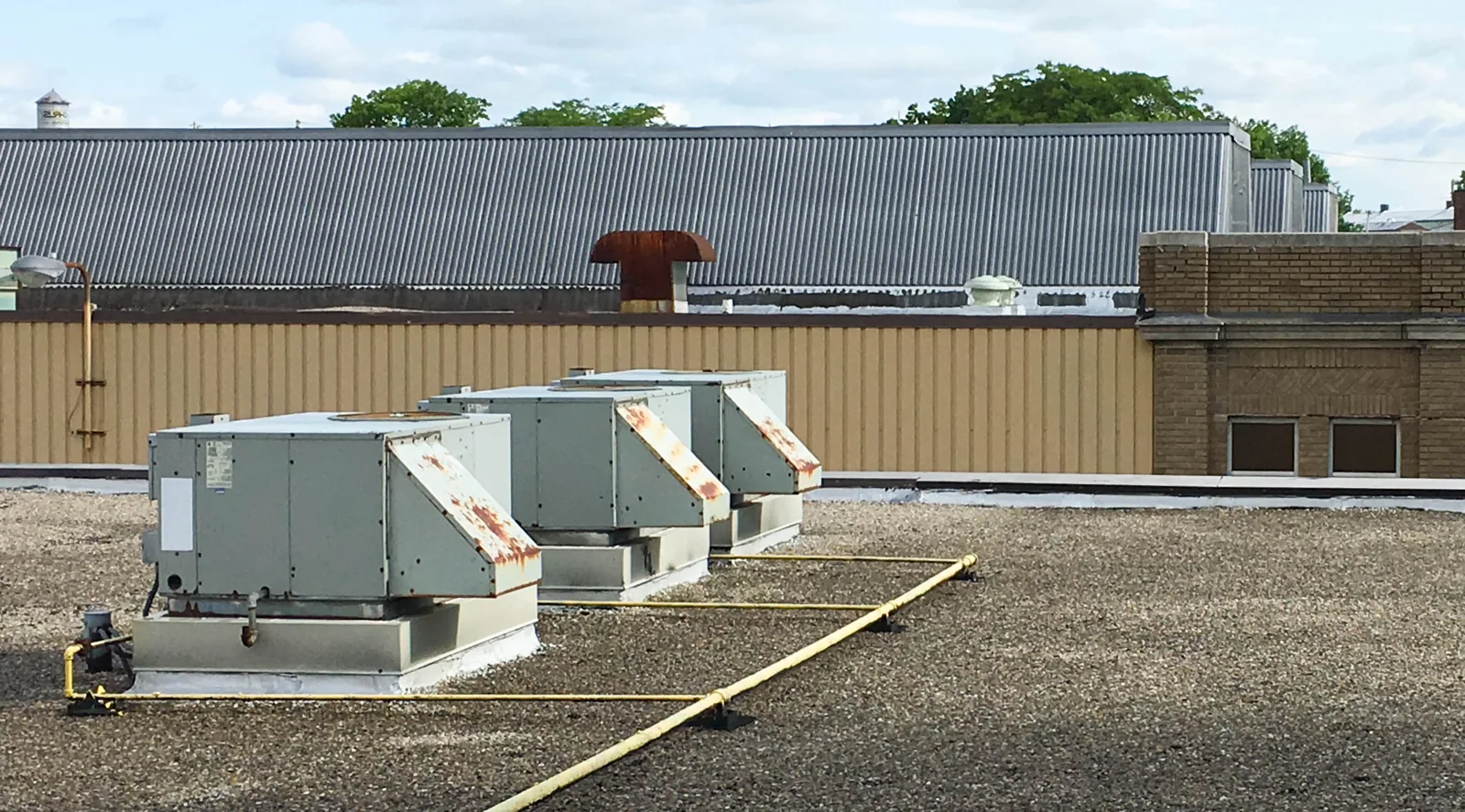
Fans, exhaust ducts, condensers, and piping create openings that interrupt the membrane. We inspect curb corners, counterflashing, fasteners, and the membrane turn-up for separation or movement. Unit maintenance belongs to the mechanical trade. A curb and support repair addresses the roof transition and identifies where the equipment handoff starts. If a support appears unstable, it is recorded before flashing is rebuilt around it.
Hot exhaust and equipment vibration can affect the surrounding sealant and metal, but the actual assembly determines the correction. We check for an open lap, damaged flashing, or failed fastener and tie the repair to compatible material. Photos show the curb before and after work. Any unit access restriction is confirmed with property staff, and the roofing scope does not absorb diagnostics or connections assigned to a vehicle-service or HVAC contractor.
Leak path: follow water across the roof field
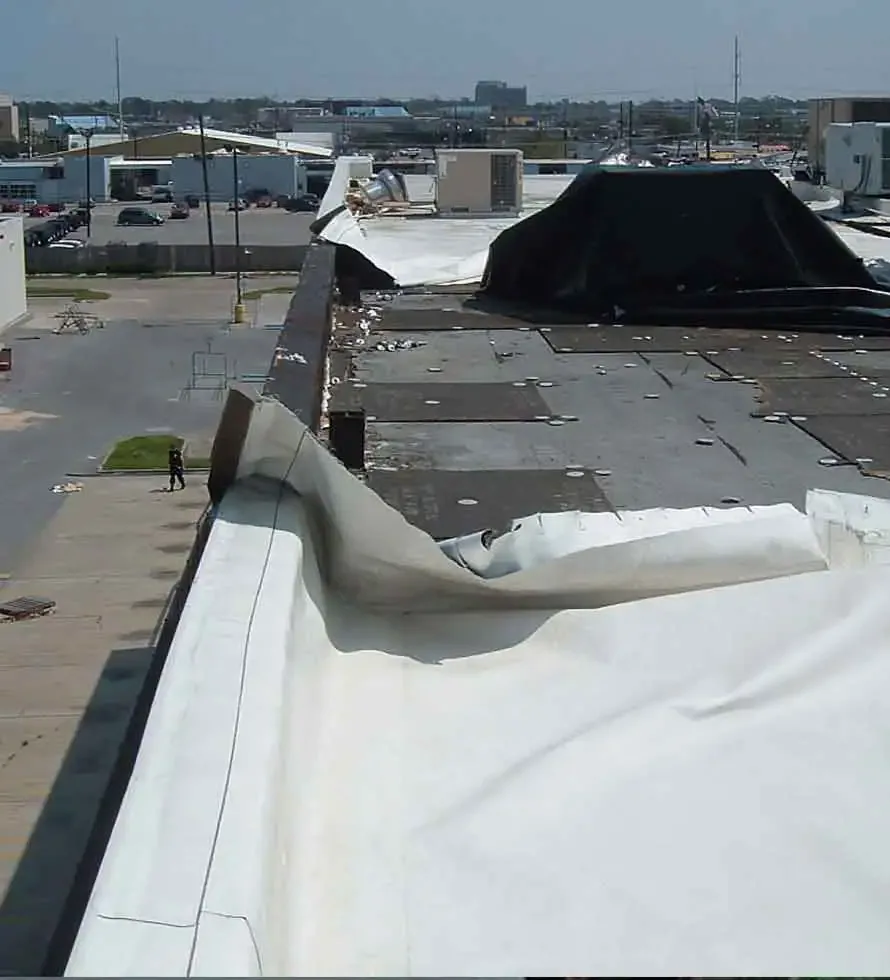
Water can cross insulation or deck joints before reaching a ceiling tile. We compare the interior mark with the seam, curb, drain, or wall detail above and around it. A commercial leak repair identifies the entry point and the material that can receive the new tie-in. If wet insulation is suspected, a focused moisture survey or test cut can clarify the removal edge before the repair is priced.
Stamford summer normals place daily highs in the low-to-mid 80s Fahrenheit and record cooling demand. Exposed laps, sealants, and metal returns around equipment are useful seasonal inspection points. Heat alone does not establish failure. We inspect the detail and record any separation or wear that is actually present. That keeps a weather fact tied to a roof decision instead of turning it into a general replacement claim.
Drainage: keep roof outlets clear of adjacent defects
Drain bowls and scuppers can be distant from the place water shows inside. We check the strainer, flange, overflow, and nearby membrane, then follow the route to the outlet. A drain and scupper correction covers the outlet detail. If water remains after the opening is clear, we check slope, deck movement, and old patches. The scope distinguishes those causes so a drain repair does not conceal a separate seam issue.
Harbor Point and the South End sit within Stamford's broader mixed-use growth area. That setting makes it useful to confirm loading, vehicle lanes, customer entrances, and lift space on the dealership's own property plan. If the roof is above a service route, the daily sequence keeps that path identified and protected while material travels between ground and roof.
System choice: match the correction to the assembly
A contained seam defect with dry adjacent insulation may fit a local repair. Repeated failures, broad moisture, loose attachment, or deck deterioration can point to wider work. We inspect and test where the result could change the recommendation. A PVC membrane needs a compatible patch and prepared seam; other systems require their own tie-in details. The existing assembly, not the building label, determines the material choice.
If an overlay is considered, the deck, attachment, moisture, drains, and curb height must support it, and we check the code provisions that apply to the filed permit. A roof recover evaluation compares those conditions with removal. A big-box retail roof may have broad fields and a warehouse roof different equipment patterns, but neither tells us the condition of this dealership's roof.
Area context: confirm access at the property
The adopted Stamford plan places Downtown and South End among the city's higher-intensity mixed-use areas and directs growth toward neighborhood centers. A commercial address near those areas may have tighter material staging than an open parcel, but the actual site controls. The roof plan and field walk establish which entrance, service drive, or loading path remains available. We do not carry a staging assumption from another property to this job.
Norwalk's plan groups business and industrial uses along Routes 1 and 7 and Martin Luther King Jr. Drive; Norwalk Center and SoNo retain pedestrian-scale business blocks. Near those corridors, we check the route from unloading to roof access and preserve the pedestrian path set by the property. A Norwalk Route 1 corridor roof walk still documents the building's actual curb, seam, and staging limits rather than inferring them from the roadway.
Commercial Roofing Questions
Can showroom leaks be limited to one roof section?
A local boundary works when testing and inspection show stable material around the failed detail. We mark the zone and tie-in, then identify any area not opened. If moisture or attachment issues continue beyond it, the additional area is reviewed before the work limit grows.
How do you keep service bays accessible during roofing?
The site contact identifies vehicle routes, work areas, and any equipment access that must remain clear. We map lift placement, material movement, ground protection, and the daily closeout before opening a section. A route change is confirmed and documented before work shifts.
What roof details are important around dealership HVAC?
Curb bases, flashing corners, fasteners, counterflashing, and the membrane tie-in are inspected for an open water path. Equipment service stays with the responsible trade. Our scope identifies the roofing transition and any support condition that requires a separate handoff.
When is a roof recover possible for a dealership?
The existing layers need acceptable moisture and attachment, the deck must support the added assembly, and curb and drain heights must be rebuilt. We confirm the applicable permit conditions before pricing an added layer. If those conditions fail, removal can provide a clearer repair boundary.
What should the roof report show?
It should identify the roof zone, detail observed, photos, test areas, material removed, and work assigned to another trade. We state the limits of the inspection and the condition that could change the recommendation, so follow-up remains tied to the actual roof.