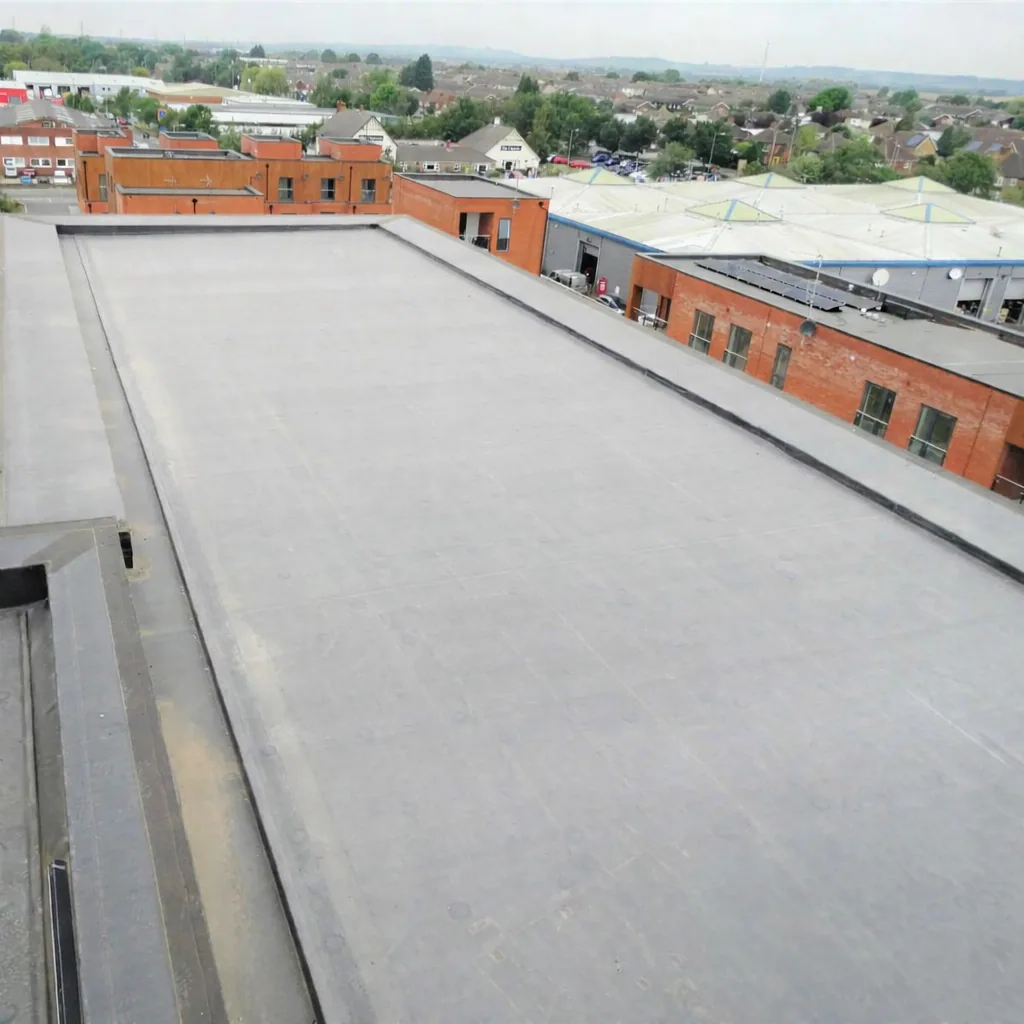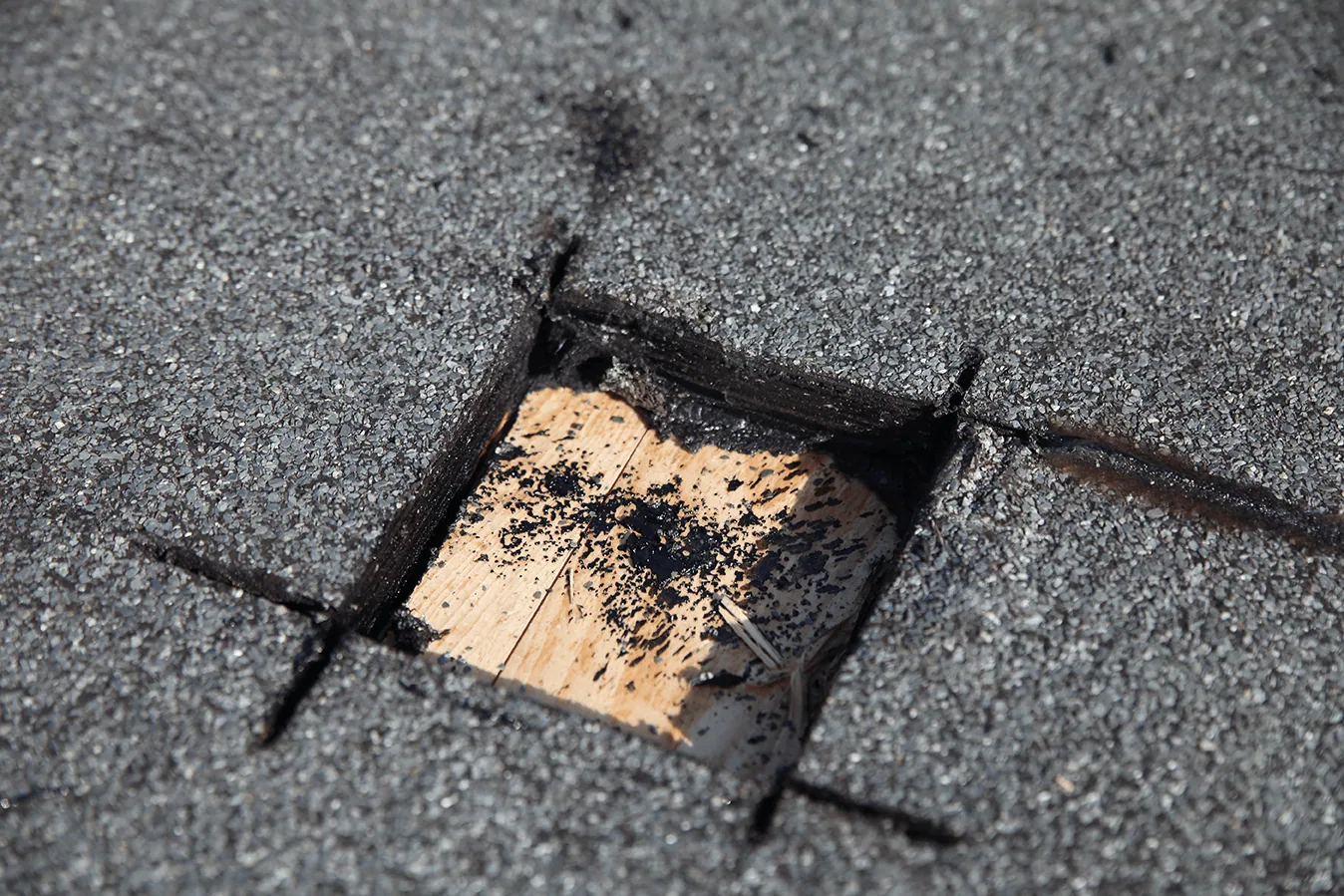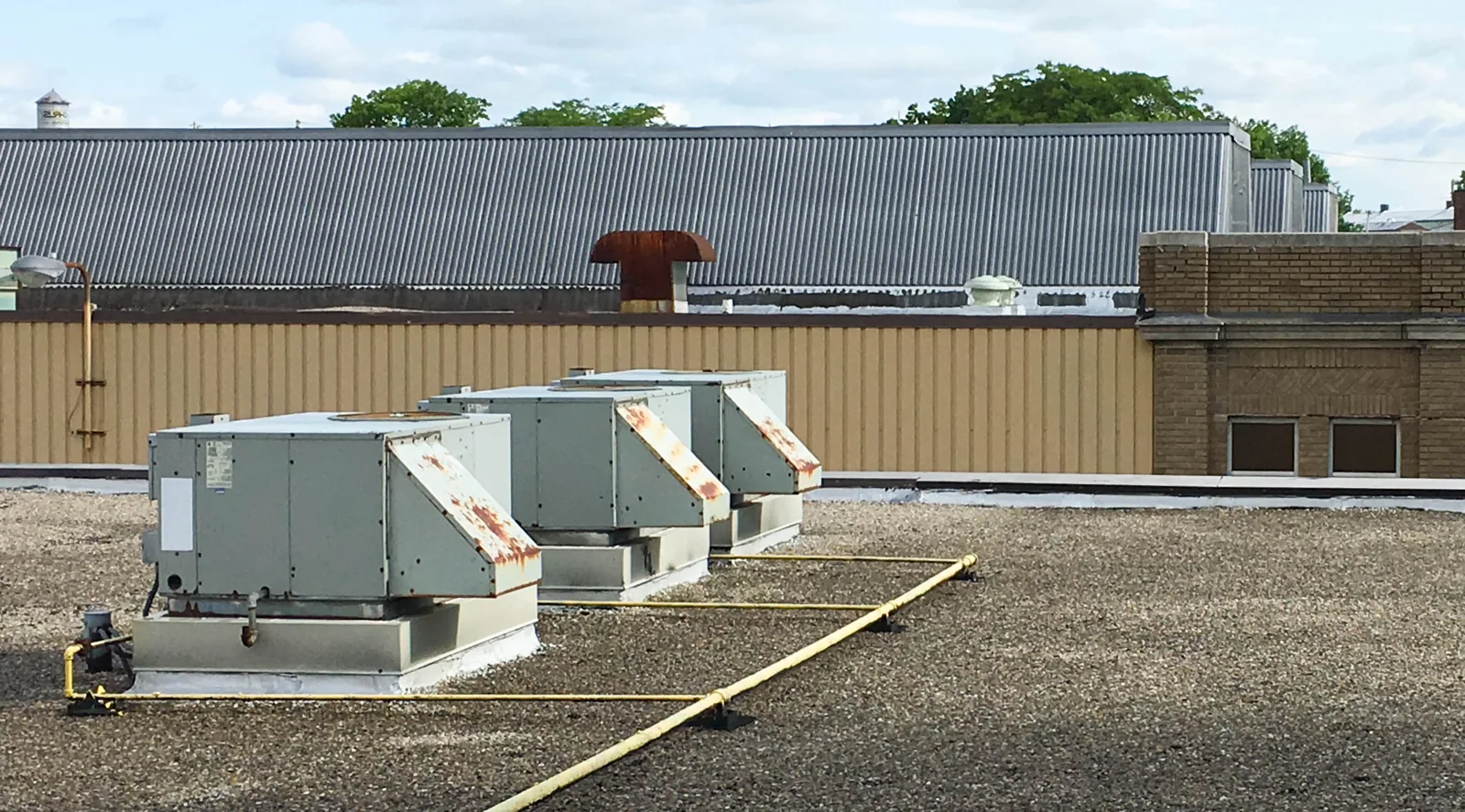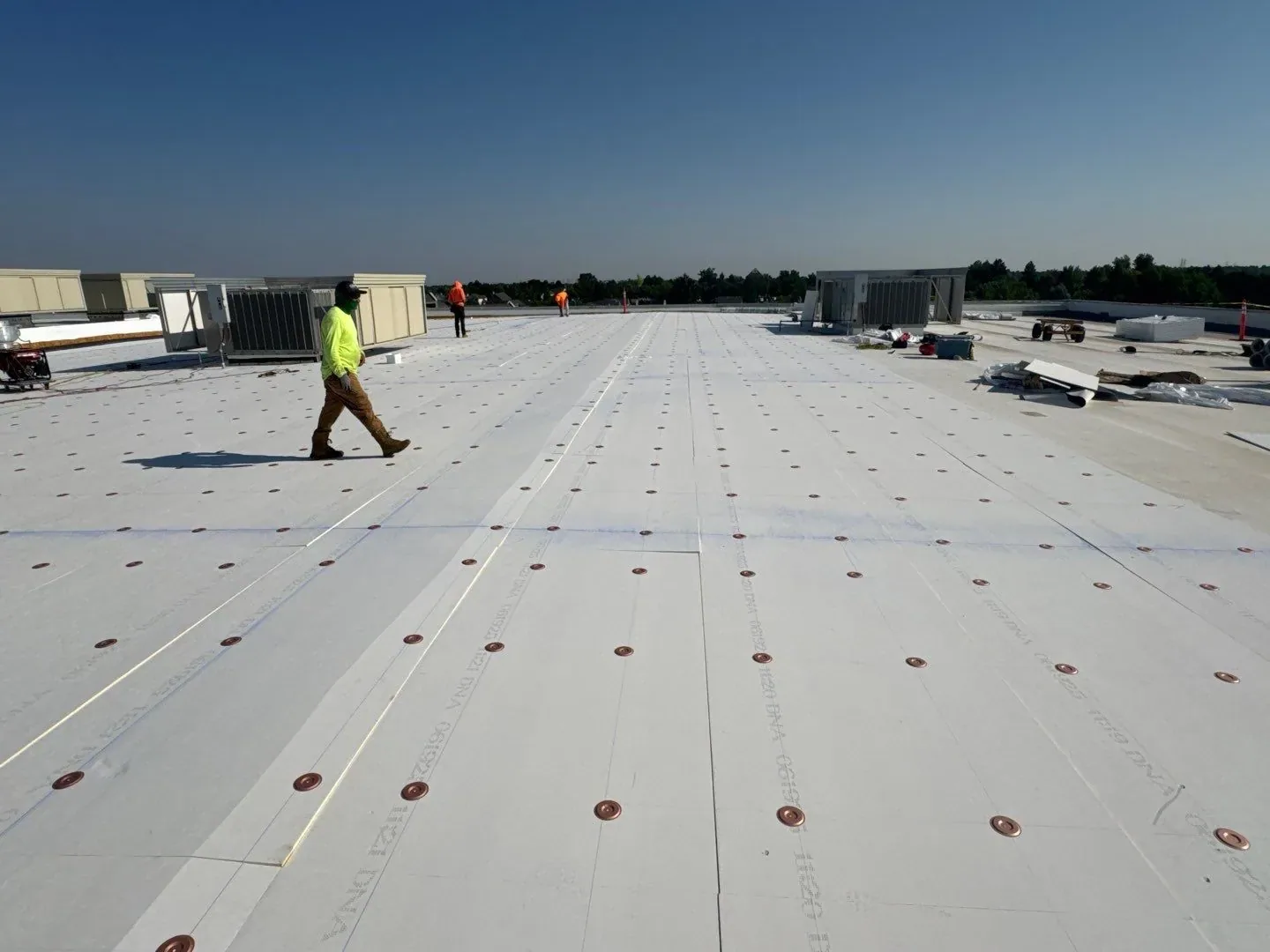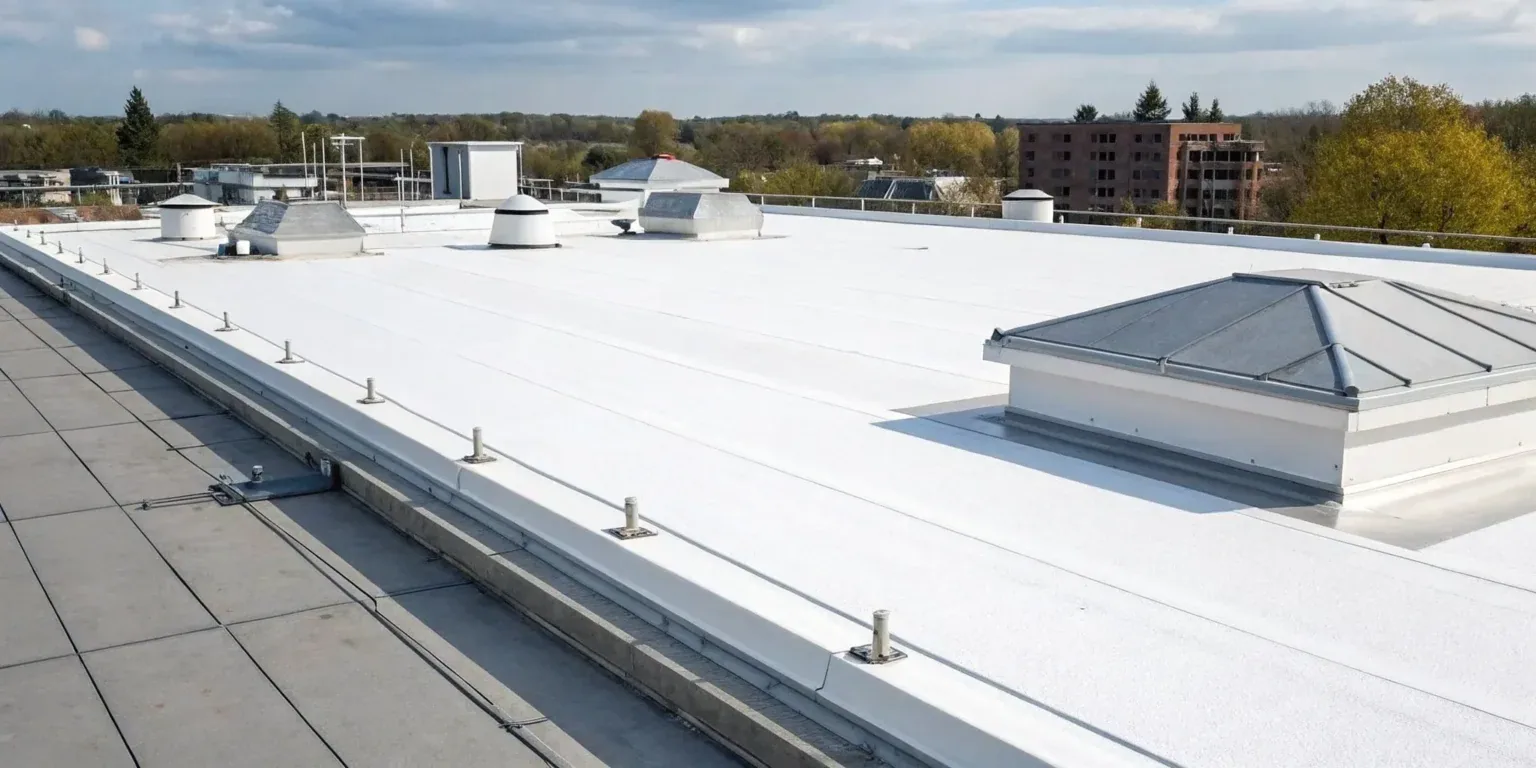
A roof can carry Carlisle SynTec membrane and still need a careful diagnosis at every transition. The label on a roll does not tell us how this particular roof was attached, where previous repairs changed the assembly, or whether water is moving beneath the visible surface. We start with the roof records, then inspect field seams, perimeter conditions, drains, penetrations, curbs and wall terminations. South End lies beside Downtown within Stamford's urban mixed-use area. For a Glenbrook roof, we confirm access and staging with the property manager before opening a section. Our commercial roof inspection records the conditions that control the work boundary.
Identify the roof before specifying material
Carlisle SynTec manufactures commercial single-ply roof systems, including EPDM and thermoplastic membranes. Those categories call for different repair materials and seam procedures. An old proposal may name a product line without reflecting a later overlay or a repair made by another contractor. We compare records with visible labels, membrane characteristics, attachment patterns and detail construction. Where the evidence does not settle the product, the scope says what needs confirmation before work proceeds.
On an EPDM roof, the repair approach differs from a welded TPO or PVC lap. A EPDM assembly review considers the field sheet, seam tape, cover strips, flashing and substrate. For thermoplastic areas, a a thermoplastic seam inspection checks the weld and compatible sheet. We do not bridge a material change with a generic patch. At additions, penthouse walls or equipment curbs, each side of the transition has to be understood as its own assembly.
Trace the leak path, not just the stain
Interior staining shows where water became visible, not necessarily where it entered. We compare the report with roof slope, drain locations, seam direction and penetrations. A leak beside an office ceiling may track from a curb well away from that room. We map the probable path, check suspect seams and examine the insulation or deck only when the findings justify opening the roof. A moisture survey may help select test areas, but the results require field verification before a repair boundary is set.
Carlisle EPDM details merit attention at cover-strip edges, pipe boots, corners and wall transitions. A patch placed over a loose edge can hide movement without correcting it. We check whether the surface is clean and dry enough for the specified adhesive or flashing method, then define the preparation and cure conditions in the work scope. Where a rooftop unit, curb or conduit creates a separate detail, a curb and equipment inspection can keep the related flashing from falling between scopes. The owner sees what is included and what remains open.
Separate a localized repair from roof renewal
A single opening with sound surrounding membrane may support a focused repair. Several failed seams, recurring water entry, extensive wet insulation or a compromised deck raise a different question. We document the number and distribution of defects rather than treating every roof as one large leak or one easy patch. If the existing assembly has room for a recover, the recover feasibility review addresses attachment, moisture and project constraints before another layer is proposed. Replacement may be the more direct scope when the base assembly cannot support a durable repair.
A Carlisle system choice does not by itself establish that a roof is suitable for an overlay or replacement. The existing deck, insulation, slope, drainage, perimeter, penetrations and owner requirements all matter. We compare repair, recover and replacement options only after the assembly is documented. Where a roof section contains a different brand or membrane, that area receives its own material identification rather than inheriting the Carlisle label from an adjacent section. The written recommendation explains which observations support each option and which conditions would change it.
Plan roof work around the people below
A membrane repair can affect occupants through roof access, odors, noise, tools, material handling or temporary restrictions around a work zone. Before starting, the manager identifies occupied rooms, delivery periods, secure entrances and any roof-access rules. Our field plan sets the work area, staging point and route to the roof with the site contact. In Stamford, South End lies beside Downtown within the urban mixed-use area. A Glenbrook roof gets its own access and staging plan before a section is opened.
Weather also sets limits. Adhesives and seam materials have preparation requirements, and a wet or contaminated surface cannot simply be covered. We review wind, temperature, rain risk and substrate condition before deciding which work can proceed. If a transition must remain open between work periods, the scope describes protection and the next step. For commercial sites near Downtown or Glenbrook, we confirm staging and deliveries with the property manager before work begins. The plan remains specific to the roof and the operation underneath it. Stamford's Route 1 segment between Greenwich and Darien spans 3.2 miles. For a material delivery, we confirm the unloading point and roof access with the property contact.
Leave a usable record after the repair
A closeout record should identify the roof section, system when confirmed, repair location, materials and detail addressed. Include photographs before preparation, after repair and at completed transitions where practical. Note any concealed condition found after opening and whether it was incorporated into the approved scope. A roof condition report gives owners and managers a consistent place to keep those observations with roof plans and prior work records.
The record helps the next inspection begin with the actual repair history instead of an assumption. If a seam is later disturbed by other work, the detail and date can narrow the inspection. If a new stain appears elsewhere, the prior repair can be compared without treating it as proof of a continuing leak. We state what was observed, what was completed and which issues require separate review. That keeps the recommendation tied to the roof that was accessed and the assembly that could be verified.
Set boundaries before opening the roof
A repair scope should distinguish the visible defect from the surrounding membrane that must remain sound. We note how far the seam, flashing or sheet damage extends, whether the underlying insulation is dry where inspected, and what would require a wider opening. That boundary matters on a commercial roof because later trades may cross the same area, while drainage and rooftop equipment continue to affect it. If an owner asks for a small patch where the substrate is compromised, the answer is a defined change in scope, not a promise that a smaller repair will perform.
Keep the approved detail with the roof plan and identify which Carlisle product or membrane type was confirmed. Where the records are incomplete, record the open question instead of filling it with a guess. A roof using GAF membrane needs its own material and flashing check; a Holcim Elevate membrane also requires details suited to that assembly. The distinction avoids mixing accessories or repair methods. At any Stamford roof, we verify the access route, staging point, and assembly before setting the repair boundary.
Commercial Roofing Questions
Can a Carlisle EPDM roof be patched?
A repair can be considered when the membrane, substrate and area around the defect are suitable for the specified preparation and materials. We inspect those conditions before setting the patch boundary.
Does a roof label prove which membrane is installed?
It is one clue, not a complete system record. We compare available documents with the sheet, seams, attachment and details visible on the roof.
When should an owner consider a recover?
The existing layers, moisture condition, deck, attachment and project requirements control that choice. We document those items before recommending another system over the roof.
What should the site contact prepare for an inspection?
Share roof plans, leak reports, past repair notes, access rules and any periods when work around occupied spaces must be limited.
Can different roof sections use different Carlisle products?
They can differ by age, addition or prior repair. Each section should be identified from its own records and field details before materials are specified.