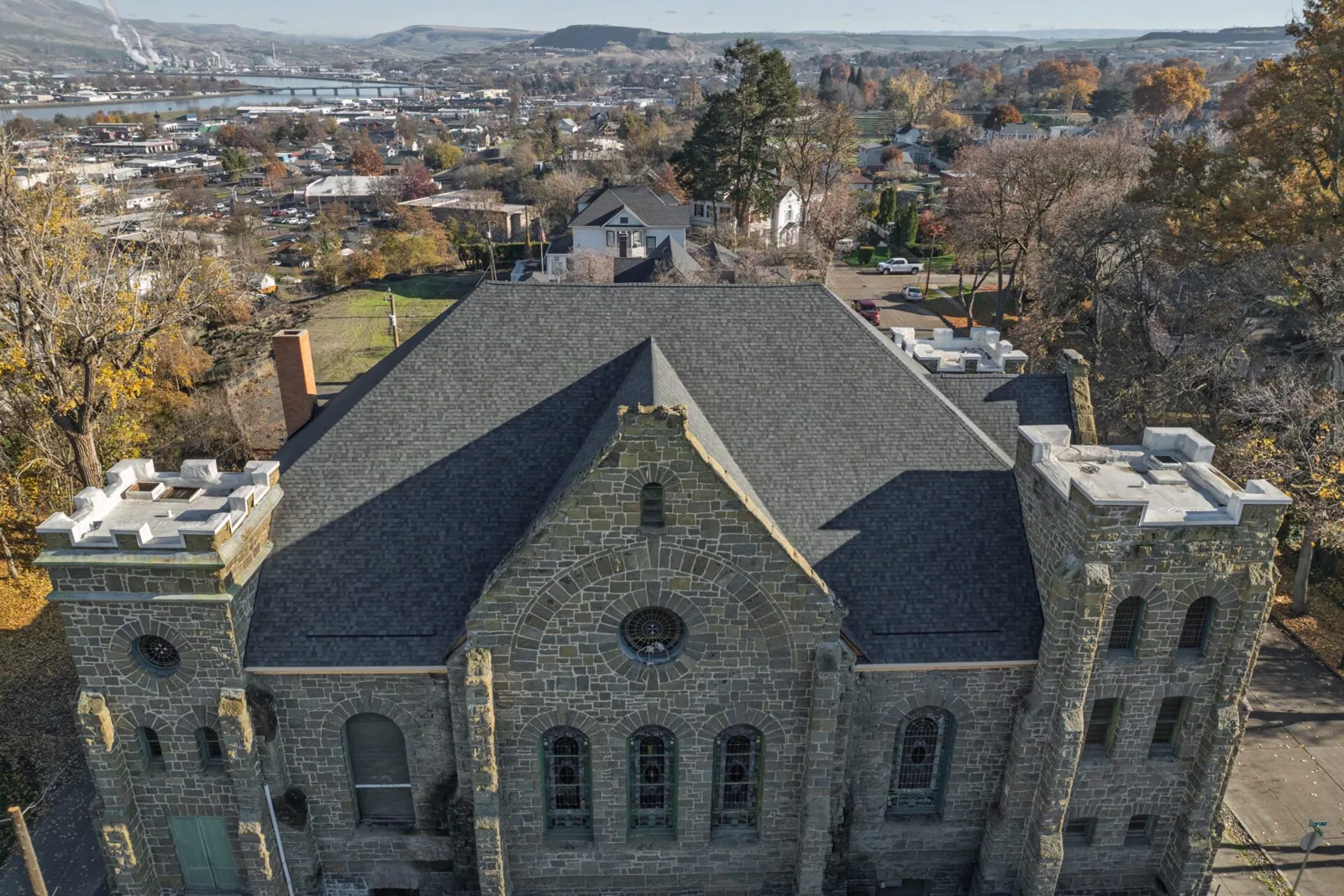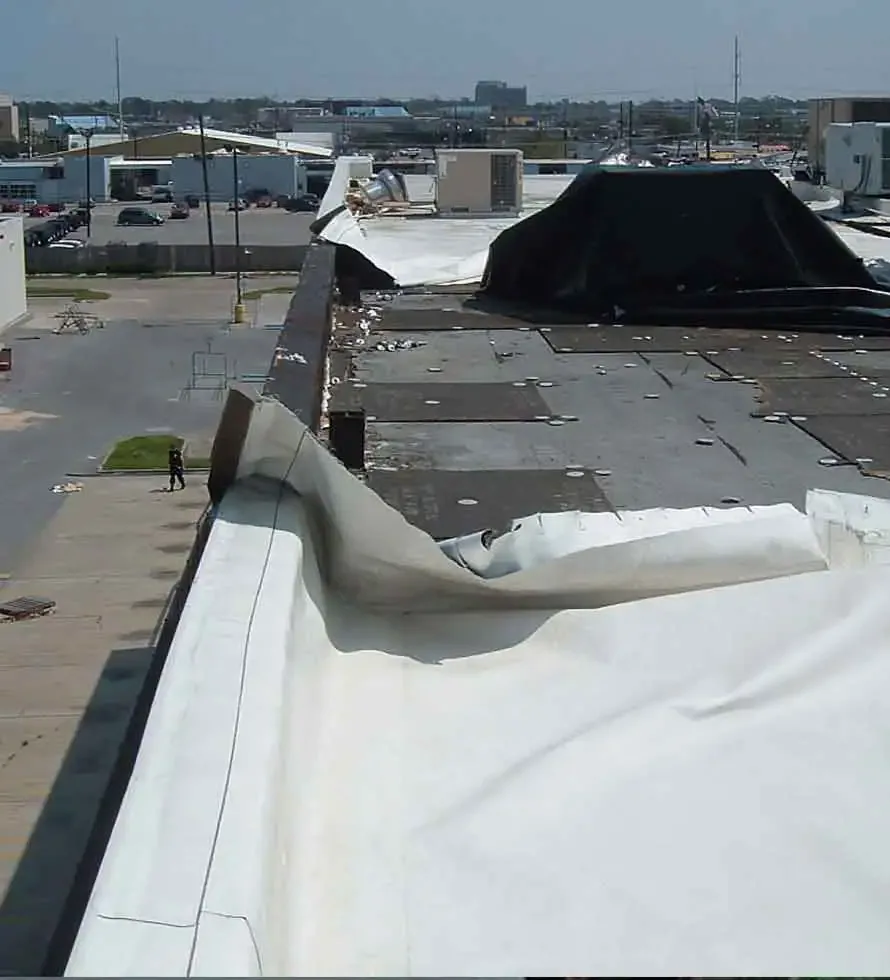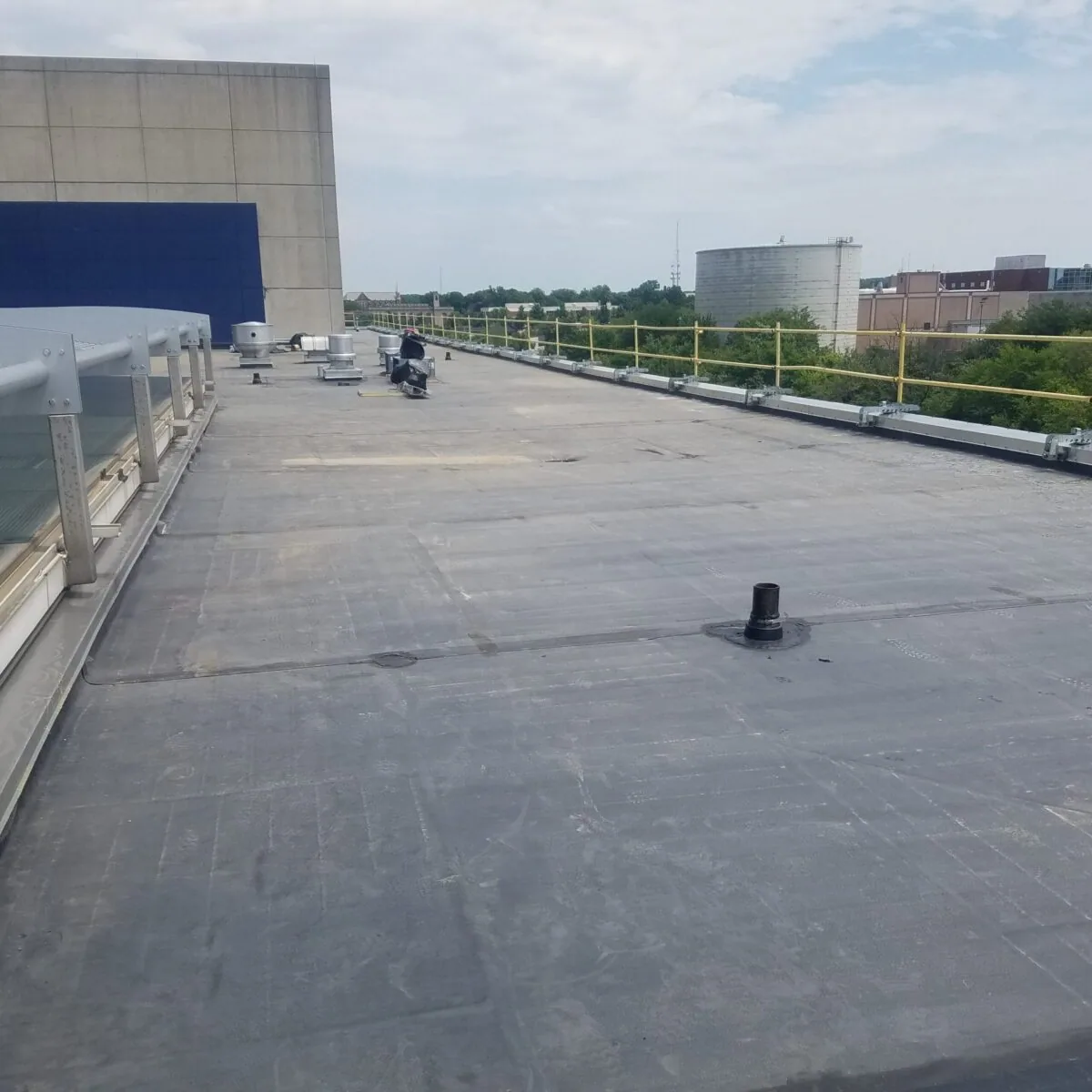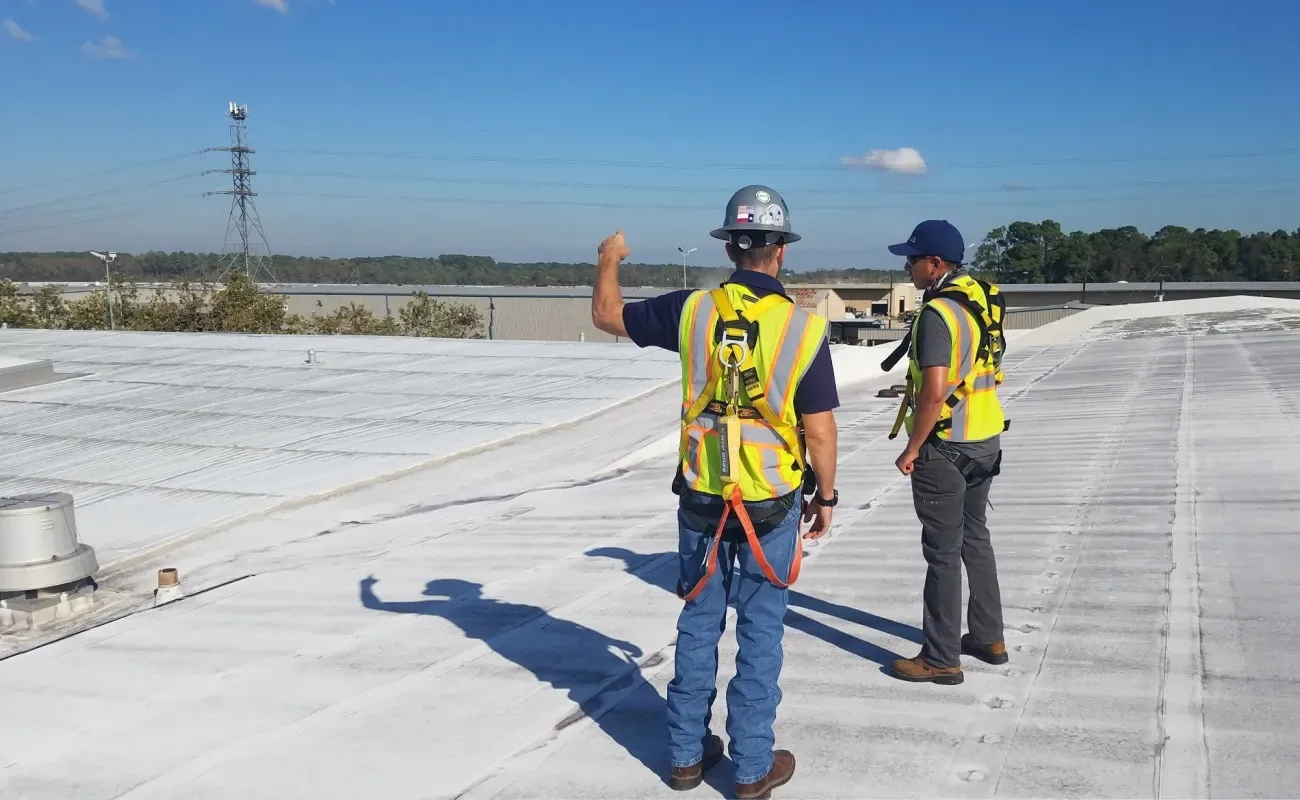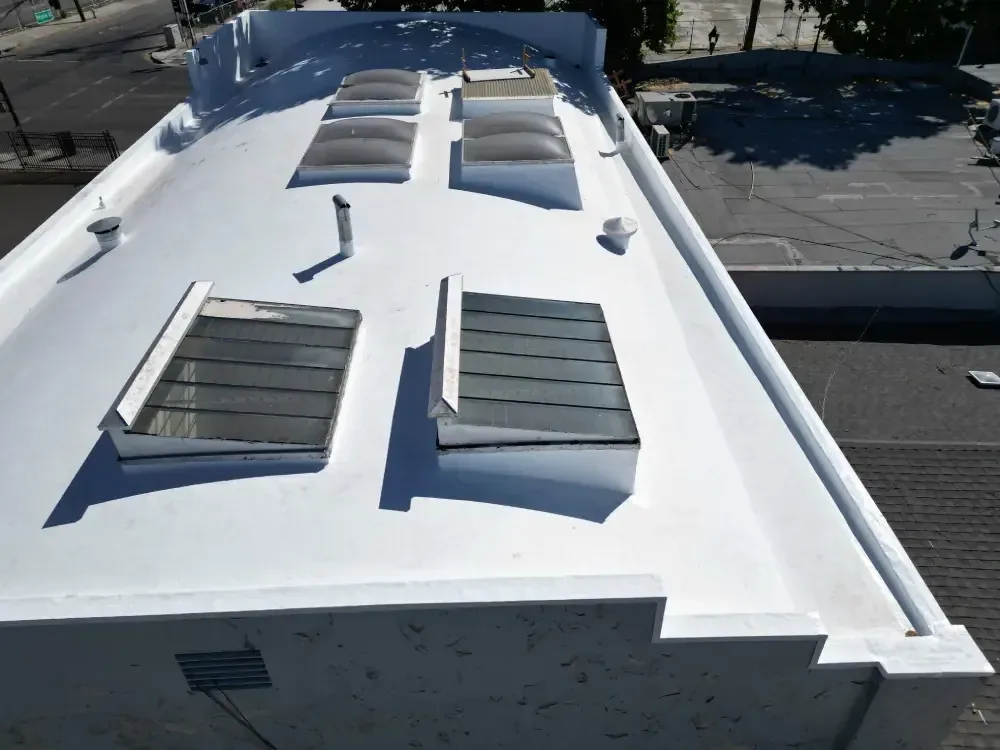
A ceiling stain after a storm does not show where the roof opened. Water can move from a seam, curb, edge, or drain before reaching the interior. We inspect the assembly, trace the reported path, and record what the roof shows. In Stamford, the National Weather Service recorded wind damage during Hurricane Sandy on October 29, 2012. For an insurance or restoration file, that local history is context, not proof of damage at a particular property. We tie photographs and repair recommendations to the building's actual roof zone. A storm-damage roof assessment can separate current observations from prior conditions and unrelated maintenance.
Damage record: connect each photo to a roof zone
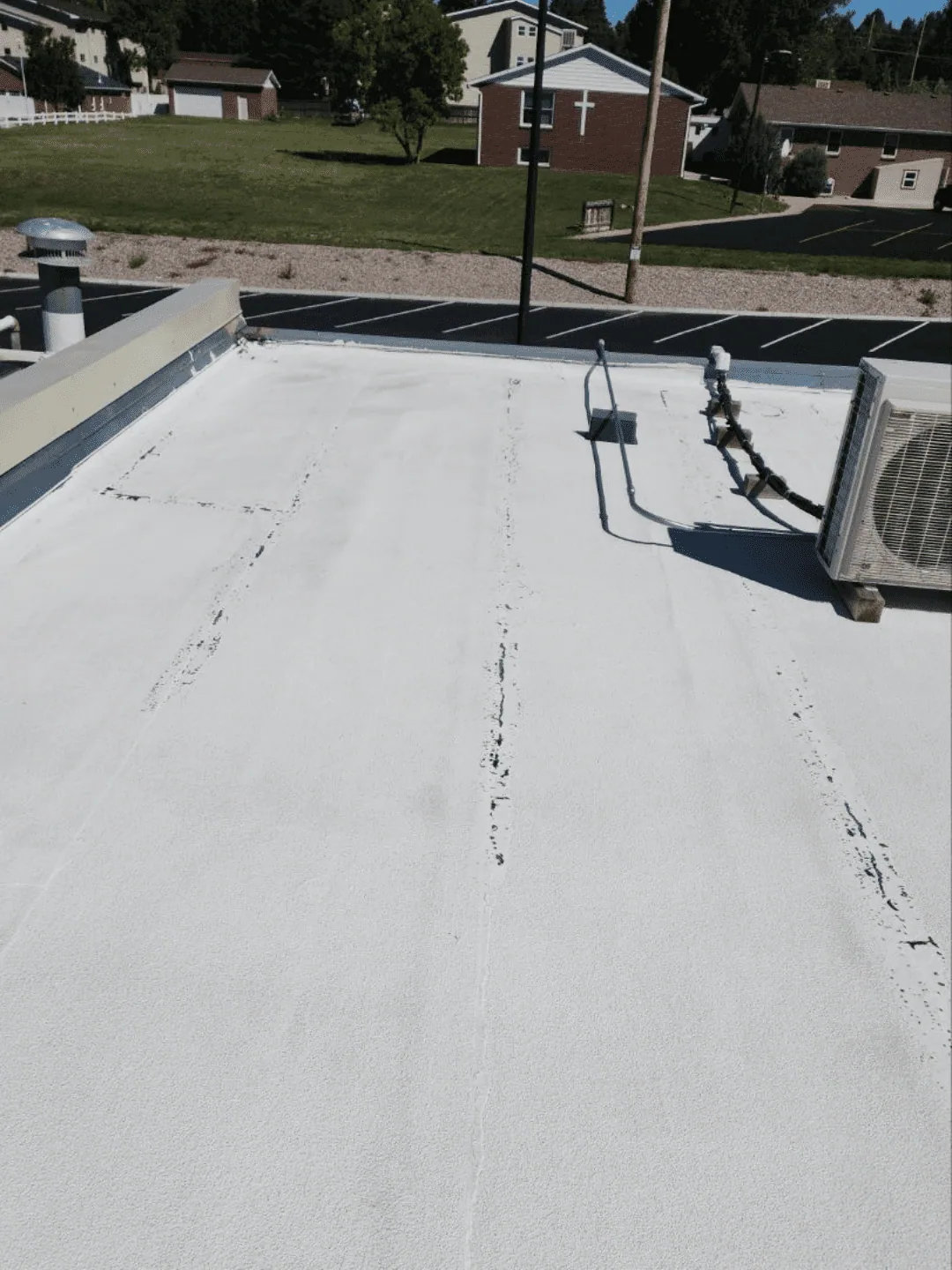
Useful documentation identifies the roof area, detail, and visible condition in each photograph. We mark open seams, displaced flashing, punctures, drain concerns, and interior reports on a roof plan. The record states what was accessible and what could not be inspected without opening the assembly. A stain may be consistent with water entry, but the source still needs to be traced. If a test opening reveals wet insulation or deck damage, we document the extent and how it affects the proposed repair. Record the inspection date and whether temporary work had already changed the affected detail.
Stamford's coastal-impact guidance describes how high water can contribute to street and basement flooding when the hurricane barrier is not closed. That context makes drainage and water pathways worth reviewing after coastal weather, but it does not establish the cause of a roof leak. We inspect outlets, overflow paths, terminations, and penetrations at the property. a roof condition report can keep observed damage, recommended work, and questions for further testing in separate parts of the file. An annotated roof map lets a reviewer locate each image without relying on a room label alone.
Repair scope: separate immediate work from restoration
A dry-in limits immediate exposure; permanent work addresses the confirmed roof defect. We identify what must be made weather-tight, which materials can be reused, and where removal should continue to reach sound assembly. A patch around a puncture is not equivalent to replacement of wet insulation or a failed edge. The scope describes the roof area, materials, tie-in, and closeout inspection. Any hidden condition that could enlarge the work is stated as a review point rather than presented as confirmed damage.
Hurricane hazards along Long Island Sound include wind, precipitation, surge flooding, and erosion. That regional hazard description does not prove that every storm-related roof condition came from one event. Our inspection focuses on the visible detail and water path at the building. If a membrane seam has lifted, we record its length and adjoining condition; if a curb flashing has opened, we photograph its sides and termination. leak repair work can address the confirmed entry detail while keeping unrelated roof maintenance outside the damage scope.
File coordination: make the evidence legible
An adjuster or restoration contractor may need a concise description of the condition, location, and proposed roofing work. We can provide photographs, a roof plan reference, material notes, and a repair boundary. The file should distinguish direct observation from the interpretation that links a roof detail to an interior report. We do not determine policy coverage or promise a claim outcome. Those decisions belong to the insurer and policyholder. Our part is to describe the assembly and the roofing work required to correct the observed condition.
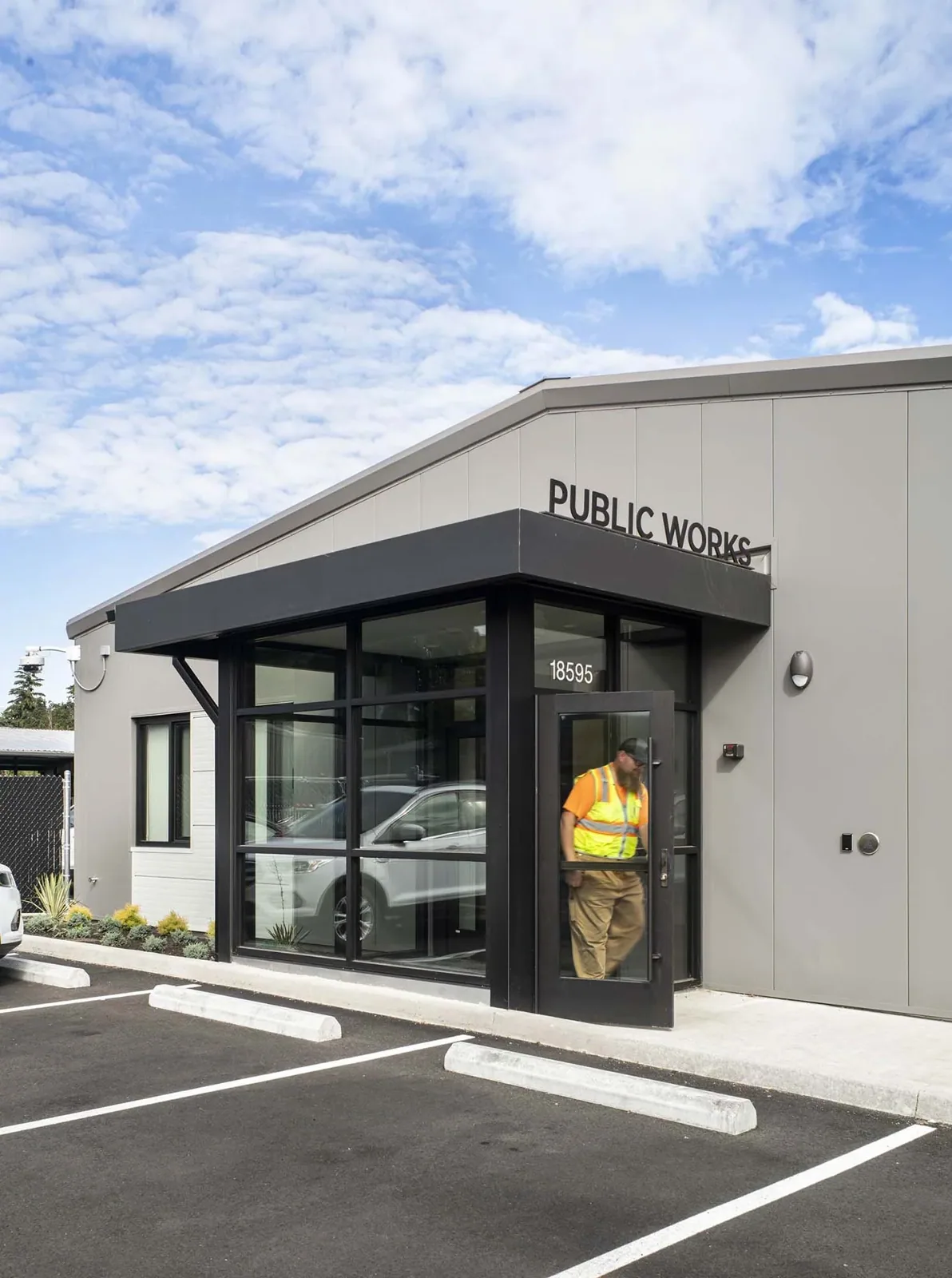
Norwalk's Route 1, Route 7, and Martin Luther King Jr. Drive corridors include commercial and industrial uses, with business areas such as Norwalk Center and SoNo. For a restoration project near those districts, access and pedestrian movement may affect lift placement or material delivery. The site's own plan controls. We can coordinate the repair area with the restoration team and show what roofing detail must be completed before interior finishes are closed. public building projects may have separate procurement documentation, but the roof evidence still needs to point to a specific observed area.
Permanent correction: test the repair boundary
After temporary protection, the permanent repair needs sound substrate and a compatible tie-in. We remove only the agreed materials, check the deck and insulation at the opening, and extend the work where the observed condition requires it. A broader patch that stops before wet material or leaves a loose edge will not resolve the underlying path. If multiple roof areas show failure, we compare those zones with the overall assembly before recommending recover or replacement. A commercial inspection can document adjacent details that are outside the storm repair. We note whether the repair reaches stable material and how it ties into the existing membrane.
Stamford's NOAA normals show recurring winter snowfall and subfreezing overnight temperatures. Cold-weather conditions make the dry-in and protection sequence important when roofing is opened, but the normal climate values are not a project forecast. We inspect the actual substrate and confirm the repair method suits the membrane and conditions at the work area. The closeout record should say what was replaced, how the tie-in was made, and which adjacent condition remains for separate maintenance. A replacement scope becomes relevant when widespread damage or assembly failure makes isolated restoration impractical.
Closeout: preserve the before-and-after
We match completed-work photos with the initial roof map and identify repairs by location. The file notes material removed, material installed, and any area excluded from the authorized scope. If a test was not performed, the record does not imply that concealed insulation or deck is sound. The property team can retain that boundary with future maintenance records. roof asset management can keep the inspection and repair history available when the next weather report or service call arrives.
Share the claim or restoration scope, interior leak locations, roof plans, and prior repair records before the walk. We will inspect the assembly and prepare a written roof scope based on observed conditions. For context, Downtown Stamford and nearby South Norwalk have distinct mixed-use and pedestrian-scale commercial areas; the repair itself remains tied to the property and its roof. A property-management history can preserve the same roof boundary after the claim file closes. The final record can then be reviewed against the assigned work without adding a claim about coverage or cause beyond the evidence.
Commercial Roofing Questions
What roof documentation can help an insurer evaluate a storm-related loss?
A roofer can document the roof condition and prepare a repair scope, but coverage depends on the policy and insurer's review. Our report distinguishes observation from a question that requires a coverage decision.
Which roof details and interior observations belong in leak documentation?
Record the interior location, roof zone, suspected seam or penetration, adjoining membrane, and any temporary protection. We tie those views to a plan so the repair area can be identified later.
Can temporary protection be part of the permanent repair estimate?
Temporary protection can be listed separately from permanent work. The estimate should show materials, limits, and what inspection or opening is needed before the lasting repair is set.
How do you handle wet insulation found during a storm repair?
We map the opened area, document the material, and explain whether removal should extend. Any added work beyond the authorized limit is presented for review before that limit changes.
Will your report state the exact cause of every leak?
The report identifies an observed entry detail when the inspection supports it. If water may have traveled under the assembly or concealed conditions remain, it says what further test would clarify the path.