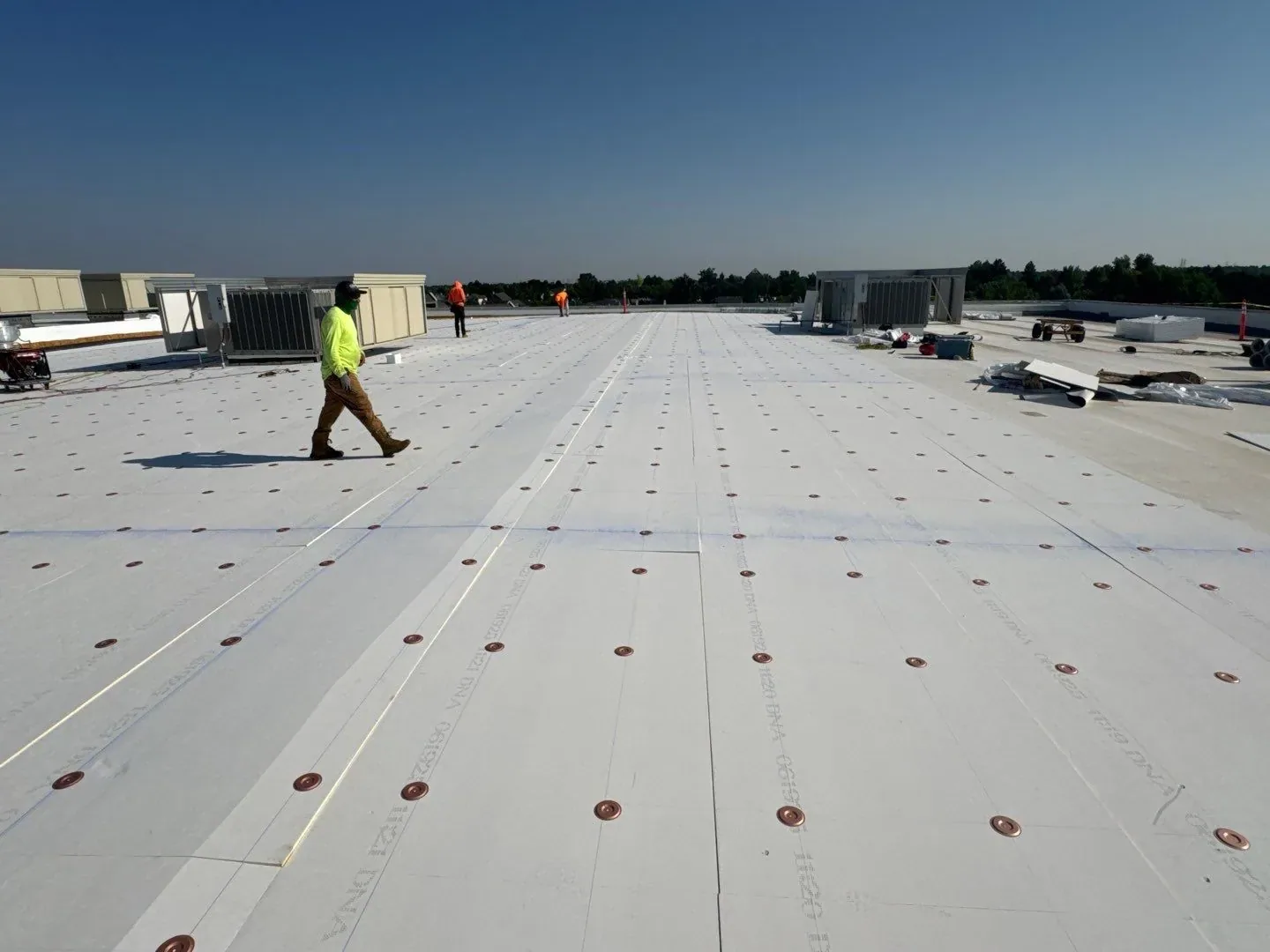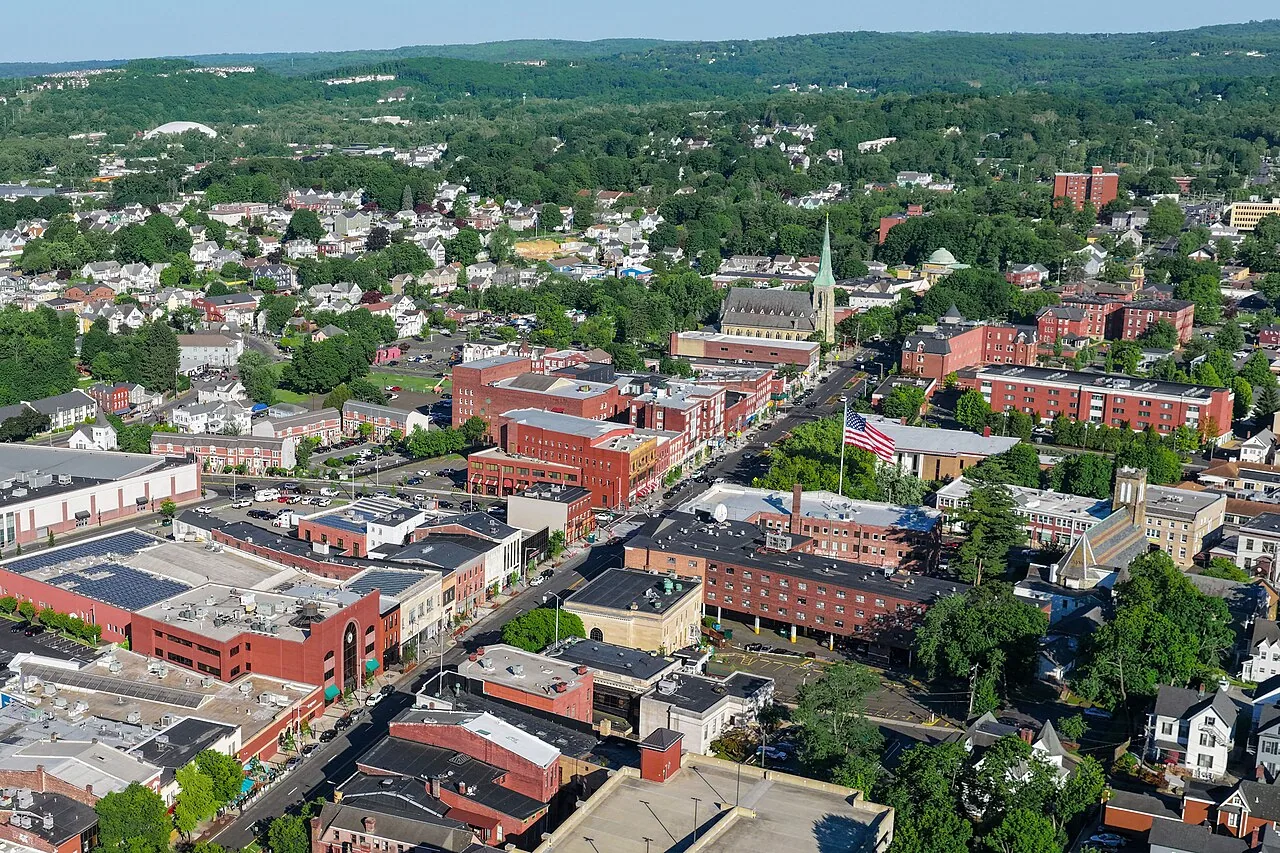
A roof leak near a curb can follow the membrane before it reaches an office or storage area. In Danbury, CT, we inspect the seam, flashing and drainage around the reported mark, then decide whether the repair can stop at sound material. Danbury is a principal work destination in the region alongside Norwalk and Stamford. The Danbury Branch rail corridor also parallels Route 7 toward Norwalk. That connected commute network does not tell us what any building has overhead. We verify the assembly on site and write the scope around its actual condition. A commercial roof inspection starts with the water path and the detail that could be carrying it. Leak repair follows once that path is tested.
Route connections: plan deliveries at the property
Route 7 meets I-84 and US Routes 6 and 202 in Danbury, and Route 7 includes expressway sections there. Those connections help explain the city's regional role. The roof plan still begins at the building entrance, loading point and safe access to the work area. We confirm which drive can receive material, where a lift or crane may set up, and what doors must remain open. Traffic movement does not establish permission to stage equipment on a particular parcel.
Regional service calls also reach Norwalk and New Canaan. A roof walk in Norwalk Center or New Canaan Center still starts at the reported leak, the roof access point and the area that must remain in use. We set those limits with the property contact before materials arrive. Route connections do not replace a site-specific access check, and a regional commute corridor does not describe the roof construction at an individual property.
When access is tight, the sequence changes. Smaller deliveries can reduce the footprint below, while a longer path from unloading to the roof can add handling time. We include those conditions in the estimate rather than treating the map as a staging plan. For an occupied office or warehouse, we also identify the rooms beneath removal and agree on protection before opening the roof. A clear roof condition report keeps those choices tied to the repair boundary.
Water path: locate the detail before patching
A ceiling stain may sit well beyond the opening. Water can move along a deck flute, insulation joint or membrane lap, then appear at a low point. We compare the reported timing with roof slope, drain direction and nearby penetrations. The first visible defect is a lead, not a diagnosis. We lift or test only where access and roof condition make that useful, then record what is wet and what remains firm.
Rain can enter at a fastener or metal return, then follow the deck before it becomes a stain. We compare the report time with the conditions around rooftop equipment and the drain path. If water is still entering, temporary protection may limit further exposure while we prepare the permanent repair. The temporary step depends on safe access, the roof surface and weather. We record the locations tested so the final scope follows the evidence on the assembly.
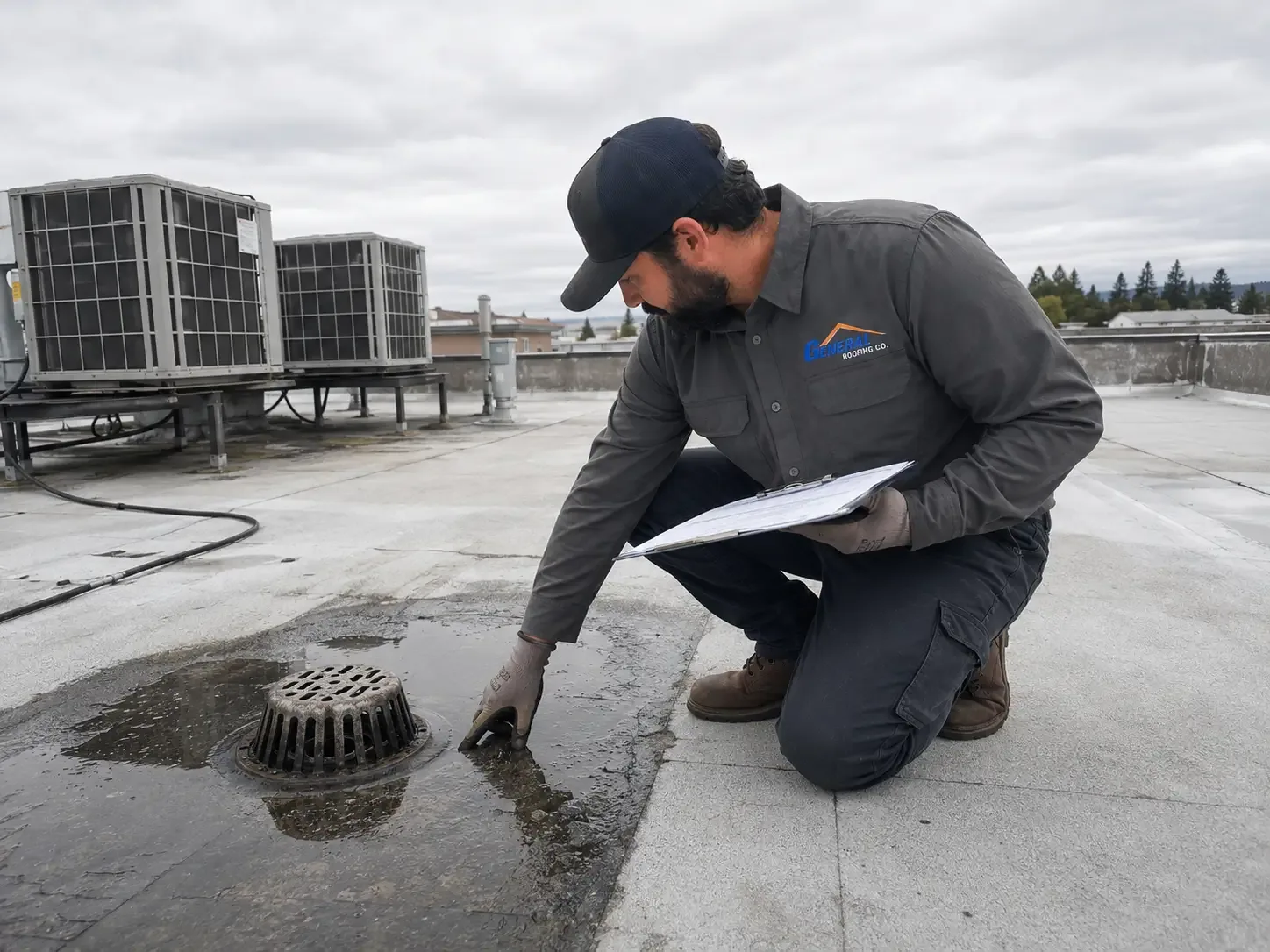
At a curb, the membrane must turn up and connect to the flashing without leaving a loose corner. At a seam, lap direction and bond matter. At a drain, the bowl, flange and surrounding field must work together. We mark the condition that can be repaired and the edge beyond which wet insulation, a broken deck or moving substrate would change the scope. Drain and scupper repairs address the outlet and its surrounding transitions, not just debris in the bowl.
Assembly: match the repair to the installed roof
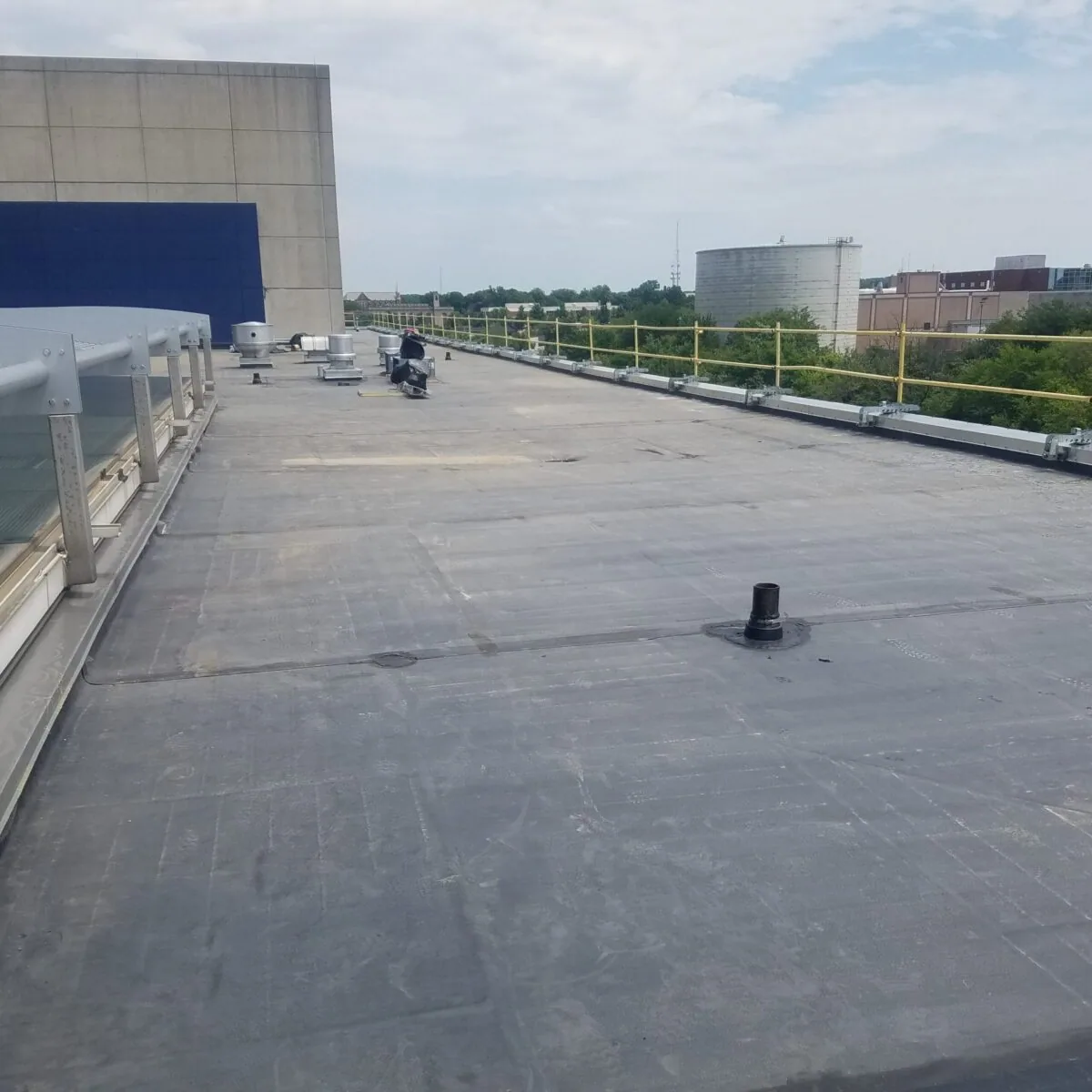
Patch materials do not bond equally to every membrane. Before choosing a repair method, we determine whether the field is sheet membrane, layered bituminous roofing, metal or a coated surface. Thermoplastic sheets, EPDM and metal each need a different tie-in, so we confirm the installed material at a seam or exposed edge. A compatible patch needs clean, dry substrate and a sound edge. If the surface is contaminated or the sheet has lost strength, adding another layer can hide the defect without restoring the connection.
Metal transitions need their own check. We look at fasteners, laps, end dams and the way the metal return meets the field membrane. A short split at a penetration may take a focused repair. Repeated separation across several details can point to movement or age that a single patch will not address. We explain the difference in the written scope, with TPO roof work selected only after the installed system is confirmed.
Repair boundary: choose the work that holds
A localized repair is useful when the surrounding membrane is attached, the insulation is dry and the detail can be sealed back to stable material. We remove failed material, prepare the surface and rebuild the transition. The estimate names the area included and the condition that would expand it. That gives the manager a decision point before work reaches a larger field or a different roof section.
Budget review works best when the alternatives share the same condition record. We note where the membrane remains bonded, where a seam has opened and whether the insulation changes the repair limit. That lets a manager compare a focused patch with a wider section repair without assuming that one visible leak explains the whole roof. The recommendation also identifies what should be monitored after the work and which finding would justify another inspection.
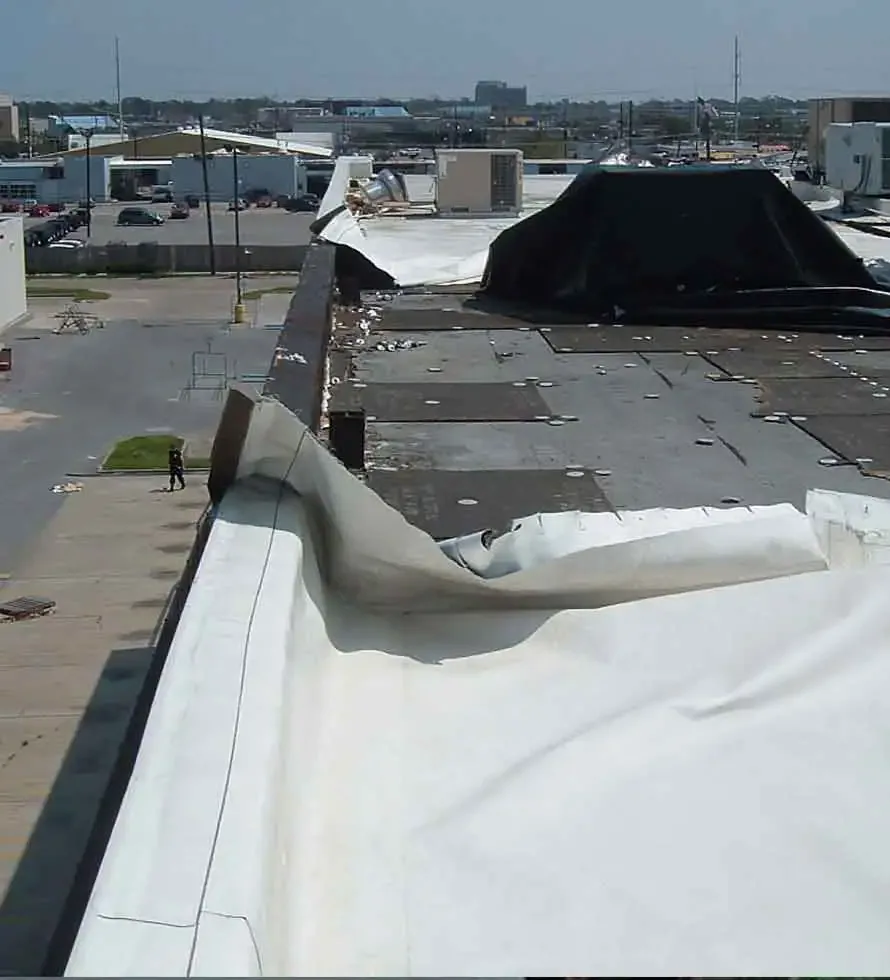
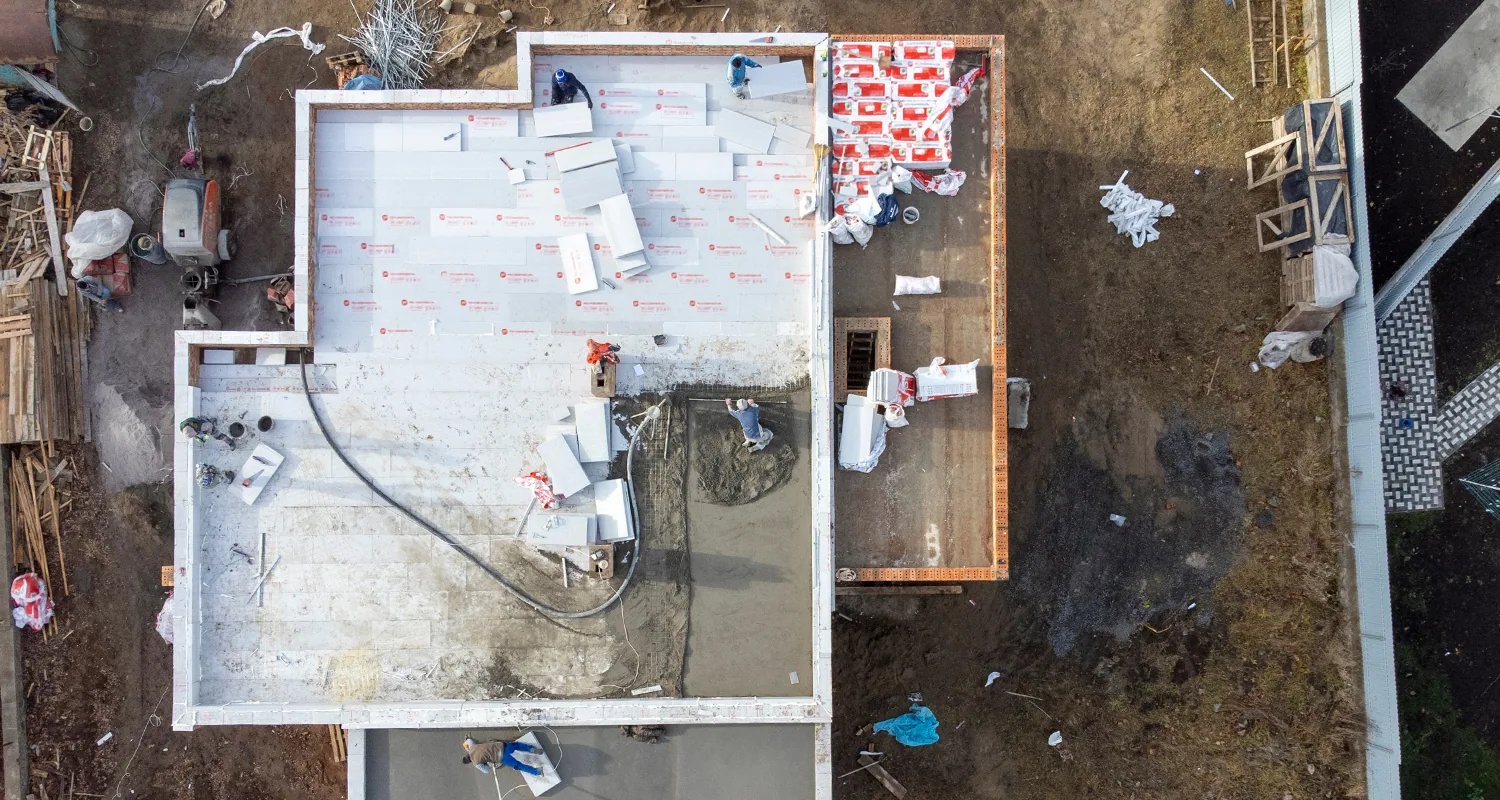
Widespread wet insulation, open seams in several areas or a deteriorated deck can make repeated patches a poor use of the budget. In that case, we compare repair, recover and replacement options against the condition of the assembly. A recover may preserve a serviceable roof below only when the existing system, moisture and edge height allow it. Replacement planning covers removal and new assembly choices; a roof recover is considered only when the existing layers support it.
Work window: protect the space below
Water entry during removal can damage finishes, stock and equipment. We set a daily opening limit, keep compatible dry-in materials ready and close the work area before weather or the site's operating window changes. For a building with active loading or shared access, the sequence can move from one section to another so the exposed area stays controlled. The contact identifies restricted rooms, alarm points and routes that cannot be blocked.
Weather affects adhesion and cure as well as access. A wet substrate cannot take every repair, and temperature can change how a membrane or coating handles. We record the condition before installation and adjust the sequence when the roof cannot be closed correctly. A coating scope starts with adhesion, surface preparation and a test area. It does not correct a failed seam or saturated insulation. We identify those conditions before recommending coating work. Work notes and photos give the manager a clear record of the repaired detail.
Commercial Roofing Questions
Why is the ceiling mark away from the roof opening?
Water can travel through insulation or along a deck joint before it becomes visible. We compare the stain with slope, seams, curbs and drains, then test the detail that fits the timing.
Can a patch solve a leak beside a rooftop unit?
A patch can hold when the flashing and adjacent membrane remain sound. We check the curb corners, termination and nearby laps first. If wet insulation or movement extends beyond them, the repair boundary needs to include that condition.
Which roof conditions alter a repair price on the danbury service route?
Access, removal depth, roof height, material compatibility and the size of the wet area all affect labor and material. We document the affected assembly and staging limits so the price reflects the work actually included.
What inspection findings move a danbury center job beyond localized repair?
Repeated failures, saturated insulation or a damaged deck can make a patch temporary. We show where stable material ends, then compare a broader repair with recover or replacement if the assembly supports those choices.
How can roofing work be phased around active operations in danbury center?
Yes, when the work area and dry-in sequence can be controlled. We set access, protection and daily closure limits with the property contact before removal starts, then keep occupied areas outside the active zone.