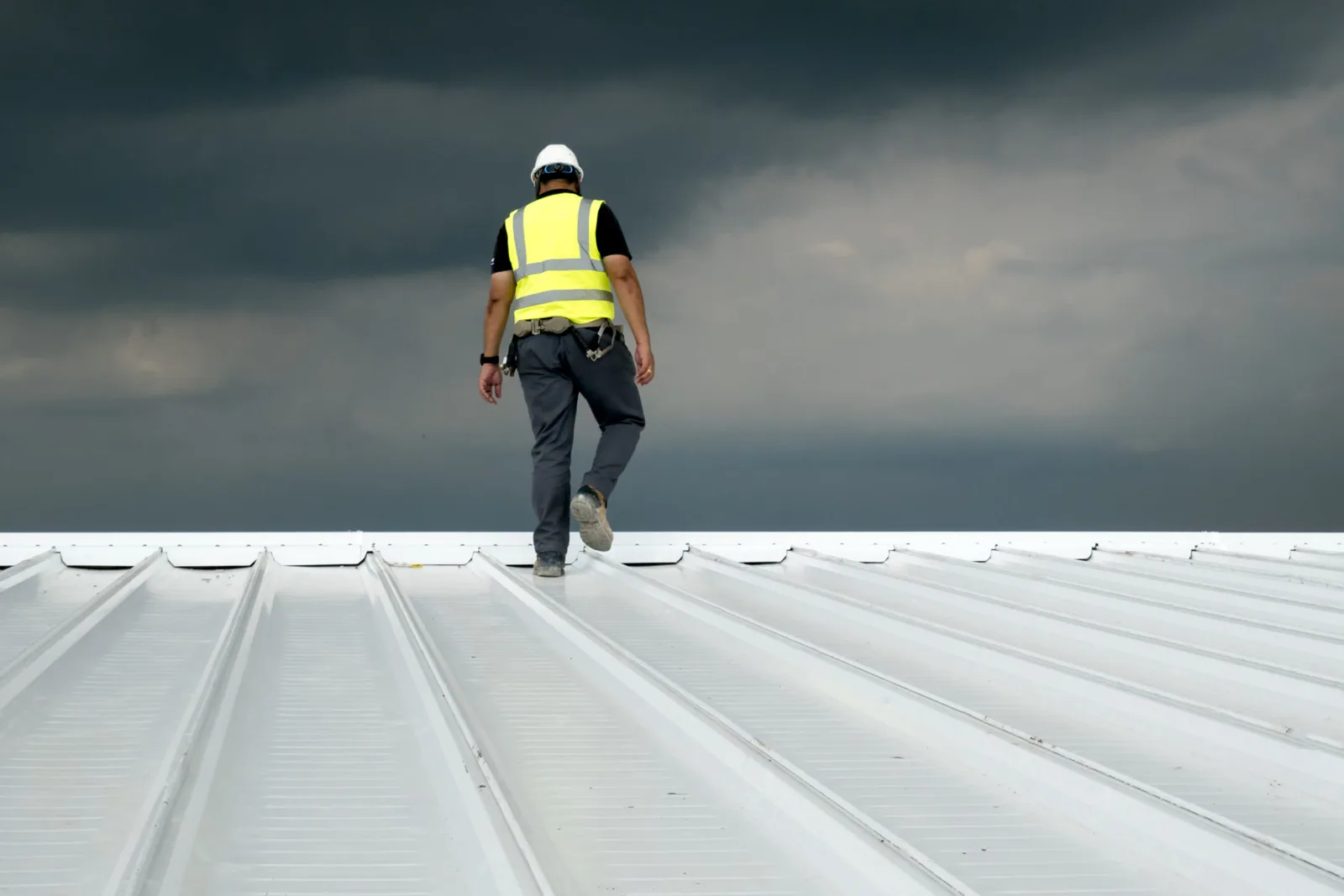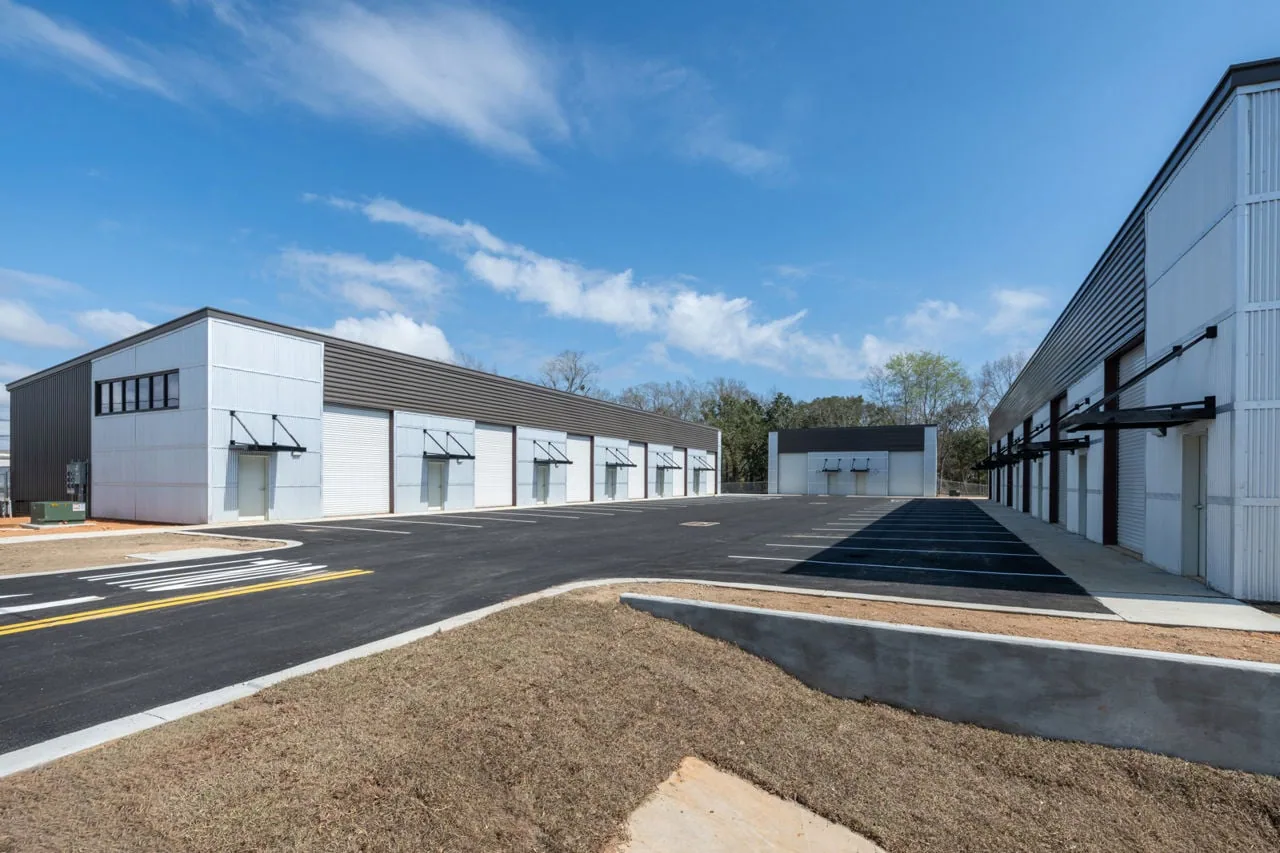
A leak over a production bay may start at a seam beyond the visible stain. We follow the water path before choosing a repair limit. Flex and light-industrial buildings can combine manufacturing, distribution, maker space, office, or showroom use, sometimes across additions with different roof assemblies. In Stamford, CT, we inspect the membrane, metal transitions, drains, and equipment curbs around the reported area, then identify which section needs work. We identify the roof type from the installed membrane, seams, flashing, and exposed layers.
Production lines, loading doors, and office entrances create separate access needs. We map the lift, material route, equipment clearances, and daily dry-in point with the property contact. A commercial roof inspection establishes the observed seam, curb, deck, and drainage condition before repair is priced. If an opening exposes wet insulation or a weak deck, we document the added area and review it before expanding the work boundary.
Operations: separate the roof zone from floor work
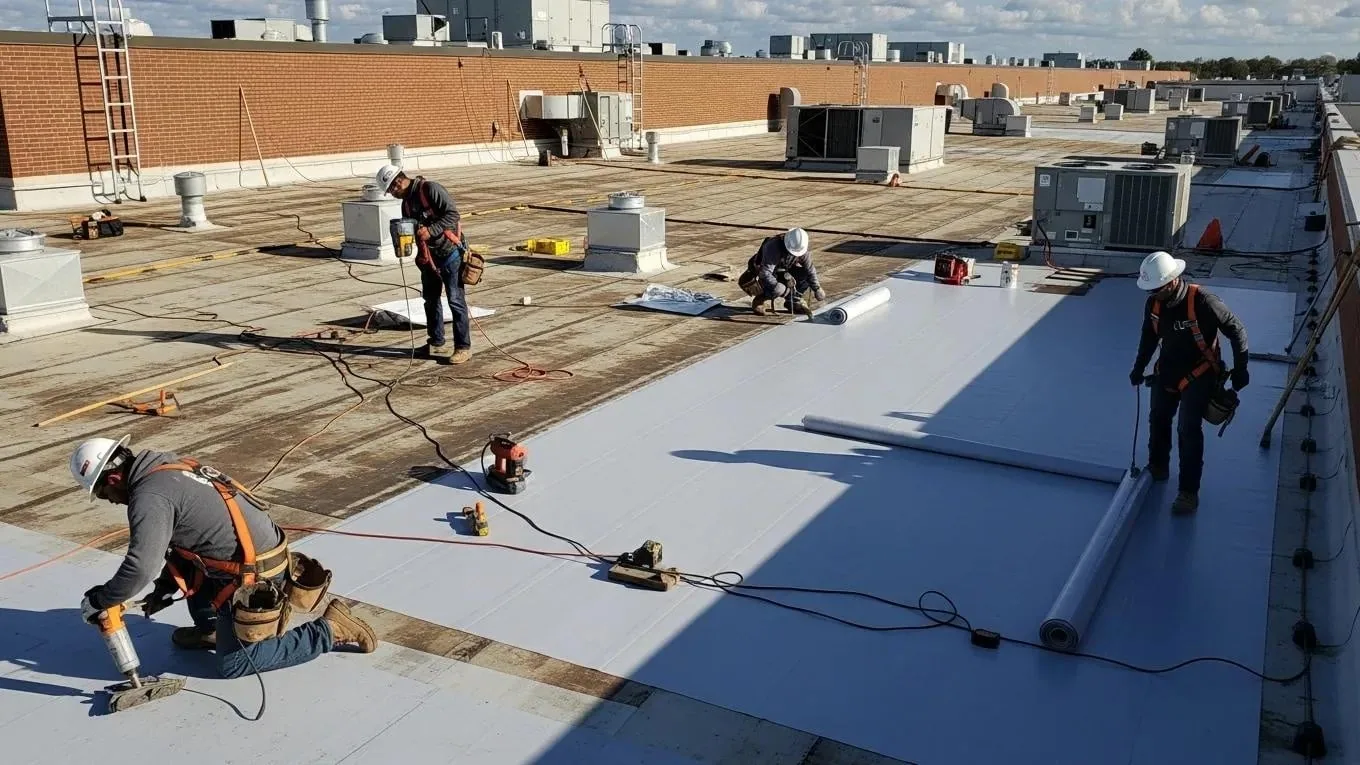
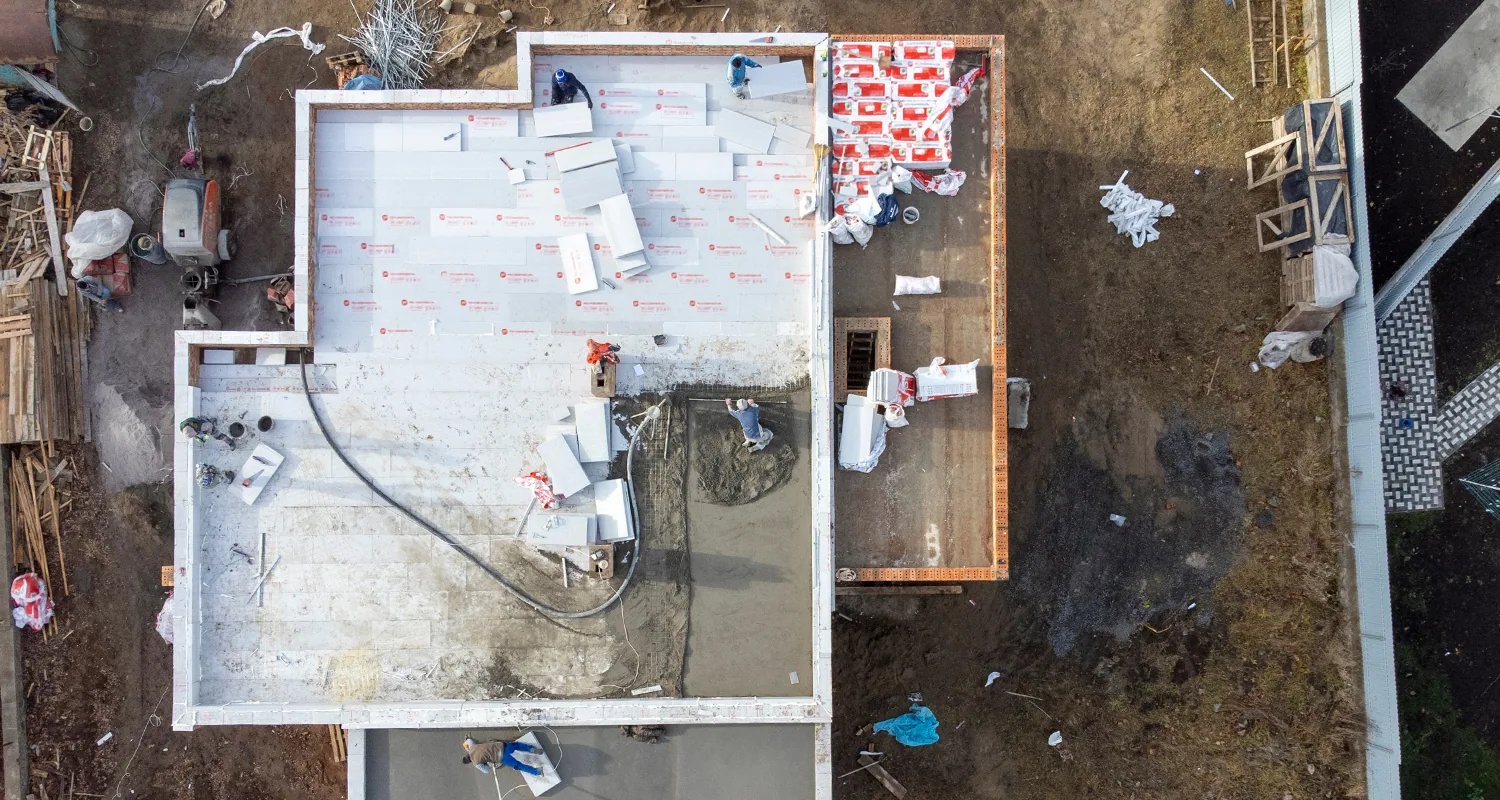
Material drops, debris removal, and roof access can conflict with truck circulation or a production route. We identify unloading space, lift location, roof hatch access, and any aisle that must remain available. The work map also shows the ground area protected beneath an opening. A phased occupied-building reroof can divide a large project into sections that close at a defined point instead of leaving several active work zones.
Noise, vibration, and equipment shutdowns need property-specific instructions. The facility team states which machinery cannot be interrupted and where intake protection may be needed. We schedule roof details around those constraints while keeping HVAC service with its trade. If conditions require a change, the revised route or closure point is confirmed before material moves. That record helps the next shift begin with the same boundary and access limits.
Roof interfaces: inspect curbs, lines, and supports
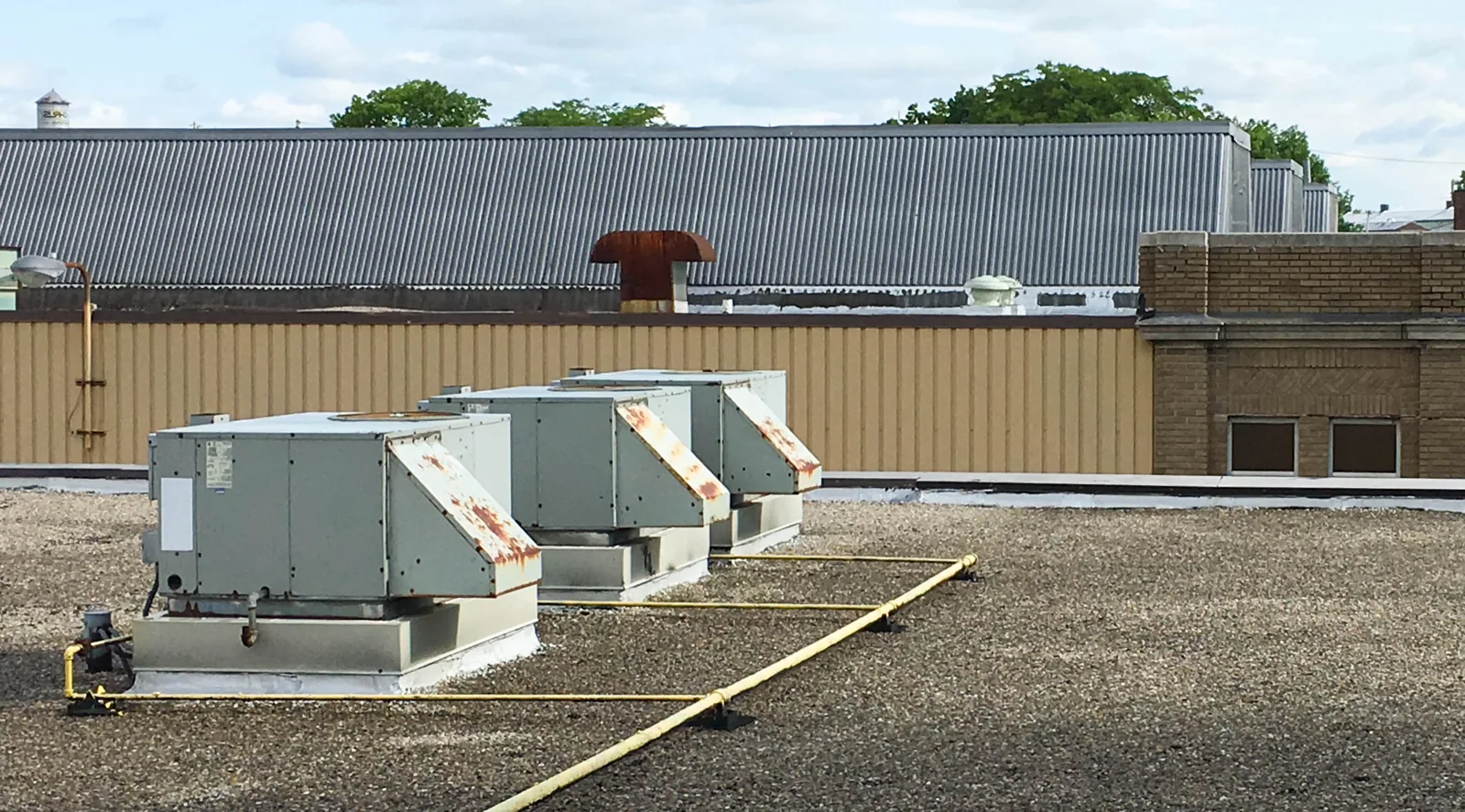
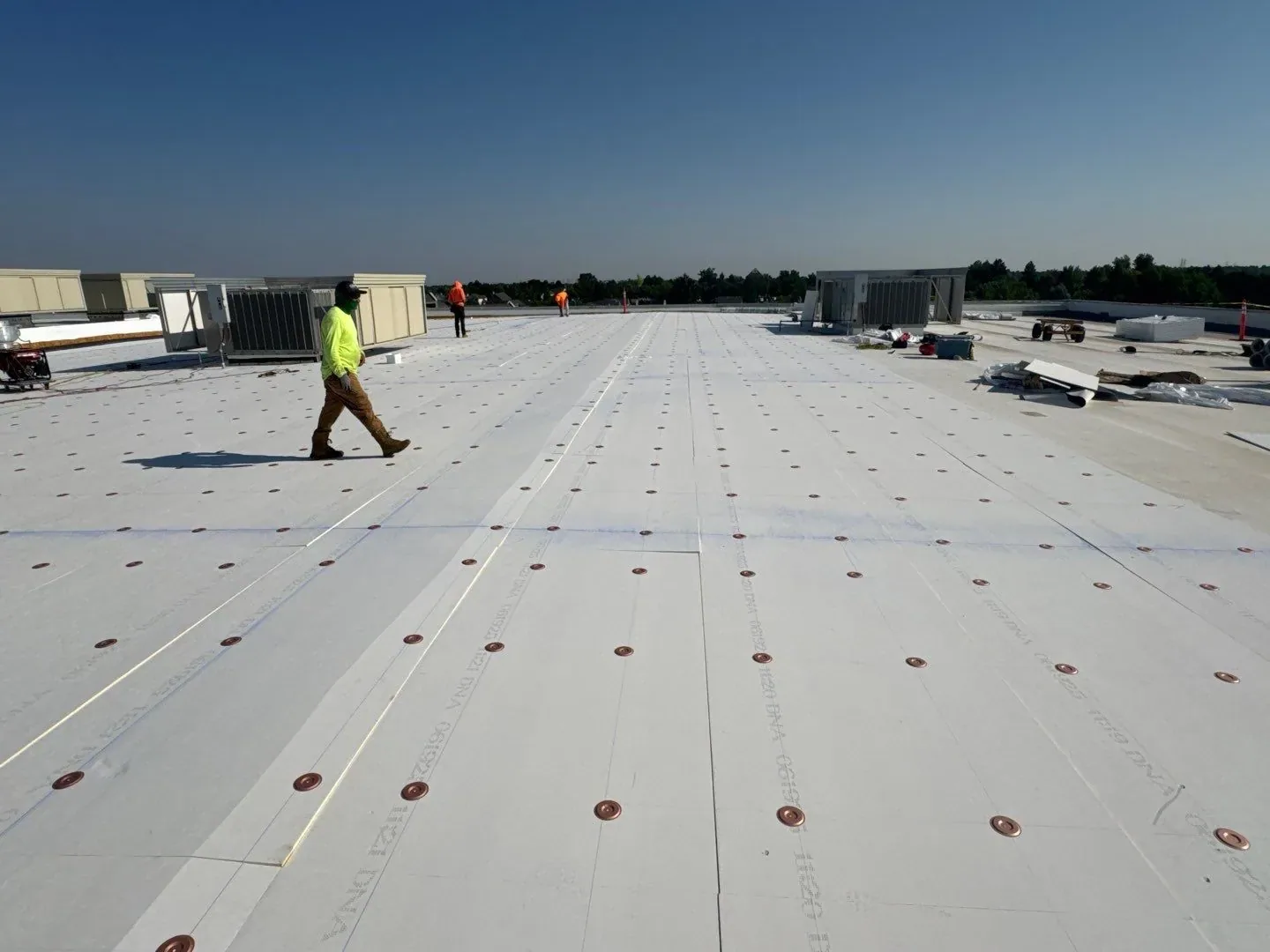
Conduit, pipes, exhausts, fans, and rooftop units break the membrane field into multiple flashing details. We inspect curb corners, base flashing, fasteners, and metal returns for movement or a failed tie-in. A curb flashing correction defines the roofing work and identifies any support issue for a separate trade. We photograph the base before covering the transition so later service can be compared with the completed detail.
Loads and equipment movement can stress a curb or support, but the inspection follows the visible condition. We check for an open lap, loose attachment, water staining, and deteriorated substrate around the base. If the equipment must move, the responsible trade and the property contact set the sequence. The roof scope names what flashing can be completed and what remains outside roofing, avoiding a handoff that leaves the membrane connection unclear.
Drainage: distinguish an outlet fault from field water
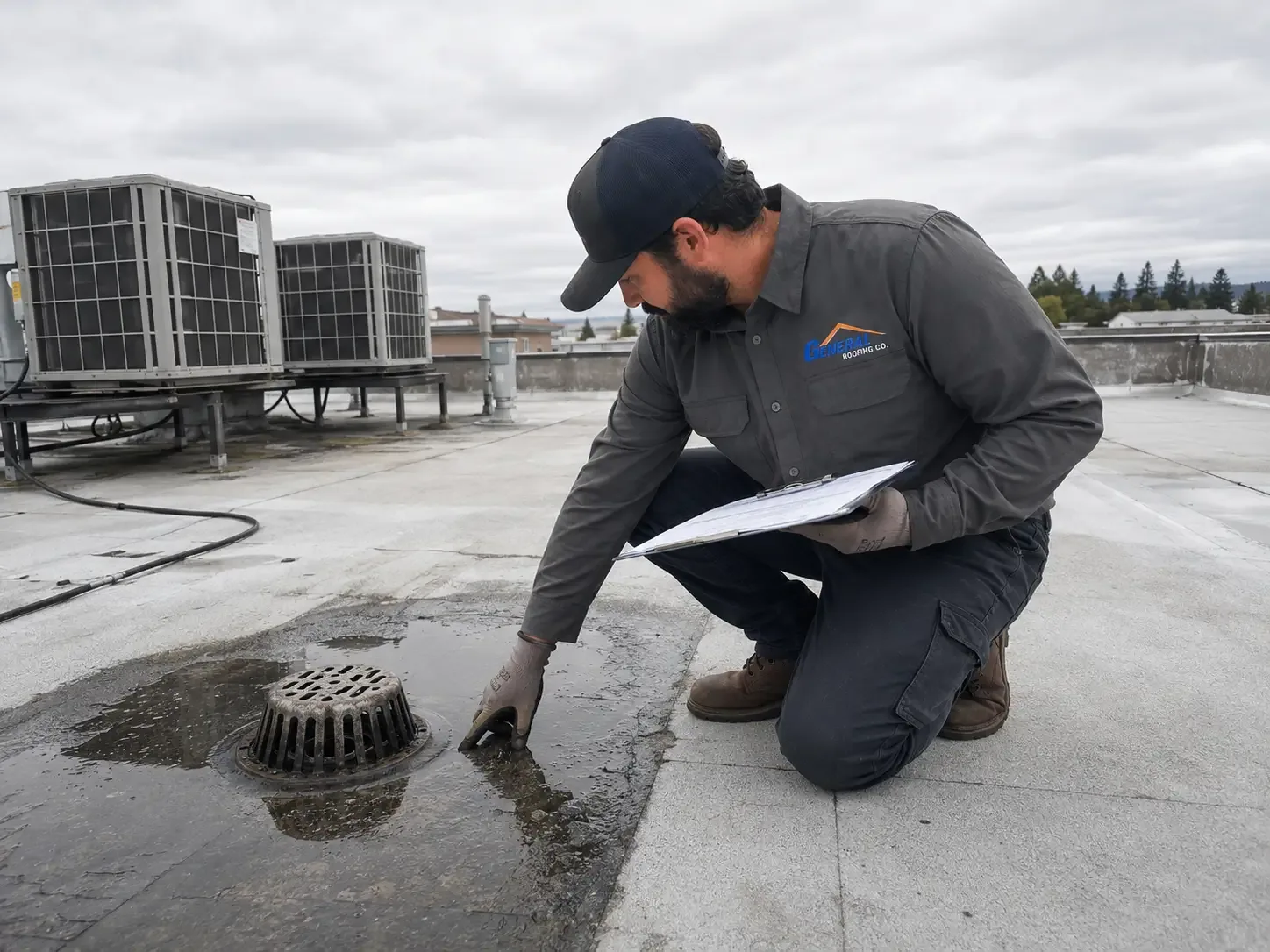
A blocked strainer and a low field can leave similar standing water but require different corrections. We check bowls, flanges, scuppers, overflows, and the membrane around each opening. A drain and scupper service can repair an outlet, while slope, deck movement, or repeated patch layers are evaluated separately. The report states what was seen and which test would change the next step.
Stamford climate normals record snowfall and subfreezing winter nights. Freeze-thaw conditions make outlets, terminations, and low transitions useful areas to inspect after a leak report in colder weather. We verify obstruction or separation on the roof rather than treating the climate as evidence of a defect. If the drain is functioning and a nearby seam is open, that seam sets the repair edge. If a deck issue is suspected, the scope identifies where to investigate.
System fit: check the existing layers before covering
A repair can stay local when the failed detail is contained and surrounding insulation and attachment remain suitable. Repeated leaks, broad moisture, loose fasteners, or deteriorated deck can call for a wider correction. We test where the result could change the boundary. A TPO membrane uses a different seam and flashing method from a metal system; the substrate and existing assembly determine the tie-in.
A recover adds weight and height, changing curbs, parapets, drains, and edge metal. Moisture, deck strength, attachment, and project-specific permit requirements must support the added layer. If not, a recover evaluation may point to removal instead. A warehouse roof or manufacturing plant roof also needs a condition-specific scope for its assembly and operating routes.
Local pattern: connect the roof to its use
Stamford's flexible-industrial category supports light manufacturing, distribution, maker space, and adaptable production, with possible office or showroom use. That range means neighboring operations can occupy different parts of a building, so the roof plan and property instructions matter more than a generic category label. We note which bays sit under the affected section and what route remains clear during the work.
The city plan also places Downtown and South End in a higher-intensity mixed-use area while retaining lower-density neighborhoods elsewhere. Nearby Norwalk has commercial and industrial activity along Route 1 and Route 7, with pedestrian-scale business blocks in Norwalk Center and SoNo. At a Norwalk Route 1 roof, we confirm delivery route, equipment clearances, and membrane details with the property contact.
Records: keep each addition and repair traceable
Closeout should identify the roof zone, assembly, repaired detail, tie-in, material removed, and photographs. We list test points, areas not reached, and work assigned to another trade. When additions meet or different systems share a building, the record keeps each section separate. A written roof condition report can connect findings to future maintenance and planning without suggesting an uninspected area was cleared.
Share roof drawings, production constraints, loading windows, leak locations, prior service notes, and any shutdown limits before the walk. We compare them with the field and state what can be repaired, what requires testing, and what condition would expand the scope. The written boundary helps operations staff coordinate roof work with floor activity and later maintenance. The closeout marks where insulation was removed, what deck condition was visible, and whether temporary protection remains. Those notes help a facilities lead compare a future stain with the last inspected bay instead of reopening unrelated areas. Each completed section receives a clear closeout record.
Commercial Roofing Questions
Can roof repairs be phased around production?
The sequence can be divided by roof zone when each opening has a safe daily closure point. We map access, noise-sensitive areas, and equipment limits with the property contact, then state the boundary for each phase. A concealed condition is reviewed before the next section opens.
How do you separate HVAC work from roof flashing?
We inspect the curb, membrane turn-up, fasteners, and flashing connection. The mechanical contractor handles unit connections and service. The written scope identifies the roofing detail and any support condition requiring a separate handoff before the membrane is closed.
What causes water to travel across a flex building roof?
Water can move along a seam, deck flute, or insulation joint before it reaches an interior bay. We compare the report with curbs, edges, drains, and transitions above it, then test suspected layers when the result can change the repair boundary.
When is a recover a poor choice for an industrial roof?
Widespread moisture, loose attachment, weak deck, or transitions that cannot be rebuilt at the new height may rule out another layer. We inspect and test the existing assembly and check the project permit requirements before comparing recover with removal.
What belongs in a flex-building roof closeout?
List the roof zone, assembly, detail repaired, tie-in photos, test results, excluded areas, and trade handoffs. We also identify any production or access restriction that remains so maintenance can plan the next visit around the actual work boundary.