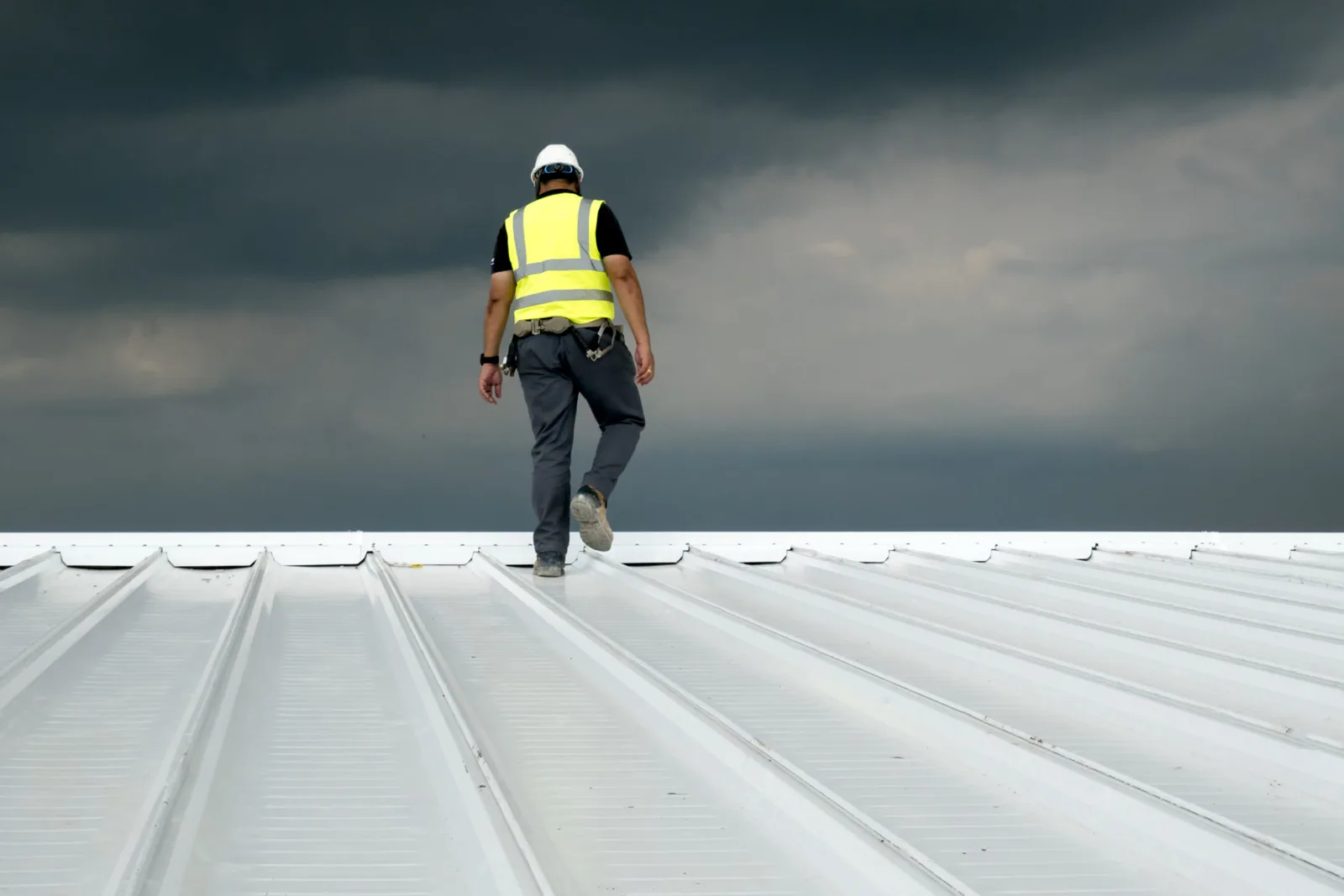
A multi-ply roof can leak at a seam, drain, flashing or termination long before the whole field appears worn. For a SOPREMA assembly, we identify the installed layers and trace the water path before deciding whether a repair is enough. A name in the maintenance file does not confirm that every roof area still uses the same build-up. On the South End and West Side of Stamford, operations and access differ by site, while the membrane and substrate determine the repair. Our commercial roof inspection starts with the conditions that can be observed and sets a clear boundary for the next step.
Separate the roof layers
SOPREMA makes commercial waterproofing and roofing products used in low-slope assemblies, including modified bitumen systems. A roof may have a base sheet, cap sheet, insulation, cover board, coating or later repair over the original work. We review the available drawings and closeout records, then compare them with exposed edges, penetrations and prior repairs. Where layers cannot be verified without opening the roof, that limitation belongs in the recommendation. We do not label a surface from color or assume that a coating reveals what lies below.
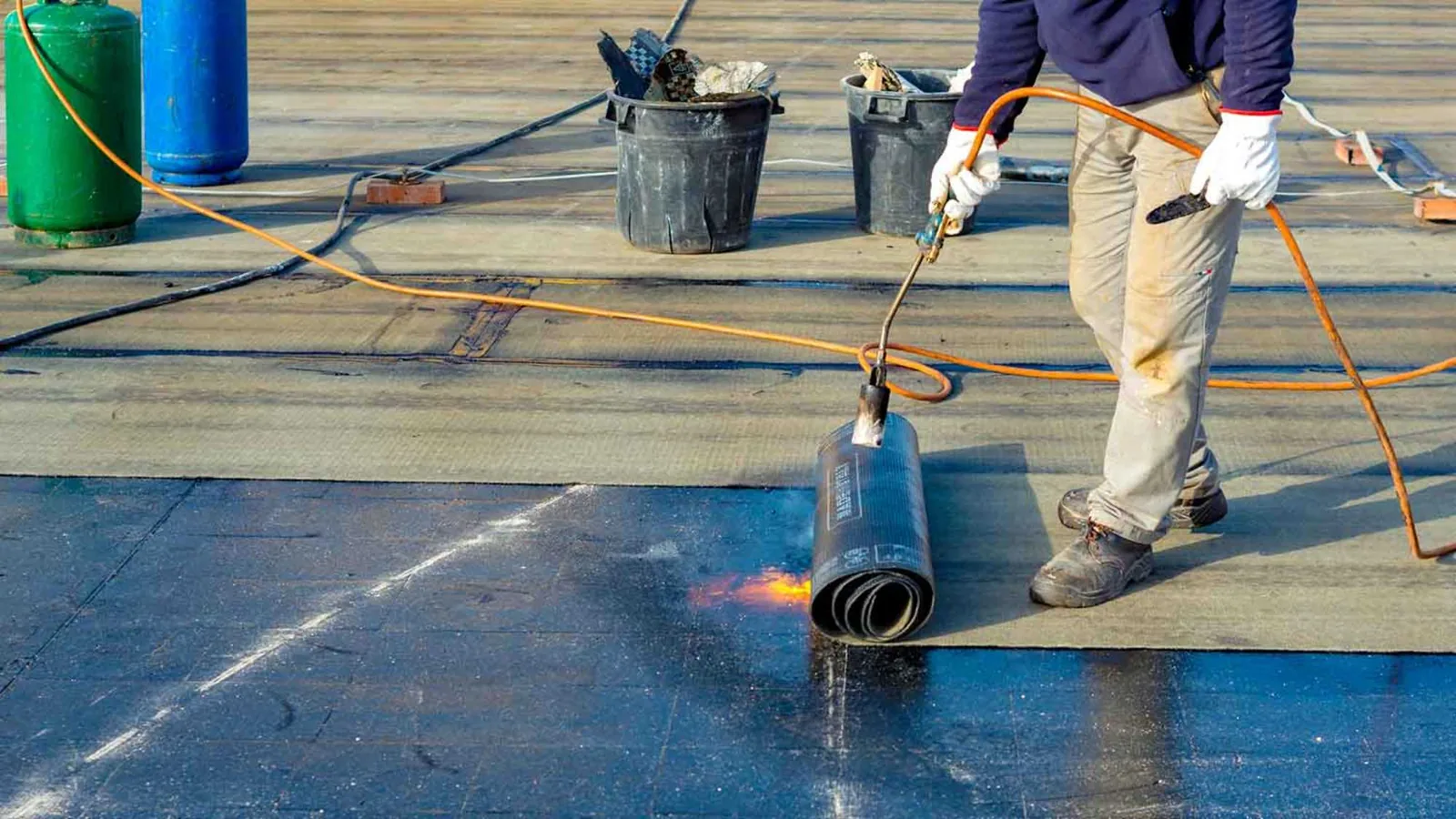
A modified bitumen roof review considers the membrane layers, laps, surfacing and transitions. A built-up assembly has a different construction and must be assessed on its own terms. At a repair, material compatibility matters at the patch edge and not only at the center. We identify whether the defect reaches the cap sheet, lower plies or insulation before proposing a repair method. The scope should state which layer is addressed and what conditions remain outside that work.
Inspect laps, flashings and drainage
We follow the leak report across the roof plan, checking low points, drains, curbs, walls and penetrations before opening a suspected area. A displaced cap sheet, open lap or split at a wall can admit water; an interior stain alone cannot distinguish among them. Look at the roof surface around the reported area, then compare it with the drain route and deck layout. If moisture is suspected beneath the layers, a moisture survey may help select locations for verification. Any test opening should be agreed and documented.
Water must have a path off the roof. Debris, low spots, crushed insulation or a blocked drain can prolong ponding and stress laps. We inspect drain bowls, scuppers and nearby membrane before treating a recurring leak as a patch issue. At parapets and equipment curbs, the flashing tie-in can be the weak point even where the field surface looks intact. The repair should restore continuity without covering a separate drainage or substrate condition that still needs work.
Determine what can be repaired
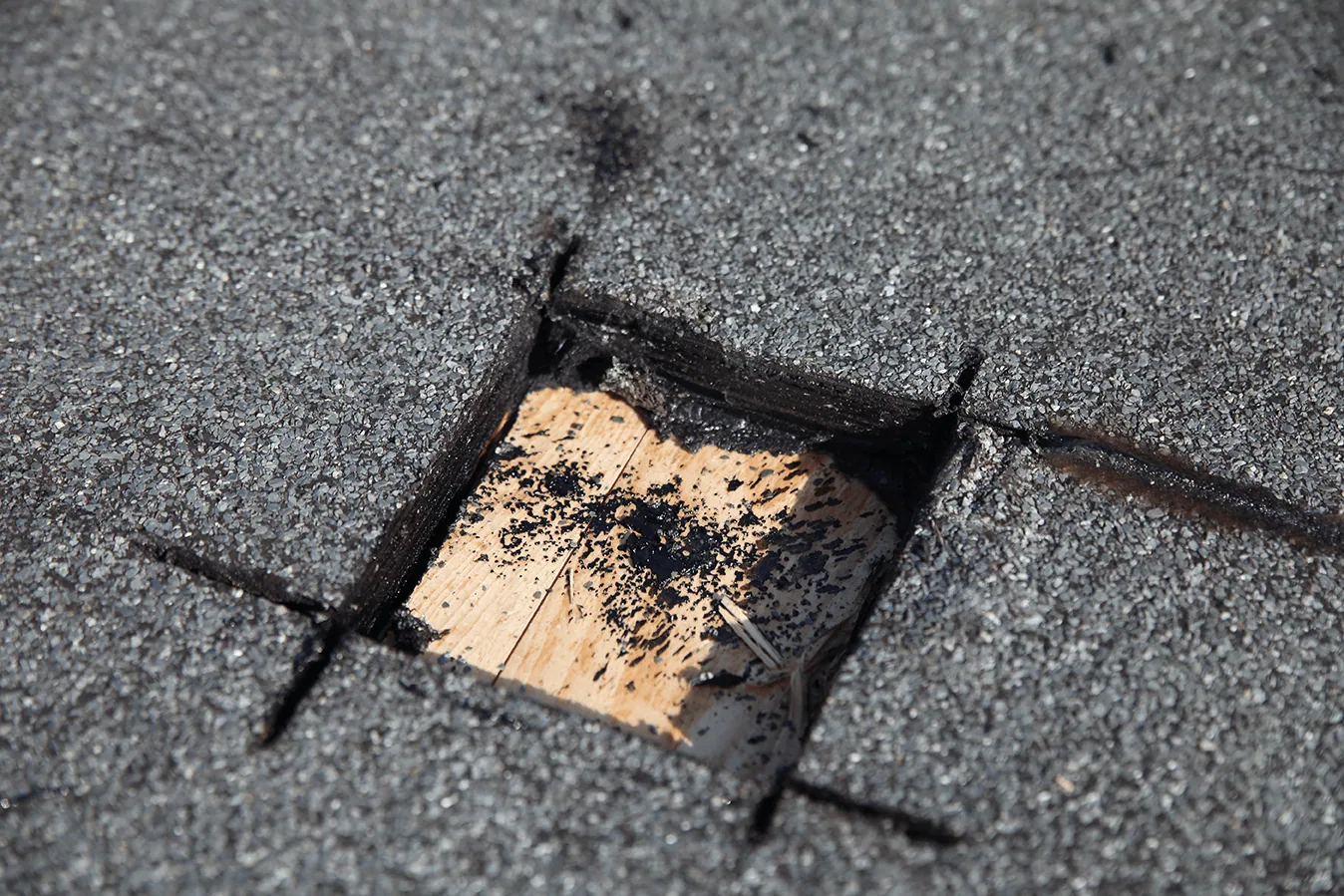
A local opening may accept a repair if surrounding layers remain bonded and the substrate is sound. Repeated seam distress, widespread trapped moisture, deterioration across several roof sections or a damaged deck changes the scope. We map where those conditions appear and distinguish confirmed defects from areas that need more testing. A commercial roof repair scope describes preparation, materials, tie-in and repair extent so the owner can see what is included.
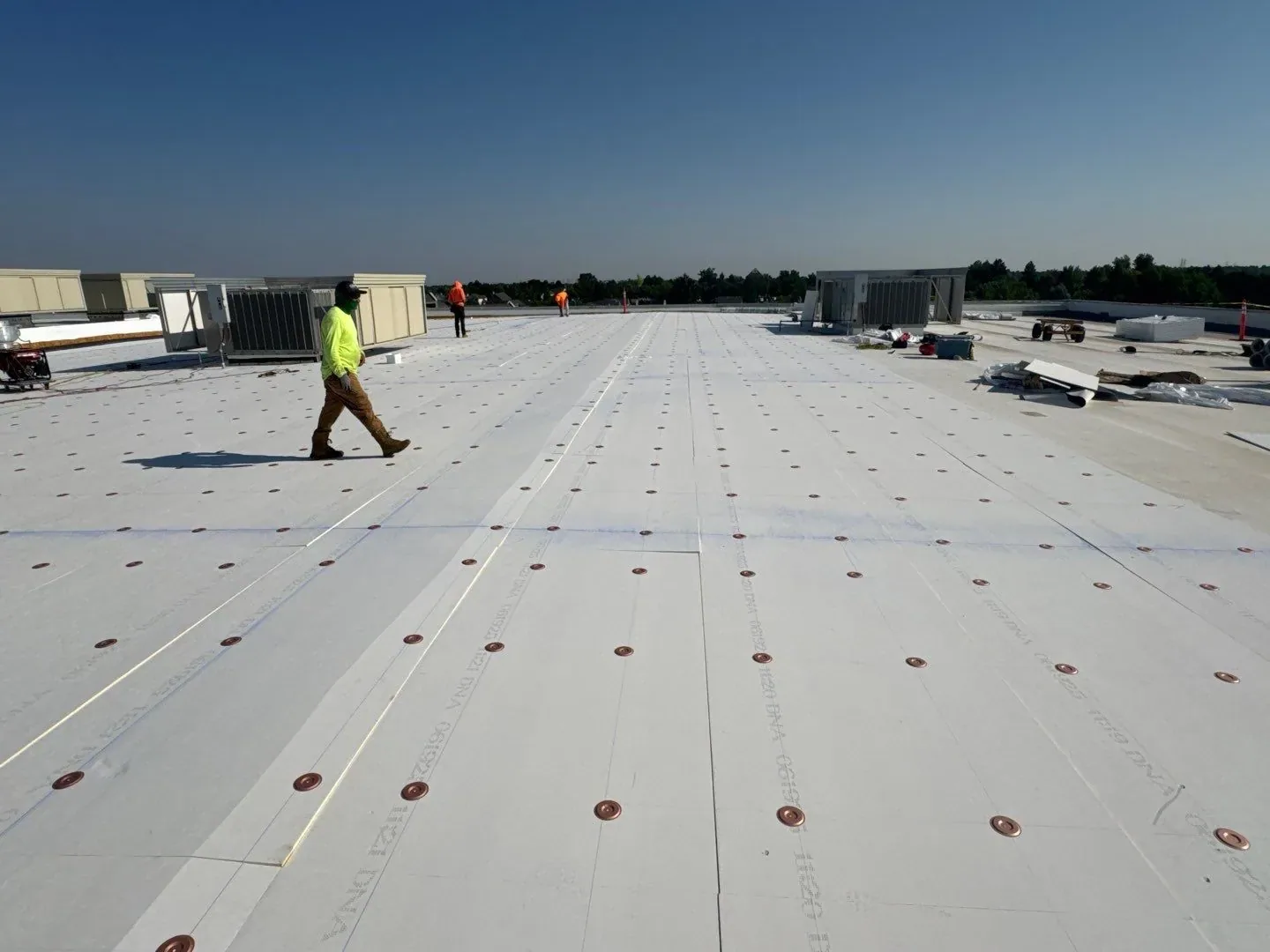
If a roof has reached a broader renewal decision, compare repair with replacement or a recover only after the assembly is understood. A roof recover review considers existing layers, attachment, moisture, drains, edge height and project requirements. A roof replacement scope should address removal, substrate repair, insulation, drainage and transitions. These are different plans. We explain what finding moves the recommendation from one to another instead of presenting a product name as the answer.
Sequence work around real site conditions
Before mobilization, the site contact identifies access, staging, occupied spaces, secure areas, delivery limits and any operating periods that affect work. We agree where materials can be stored and how the crew will reach the roof. Stamford's plan maps South End Stamford within an urban mixed-use growth area beside Downtown and names West Side Stamford as a Village Commercial district. Those settings can make access and occupied-space coordination central to roof sequencing; the membrane and substrate still govern the repair. At a South End commercial roof, the property contact sets the entry route, staging point, and protection needed below.
Weather and surface condition affect roofing work. Moisture, wind or low temperatures may change how a surface is prepared or how a repair is sequenced. We check conditions before covering exposed material and protect a transition if the work pauses. If another trade must handle equipment or curb changes, coordinate that before the membrane tie-in is closed. The work plan records who owns each step and what must be complete before the next surface is covered.
Keep the repair history useful
At closeout, keep a marked roof plan, photographs, product records when confirmed and the approved work description. Identify the section, layers addressed, lap or flashing repaired, and any open item that needs a separate decision. A roof condition report can organize observations with earlier leaks and maintenance records. It should distinguish visible conditions from anything hidden beneath the assembly.
When a building has several roof types, note each boundary separately. On adjacent areas using a GAF membrane or Versico membrane, we record each assembly separately and specify repair details that match the installed system. The next inspection then has a starting point: known material, repair location, drain or transition checked, unresolved condition and the evidence needed to make a broader recommendation.
Read the surface as evidence
On a surfaced membrane, exposed aggregate can shift, wear or collect in a way that makes the roof appear more uniform than it is. We look for places where the cap sheet, lap or flashing has changed, then compare those areas with the water report and roof history. A surface observation can guide inspection, but it does not establish the condition of concealed layers. If the roof has been coated or patched, note where the treatment begins and whether it continues over drains, walls or equipment details.
When a small sample or test opening is needed, agree on its location and closeout method before disturbing the assembly. The opening can reveal whether the layer below is dry, bonded or damaged, which may alter the recommended repair. Keep the exact test result with a photograph and mark it on the plan. If no opening is authorized, the report should say that the underlying layer was not confirmed. This difference matters when comparing a localized fix with a broader renewal scope and prevents a surface-only walk from being described as a full assembly diagnosis.
Commercial Roofing Questions
Can a SOPREMA modified bitumen roof be patched?
A patch can be considered when the existing layers and substrate are suitable and compatible materials are available. We inspect the lap and surrounding surface before defining work.
Does a roof surface show how many layers are below it?
Not always. Records and exposed edges can help identify the assembly, while concealed layers may require an agreed test opening to verify.
Can a drain problem cause recurring leaks?
Standing water can affect nearby laps and flashings. We inspect the drain, surrounding membrane and substrate before determining where water enters.
Which roof findings put localized repair and replacement on equal footing?
Repeated defects, widespread moisture or a deteriorated deck may call for a broader scope. The inspection documents which conditions support that decision.
What information helps before a low-slope roof inspection?
Share the roof plan, repair history, reported leak locations, product records if available and the site rules for access and staging.