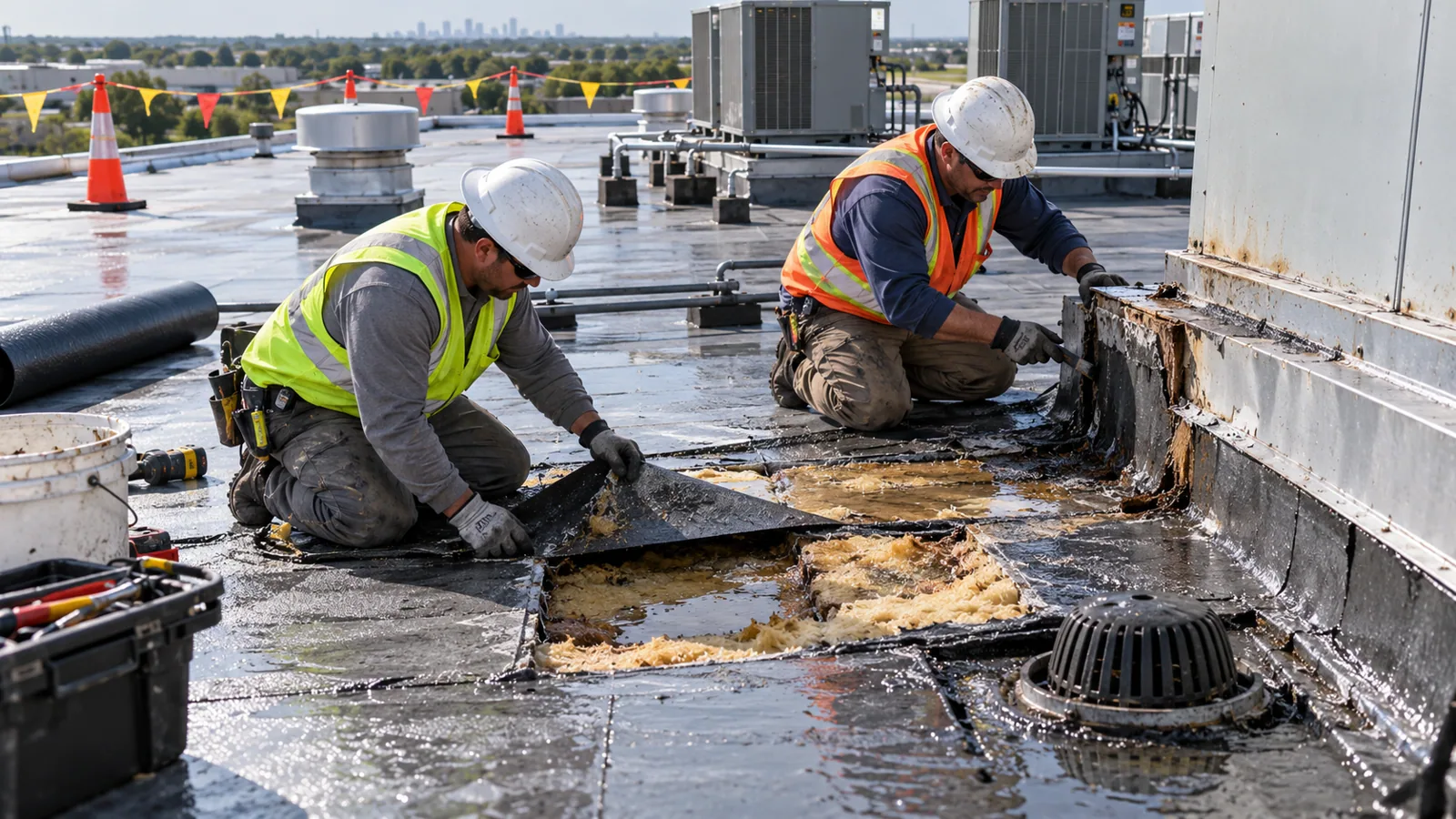
A lifted seam can start a leak while the warranty folder still looks complete. We inspect the roof detail and match the installed system to the issued terms before proposing work. In Stamford, CT, an owner’s portfolio may include Greenwich’s commercial centers and Westport’s mix of Post Road retail and office parks. Those property patterns can call for different access and work windows. We tie warranty review to the assembly, documents, and condition found on each roof.
Warranty file: identify the assembly and its terms
Start with the issued warranty, installation records, product information, prior service notes and any correspondence about roof work. We identify the covered roof area and the system listed in the paperwork, then compare that description with what is visible during an inspection. A building can have additions or repairs completed at different times. The file should not treat the whole roof as one assembly if the records show separate areas or work phases.
Terms differ by document. Some set inspection, maintenance or notice expectations; others describe conditions that can affect coverage. We summarize provisions relevant to the proposed work and identify any question for the manufacturer or warranty administrator before the repair is finalized. The roof inspection establishes the current detail and provides a factual basis for deciding what should be submitted or clarified.
Maintenance record: keep visits specific
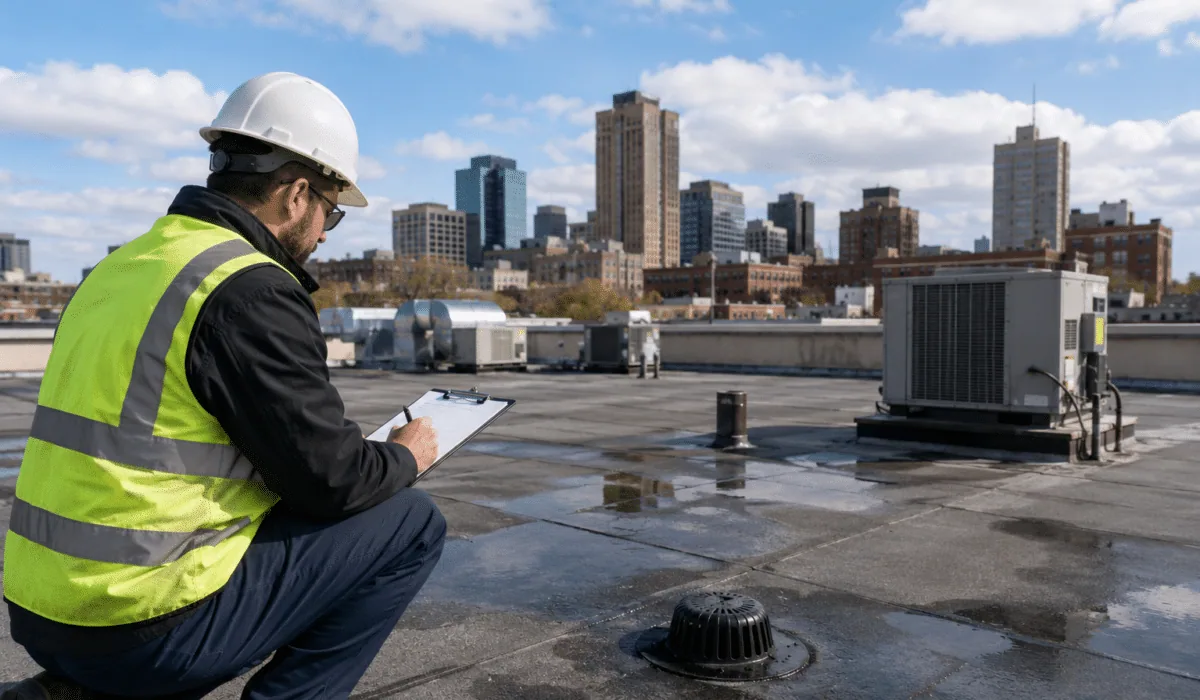
A maintenance entry should state what was examined and what was done. We note the roof area, condition of seams and flashing, drain observations, debris removal where performed and open items that remain. A phrase such as routine service is not enough to connect a future repair to a particular detail. Photos and dated work notes make it easier to compare the roof over time. The maintenance program can keep those observations together with the property’s warranty paperwork.
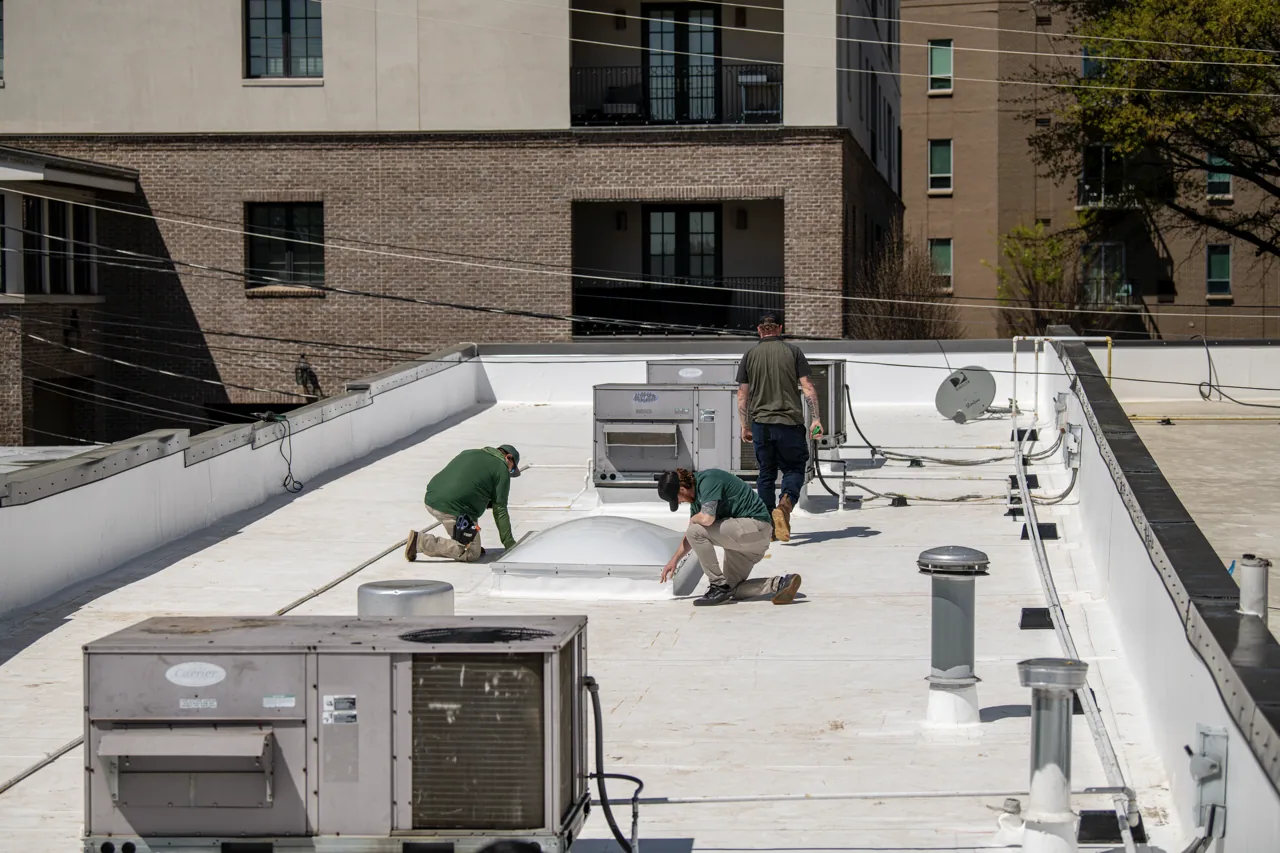
NOAA normals at Stamford 5 N record winter snowfall, subfreezing nights, and summer daily highs in the low-to-mid 80s with cooling demand. After a seasonal visit, our record identifies the seams, drain bowls, metal returns, and equipment details actually examined. The photos and work notes connect those roof observations to the applicable service terms.
Proposed repair: check the detail before disturbance
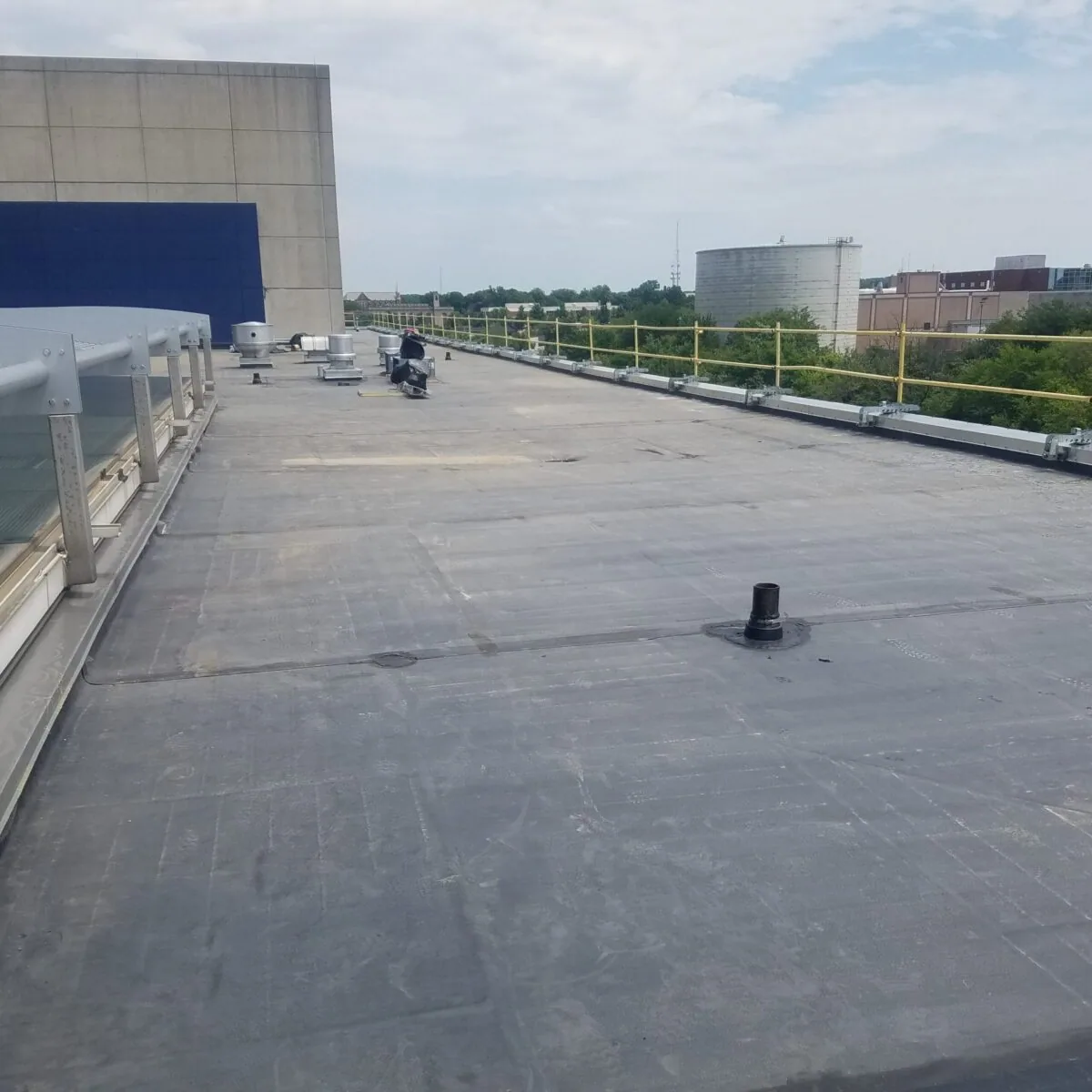
Opening a roof detail before reviewing the warranty file can complicate a repair decision. We identify the suspected failure, photograph its location and determine whether an interim measure, testing or a written scope should come first. A termination bar, penetration, drain transition or membrane seam may require a repair method compatible with the existing system. The repair scope should describe the work area and relevant materials without claiming an approval that has not been granted.
If the paperwork requires notice before repair, we can help assemble the inspection notes, photos and proposed detail for the appropriate review. Active water entry still needs a practical response, but the work plan should preserve the information needed to make a coverage decision where conditions allow. We distinguish temporary protection from permanent repair and record what was completed. If an opening reveals a wider defect, the changed scope should be documented before proceeding beyond the accepted work.
Regional portfolio: keep each property distinct
Greenwich’s town update identifies thriving commercial centers among its planning principles. Westport’s plan describes Post Road retail alongside dispersed office parks. Those facts show two different area contexts near Stamford, but neither establishes the roof system or warranty terms at an individual property. Greenwich’s commercial-center priorities and Westport’s mix of retail and office parks can put different operating schedules in one owner’s portfolio. That makes a consistent document routine useful while each roof keeps its own terms and repair history. We identify the municipality and roof section on service records so a future review can locate the right file before work is approved. We retain separate records for each owner, building, roof section and installation history. A Greenwich-area roof review still begins with the property’s own documents and visible conditions.
That separation matters when a manager oversees roofs across several municipalities. A product name on an old invoice may describe one addition and not the adjacent field. An earlier repair may also have its own scope and documentation. We reconcile the file against the roof walk, identify gaps and avoid carrying one property’s terms into another. When records are incomplete, the next step may be an inspection, document request or written clarification before a larger repair is authorized.
Renewal decision: connect records to the work
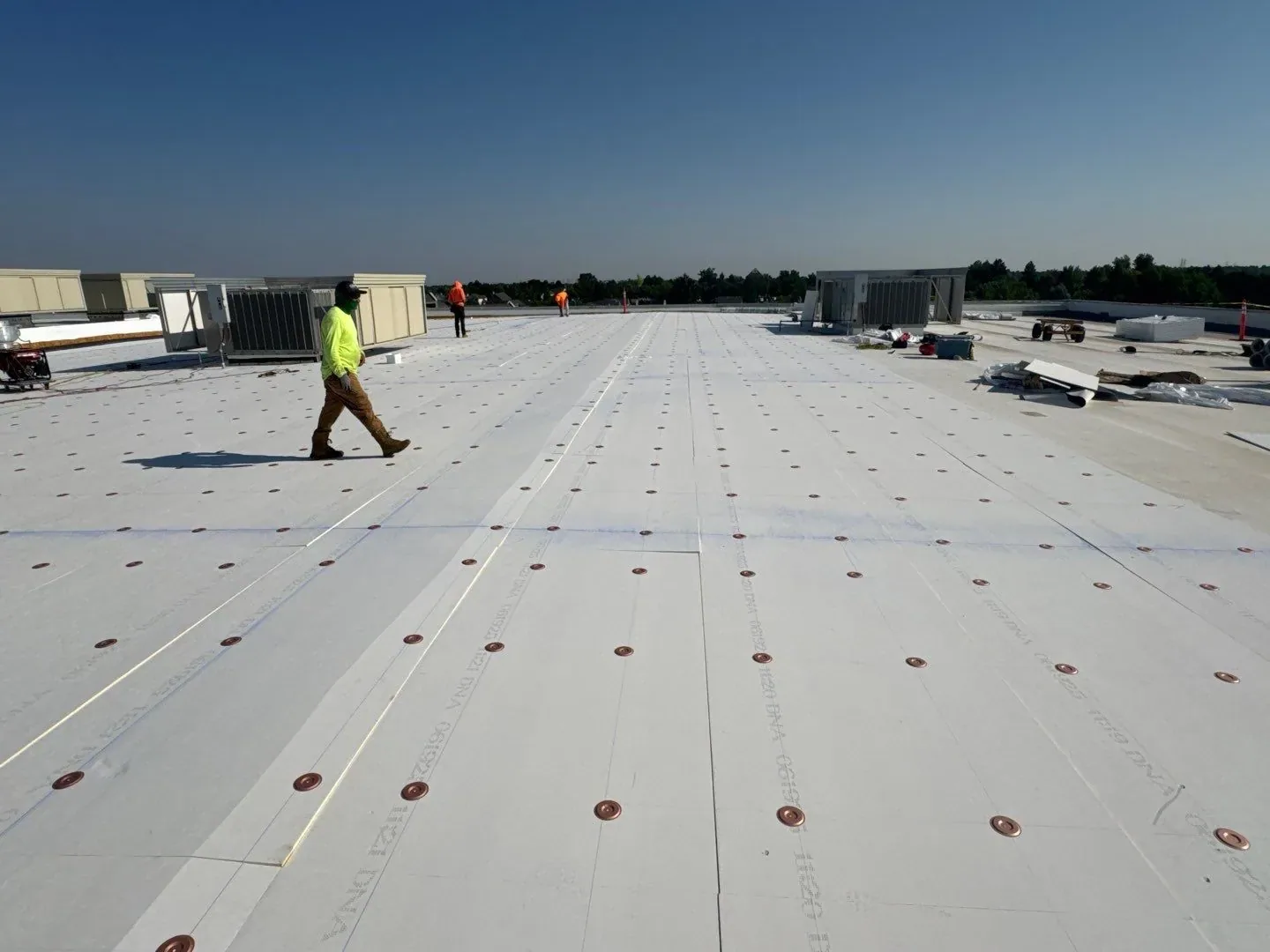
When a roof reaches a larger renewal decision, the warranty file is one part of the review. We compare current membrane and substrate condition, prior repairs, drainage and the available system documents. A recovery or replacement proposal should identify what assembly will remain, what will be removed and what new work is proposed. The recovery assessment checks whether the existing roof can support another layer. A replacement review describes the broader work when removal or substrate repair is needed.
Before selecting materials, we review applicable documents and project requirements. Connecticut’s building code provisions may depend on the code in effect when a permit application is filed, so the project team should confirm current applicability for the planned work. We coordinate roof details with the project scope before selecting materials. The work file identifies the documents reviewed, the roof sections affected, and any coverage question that needs a written answer before work proceeds. The owner receives a defined proposal tied to the roof condition and available requirements.
Working file: make the next review easier
Keep the issued warranty, system identification, maintenance notes, repair scopes, photos, notices and responses in a property-specific record. Add the exact roof section and date to each service entry. If roof equipment changes or another trade opens a detail, note the affected area and arrange a review where the work could alter flashing or membrane continuity. A written condition report can update the field record after an inspection.
When several roof areas are involved, a portfolio register can connect warranty status to condition, open repairs and budget timing without merging separate assemblies. We review the file with the manager, walk the roof where needed, and identify what additional document or roof check will settle the open question. When a repair closes, we add the completed scope and photographs to the property record. If a later visit finds a related defect, the manager can compare both conditions and determine whether another review or notice is appropriate under the applicable documents. The next recommendation can then address the detail in front of us, with supporting records available for the owner’s review.
Commercial Roofing Questions
Does routine maintenance preserve every roof warranty?
The issued document sets the maintenance requirements for that assembly. We review those terms, perform the requested roof work, and retain records that show what was inspected and completed.
What should be reviewed before repairing a leak?
Check the system documents, notice requirements and repair-area history, then inspect the leak path. That helps define a compatible scope and any needed review.
Can a warranty cover an addition differently?
Yes. Additions or later roof work may have separate documents and coverage areas. We match records to the assembly instead of assuming one document applies everywhere.
What if the original paperwork is incomplete?
We record what is available and identify missing system or service details. An inspection and written clarification can help before a repair or renewal is selected.
What records help an owner check the warranty requirements for roof work?
A report documents observed conditions and proposed work. Coverage depends on the applicable warranty terms and the decision of its administrator or issuer.