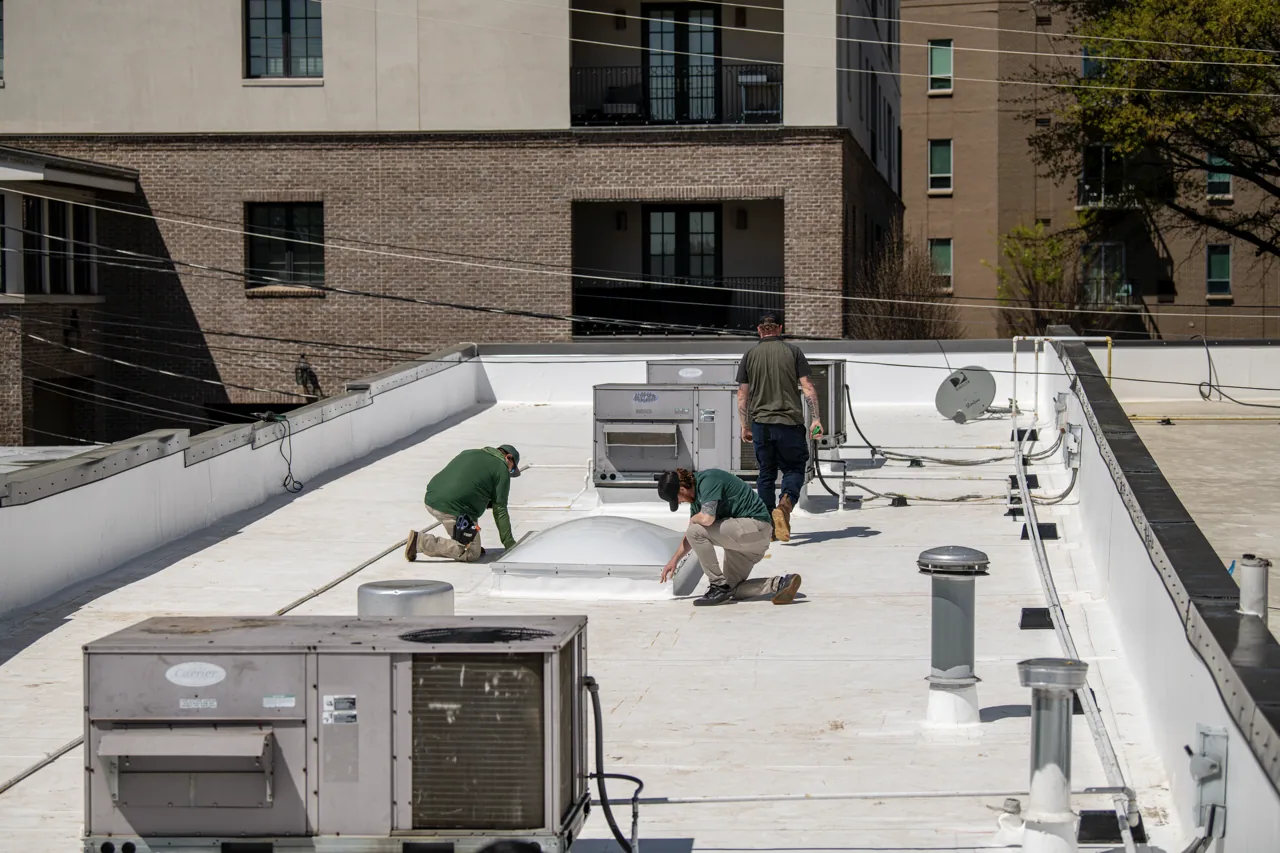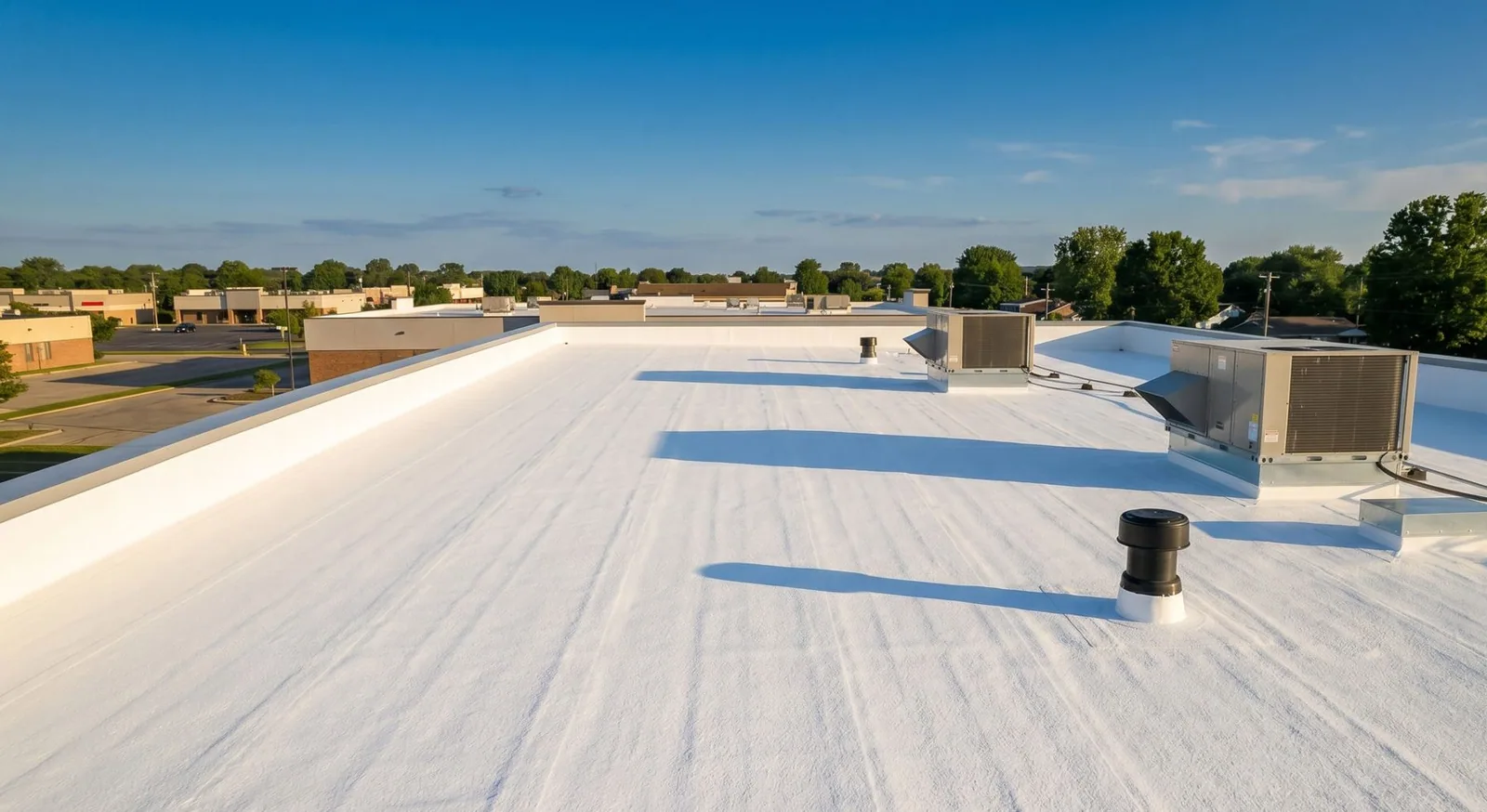
A broken surface layer leaves the foam beneath vulnerable to moisture and ultraviolet exposure. In Stamford, CT, we inspect the coating, foam profile, drains, and perimeter before choosing a repair. Summer heat and rooftop equipment can stress exposed areas around curbs. A foam roof inspection checks both the surface layer and the foam beneath it, because a coating crack is not the same as a wet or deteriorated substrate.
Foam profile: check adhesion, thickness, and drainage
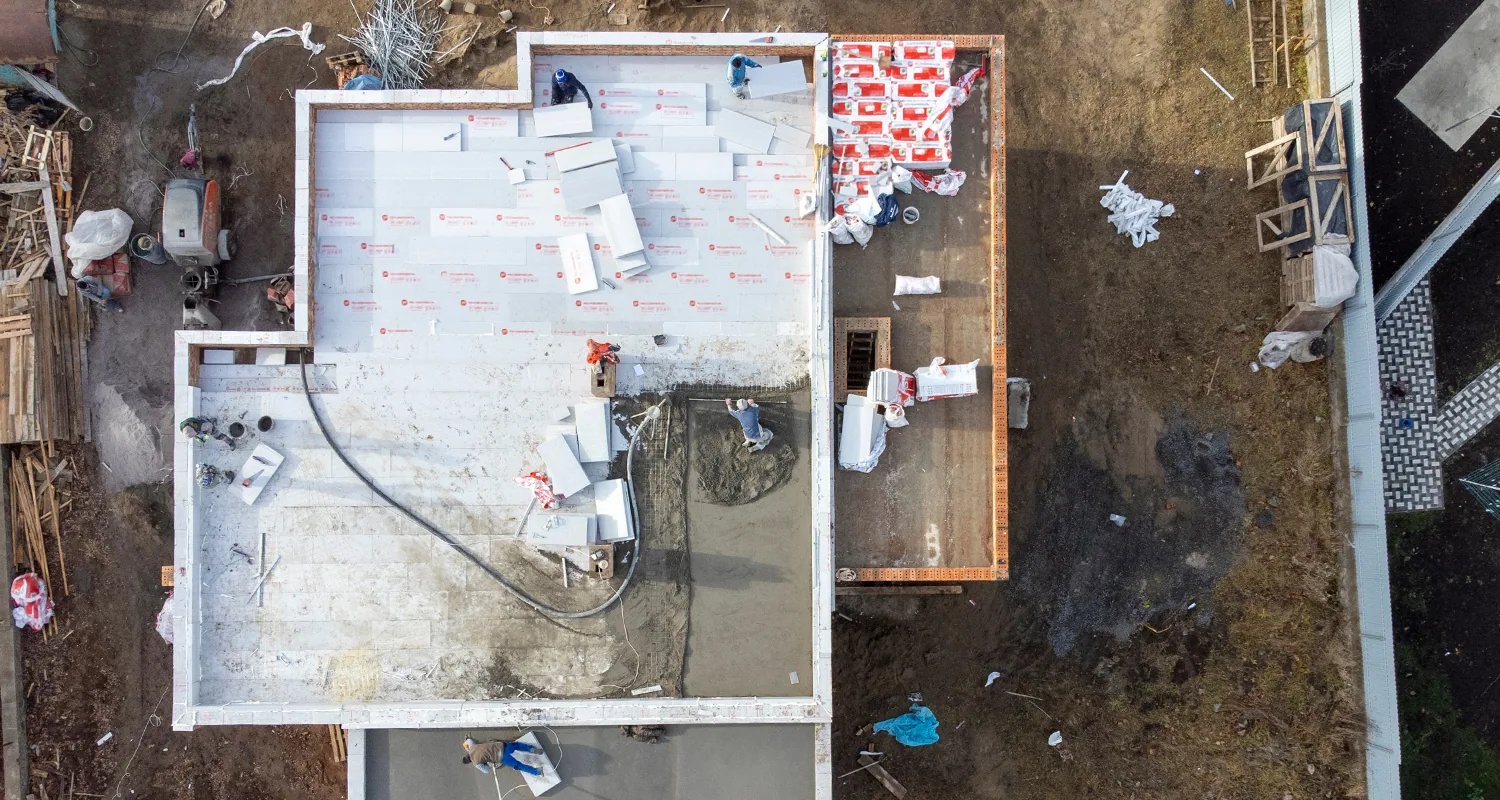
Spray polyurethane foam is applied in place and expands to form the roof surface. We inspect for splits, gouges, loose areas, exposed cells, and changes in thickness that affect runoff. A smooth appearance does not confirm adhesion beneath the surface. We check the foam at a defect and compare it with surrounding slopes, penetrations, and drains. Where the foam has separated from the substrate, a surface coating alone will not restore the bond.
Drainage depends on the finished foam profile and outlet elevations. We look for low spots, crickets, and ponding around equipment bases, then confirm whether the existing profile still sends water to the outlet. A local depression may be repaired with additional foam only when the substrate and surrounding surface can support it. We record where new material will taper into the existing field. A sudden ridge can trap water or create a weak edge in the protective coating.
Protective coating: renew the surface after preparation
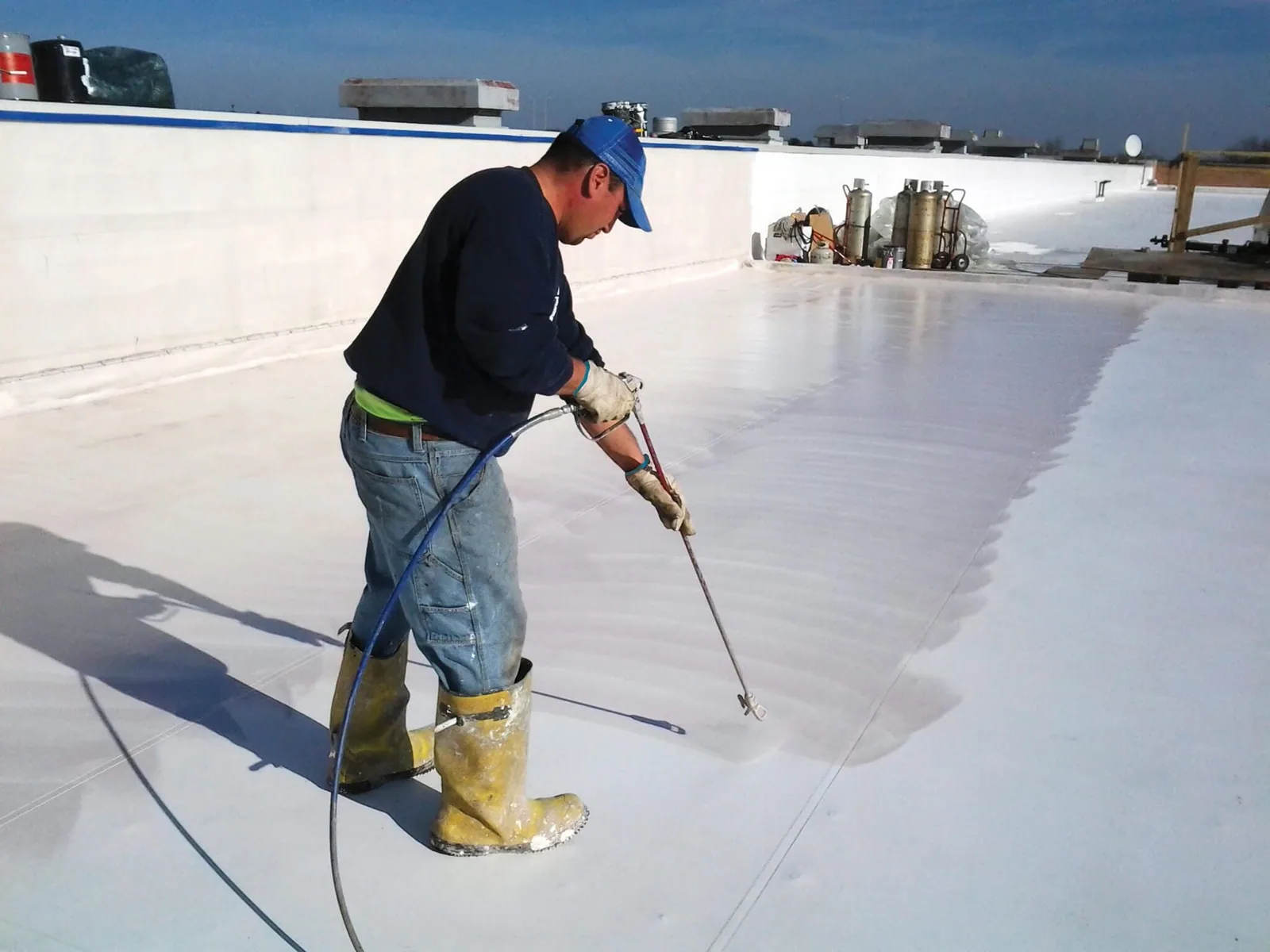
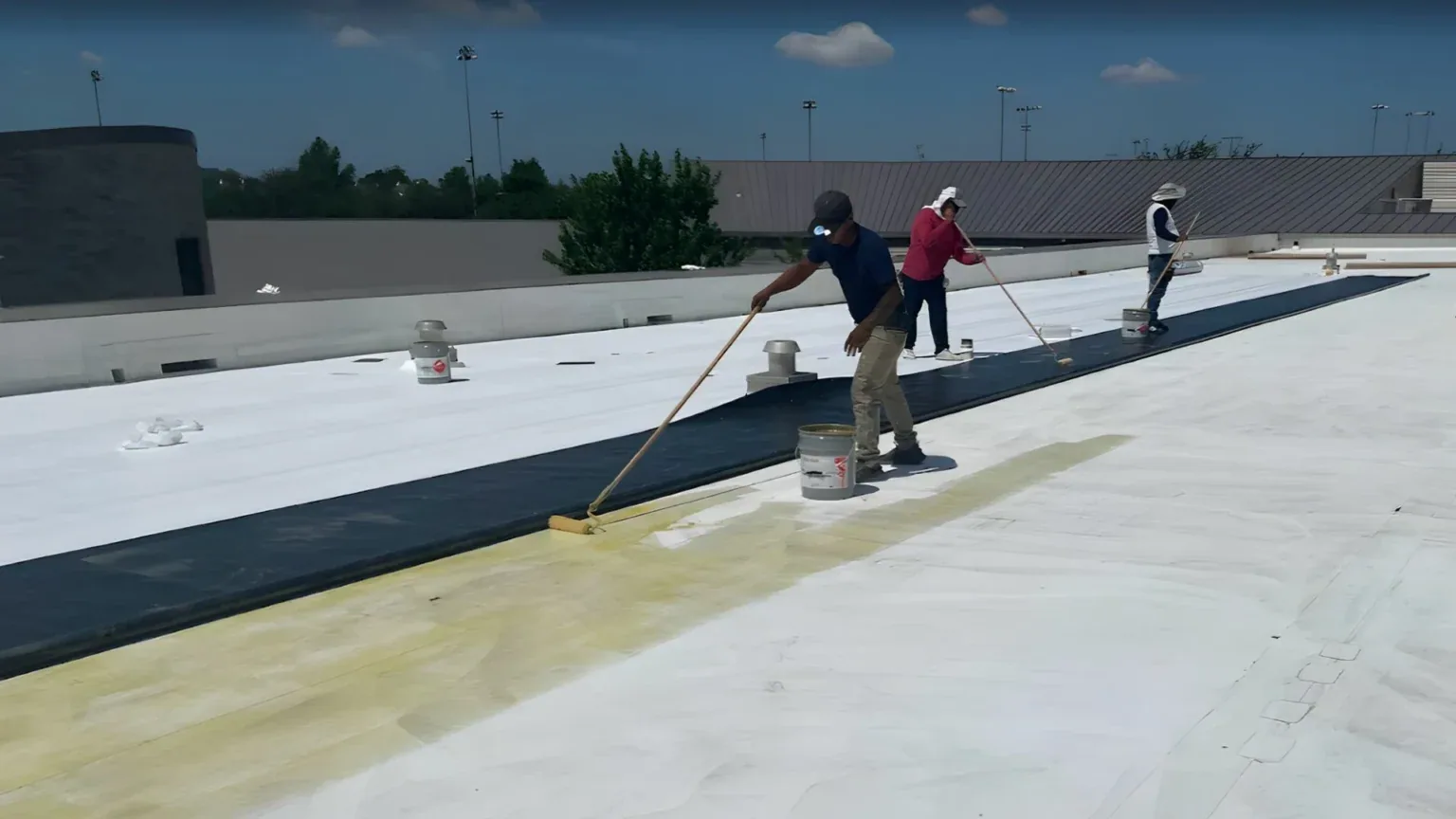
The foam relies on an intact topcoat to limit exposure to sunlight and precipitation. We check adhesion, erosion, cracking, pinholes, and the amount of sound surface available for a new application. Dirt, chalking, or an incompatible prior coating can interfere with bonding. The roof must be cleaned and prepared to the selected product requirements. We test the existing surface where needed and identify any foam that must be removed before coating work begins.We check the surface in representative areas and look for thin spots, pinholes, and edges where water can reach the foam. The number of passes and final thickness follow the selected coating specification. At a curb, drain, or wall, detail work is completed before the broad field application. The surface is reviewed again after application so missed gaps and uneven transitions can be corrected while the material is still accessible.
Silicone restoration and acrylic systems call for separate substrate and compatibility checks. A silicone coating renewal may suit one roof condition, while acrylic coating options may fit another. We select by substrate, drainage, weather exposure, and the intended maintenance plan, not by assuming one coating is suitable for every foam roof. The surface must be dry and the detail work complete before the field coating is applied.
Edges and penetrations: close exposed foam
At curbs, vents, and pipes, foam needs a durable transition that keeps water from reaching the substrate. We inspect metal flashing, sealant, counterflashing, and the coating termination on each side. A thin coating at a vertical face can break where materials meet. We check whether the detail is supported, whether the foam is stable, and whether water can enter behind the flashing. The scope states which penetration or curb is included.
At the perimeter, we inspect metal edging, coping, and the return of the coating onto the edge detail. A loose cap can allow water under the foam, while a split coating can expose a cut edge. We also check drains and scuppers for a clear opening. When the foam meets a membrane roof, the transition needs a compatible flashing; a TPO roof transition should be detailed for both materials rather than coated over without preparation.
Moisture: determine what can stay in place
Foam can hold moisture beneath a coating if water enters through a split or failed detail. We map soft areas, staining below, and any location where coating adhesion has changed. If testing or a selective opening is warranted, we record the area and the layer condition. Wet substrate, deteriorated foam, and surface wear require different corrections. The repair plan explains the material to remove and the condition needed before replacement foam or coating is applied.
A foam roof may have multiple coating generations or patches. We identify their edges and test compatibility before adding another layer. If the coating is sound but thin in one area, additional application may be an option; if foam is damaged, it must be corrected first. The written work boundary separates preparation, foam repair, detail flashing, and field coating. That makes it clear which existing areas remain outside the project.
Stamford roofs: coordinate coating work with building use
Downtown and South End Stamford include mixed-use buildings where a roof project may sit above active offices, homes, or retail. Summer heat and cooling demand can keep rooftop equipment in service. We coordinate access around equipment, maintain safe routes, and protect the space below during foam removal or coating. The material staging and work window are set with the property manager so the crew can prepare and coat a defined area without blocking building operations.
A Downtown Stamford access planning begins with roof hatch, lift, and laydown conditions at the property. We also discuss ventilation and odor control when selected products require it, using the manufacturer's application requirements for the actual material. Any equipment shutdown or interior protection is identified before the roof is opened. The local building mix informs coordination, while the foam and coating condition determine the repair.
Repair or replacement: define the foam system boundary
A localized foam repair can work when surrounding material is bonded, dry, and stable and the coating can be tied back into sound surface. The defined foam repair lists how far removal extends and where new foam meets the existing profile. Extensive wet foam, weak adhesion, or repeated cracking may warrant broader removal. We mark the test areas and report what was not opened. roof condition documentation can show the foam profile, coating condition, and details used to set the scope. Project records can include the observed coating type, test locations, repaired details, and any area reserved for future work. This is useful when roof sections have been repaired at different times or when the manager is tracking a planned renewal. The record describes the work actually performed and does not imply that every part of the roof received new foam or coating.
The written plan identifies foam repair, surface preparation, coating type, detail flashing, and drainage work separately. It states how the edge is protected and what must be dry before application. Closeout notes the area treated, coating thickness checks where specified, and any remaining condition outside the contract boundary. The owner can compare repair with a larger system project using the observed roof layers and the maintenance needs of the building.
Commercial Roofing Questions
Can a coating repair a split in the foam?
The foam itself must be stable before a coating is applied. We remove or rebuild damaged foam, then prepare the surface and restore the protective layer.
Which core location can show whether moisture has reached the foam layer?
We inspect soft or discolored areas and may use testing or a selective opening when needed. Findings are mapped so the repair reaches sound material.
Can silicone go over an acrylic foam-roof coating?
The existing product and its condition must be identified first. We test compatibility and adhesion before selecting a coating system.
Why does water pond on an SPF roof?
Drain elevation, slope, and outlet blockage can all affect ponding. We map the low area and determine whether correction belongs in the scope.
How is foam protected at curbs and edges?
At each curb, we inspect the foam, flashing, and coating termination together. The repair closes exposed foam and restores a durable connection to the curb or edge metal.